

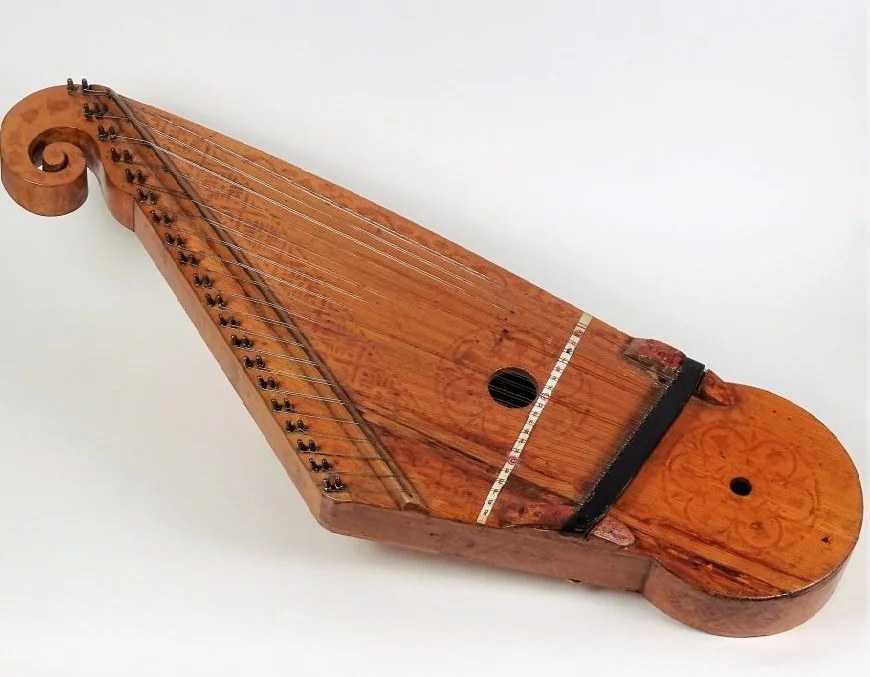
A traditional kanklės
Not to be confused with swollen or fat ankles (cankles), this singular noun despite the last letter means a lap zither instrument of Lithuania, part of the Baltic box zither family known as the Baltic psaltery, along with the Latvian kokles, Estonian kannel, Finnish kantele, and Russian gusli, with a name thought to originally mean ‘singing tree’. Varying in size and ornament, with up to 29 strings, it is thought to have been used in Lithuania to accompany church singing since the 15th century, and later in folk music in Lithuania Minor and Samogitia.
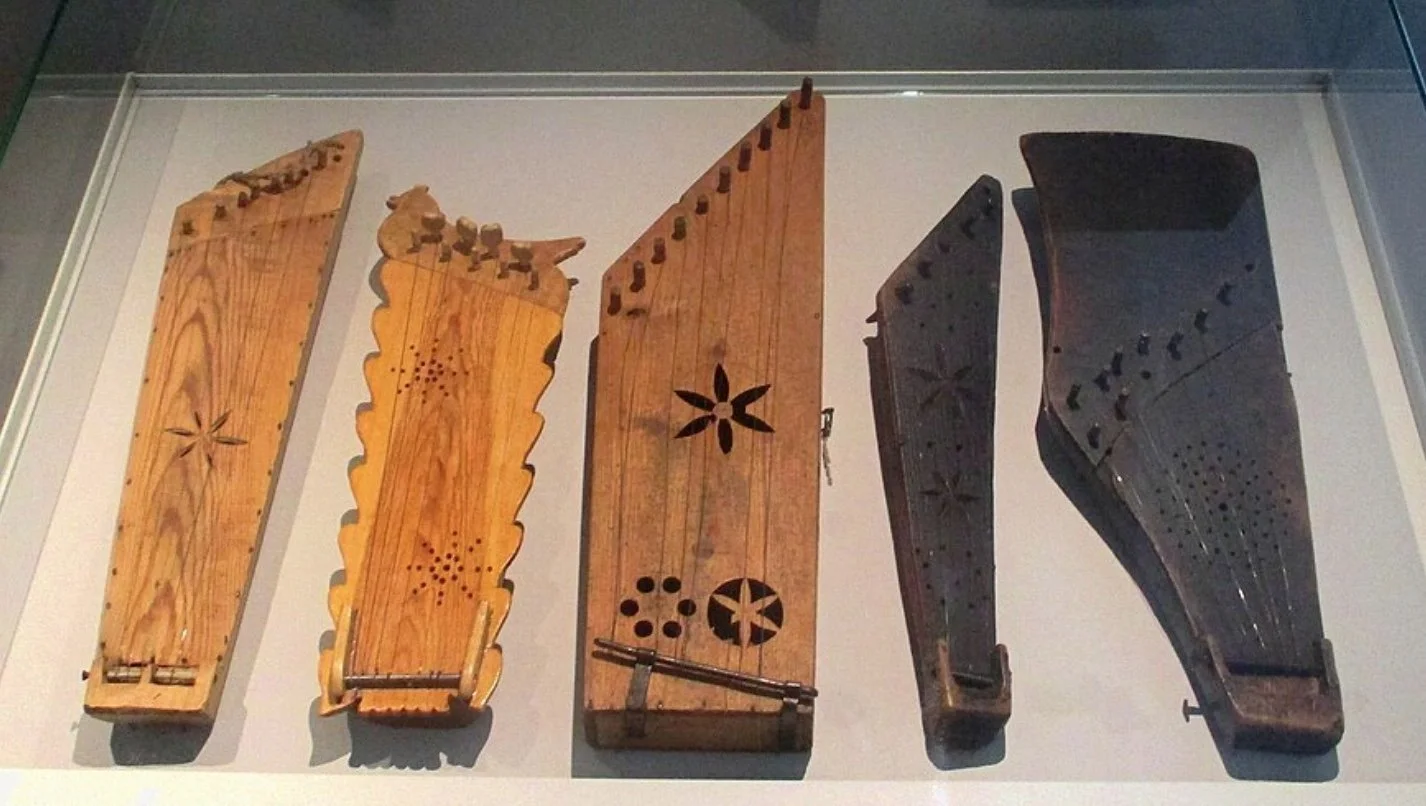
Smaller, more traditional kankles
Coming in a broad range of of sizes and types, from the simplest kanklės of Northeastern Aukštaitians, which are carved out of a single piece of wood into a boat or coffin shape; the larger, more ornate insturments of Western Aukštaitians and Samogitians with between eight and twelve strings, a flat bottom, and some with shortest end carved with the figure of a bird's or fish's tail; and the most decorated models of Northwestern Samogitians and Suvalkians, now used more for concerts, mostly with nine to 13 strings, a carved spiral figure to the point of the instrument's body. More more recently made kanklės have an expanded range of over four octaves (29 strings, C3-C7) on chromatic scales, not unlike that of the Celtic or lever harp.
But how do they sound? Here, from specialist Stringdom YouTube channel, acclaimed player Kristina Kupryte explains and demonstrates the breadth and beauty of the instrument, ending with an album recorded in 1967 by the traditional ensemble group Tautinis Kankles Ansamblis, recorded in 1967, and a 2021 release by players Vėtra Trinkūnaitė and Žemyna Trinkūnaitė, with a solo video by the former, who performs simply under the name Vėtra.
And here below are further performances by Kupryte, and others, with some traditional songs:
So then, any more kanklės music? Feel free to share anything more in relation to it, whether in music or wider culture, such as from film, art, or other contexts, in comments below.
You can also get in touch the contact page, and also visit us on social media: Song Bar X, Song Bar Facebook. Song Bar YouTube. and Song Bar Instagram. Please subscribe, follow and share. New to comment? It is quick and easy. You just need to login to Disqus once. All is explained in About/FAQs ...
Song Bar is non-profit and is simply about sharing great music. We don’t do clickbait or advertisements. Please make any donation to help keep the Bar running: