
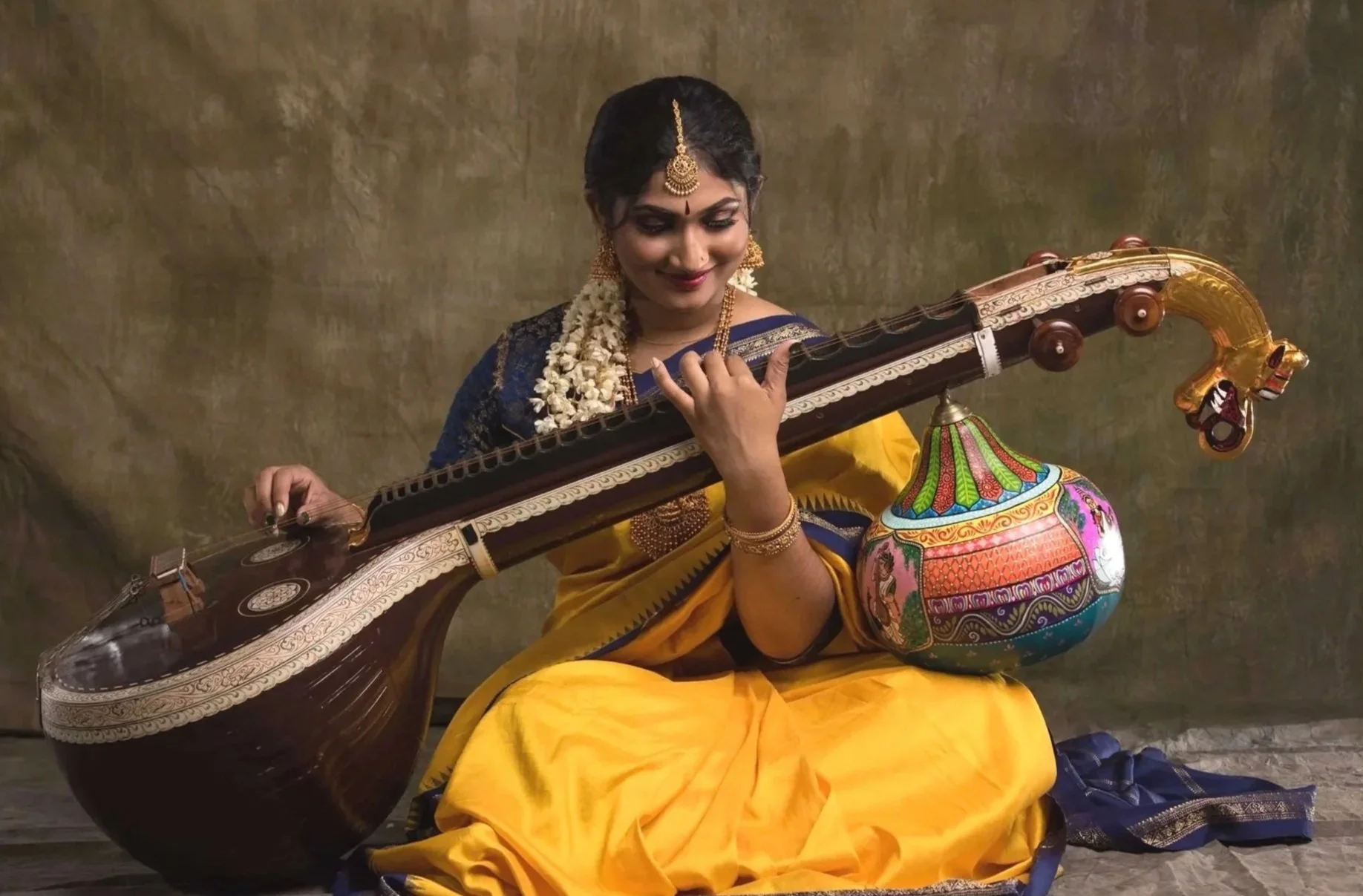
This ornate, curvaceous, south Indian classical instrument, the saraswati veena, is a special bowl lute with a rich, resonant tone, has 24 copper frets with four playing strings and three drone strings, and is used for Carnatic music. There are other types of veenas, including the rudra veena (zither), the mohan veena, and vichitra veena, but the lute form is the most established, has spiritual significance, with origins dating back over 3,000 years, making it one of the oldest continuously played instruments in the world. It is associated with Saraswati, the Hindu goddess of learning and music, often depicted holding the instrument. In Carnatic classical music, the veena is celebrated for its ability to express the subtleties of Indian ragas with depth and expression.
Crafted from jackwood or teak, it generally spans a length of approximately 130-150 cm, and is designed for both tonal depth and aesthetic beauty with a hollow wooden body and a flat surface, with two bowl-like resonators, one at each end, enhance its acoustic properties, providing a deep, rich, resonant sound. Twenty-four brass frets are meticulously set into a wax-and-charcoal base, enabling precise tonal articulation and ornamentation.
Players sit cross-legged on the floor, with the instrument resting diagonally across their laps. The left hand presses the strings against the frets to produce specific notes, while the right hand plucks the strings, using a ring mizrab (small plectrum). This allows a variety of techniques, including meend (gliding between notes to create smooth transitions, gamakas (intricate ornamentations), and syncopated plucking and striking techniques bring rhythmic richness to compositions. Curved frets allow intricate pitch modulation, while curved string ends help bring nuance to the sound production. With its intricate design it is also one of the most challenging instruments to master, the veena is considered a mark of musical virtuosity and devotion.
Here are some demonstrations and and further information by renowned player Indu Balachandran.
And here is saraswati veena performance of Kapi, live in London, by Jayanthi Kumaresh, showcasing the raga’s devotional mood and unique phrasings, enabled by the presence of two distinct ni swaras. Learn more about the music:
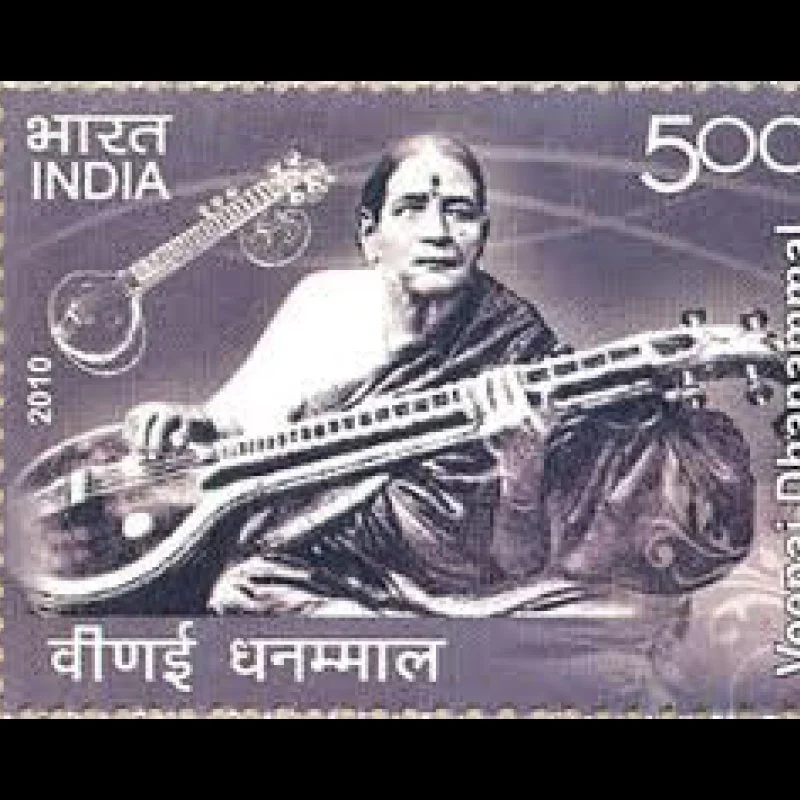
There are a number of important players from the past, but Chennai’s Veenai Dhanammal (1867–1938) was a particularly accomplished a famous example, and the torchbearer of the school of Carnatic music that goes by her name. With an individual style, we would often play and sing simultaneously, and often did not use the plectrum. The prefix "Veenai" in her name is an indicator of her exceptional mastery of that instrument. Here she is commemorated on a postage stamp.
And finally, the most revered player of all …
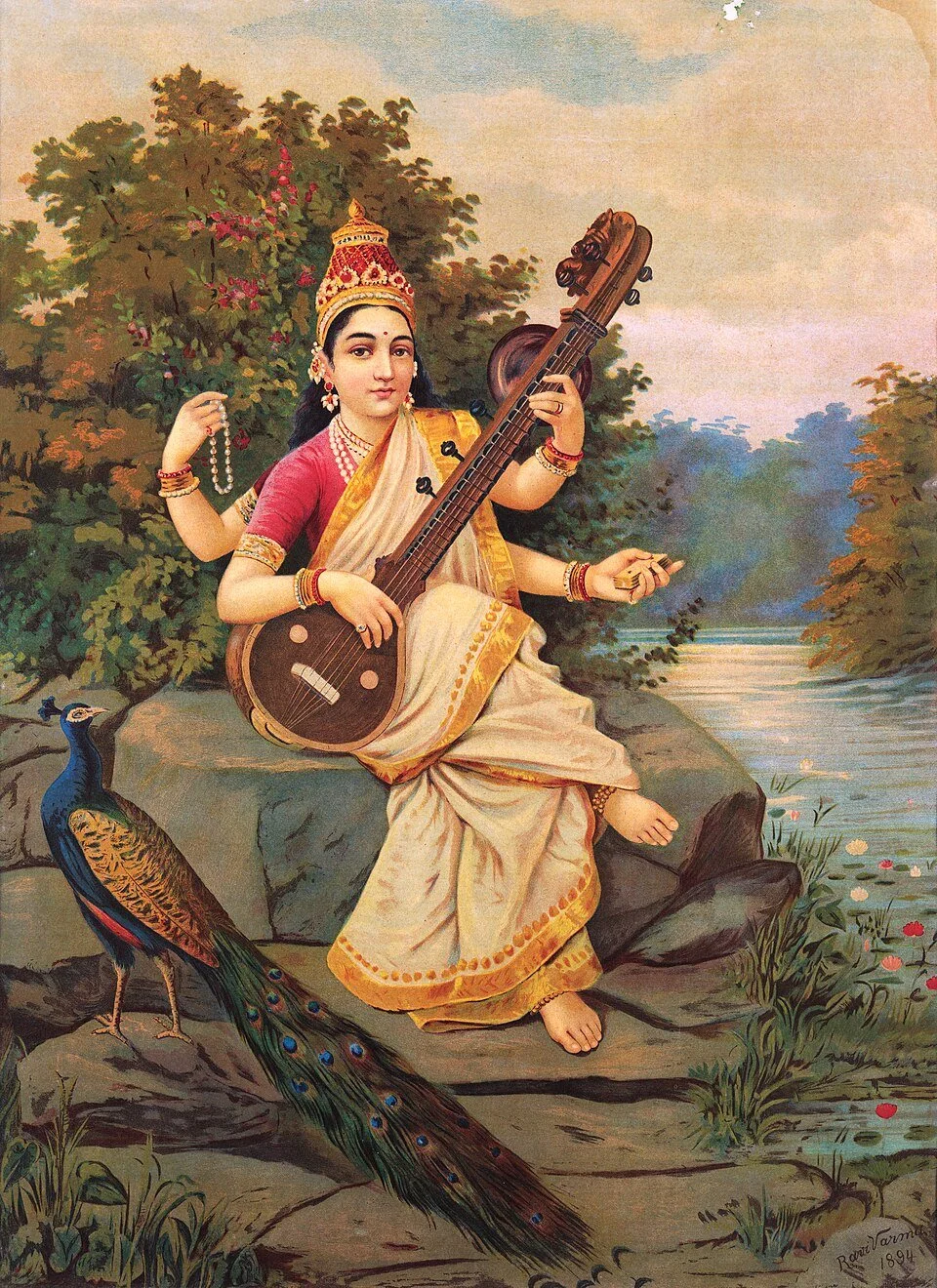
A painting of the goddess Saraswati playing the veena
So then, any further veena-related examples to share from your own music library? Feel free also to share anything related whether in music or wider culture, such as from film, art, or other contexts, in comments below.
You can also get in touch the contact page, and also visit us on social media: Song Bar X, Song Bar Facebook. Song Bar YouTube. and Song Bar Instagram. Please subscribe, follow and share. New to comment? It is quick and easy. You just need to login to Disqus once. All is explained in About/FAQs ...
Song Bar is non-profit and is simply about sharing great music. We don’t do clickbait or advertisements. Please make any donation to help keep the Bar running: