
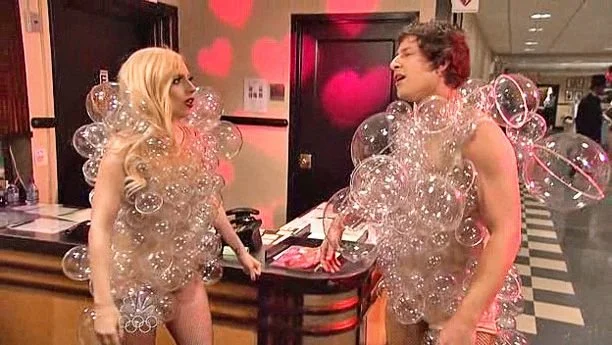
By The Landlord
“There was the outside world, the world of politics and history, and there was my inside world, the world of music and family, and the two worlds never met. In the outside world there was economic stagnation and military rule and political censorship and people being tortured and sent away to concentration camps; in my inside world there was music and laughter, there were home comforts and good food and the warm glow of the unconditional love my parents felt for each other and for me. I lived in a little bubble of happiness and paid hardly any attention to what was going on around me.” – Jonathan Coe, Mr Wilder & Me (2020)
“Google is great at helping us find what we know we want, but not at finding what we don't know we want.” – Eli Pariser, The Filter Bubble: What the Internet is Hiding From You (2011)
"The algorithms made sure it only spoke to people who already agreed with them.” – Adam Curtis, Hypernormalisation (2016)
"I know what I like, and I like what I know;
Getting better in your wardrobe, stepping one, beyond your show.” – Lyrics by Peter Gabriel, I Know What I Like (In Your Wardrobe), from Genesis, Selling England By the Pound, 1973
Greetings everyone. I hope that you're getting through all your to-do lists, planning, shopping, travelling and by now enjoying the festive season that always comes round again so quickly, and topically, one in which, at least temporarily, we might all hopefully get happier, and also a little rounder.
Of course, it's a time of year to enjoy yourself, connect with loved ones, and relax. But talking of that particular circularity of shape, of the many themes and issues floating around this past year, from violent human wrecking balls to bright, shiny baubles of resistance and hope, whether issues are heavy or light, one that comes ever more to my attention is how much we are increasingly trapped in algorithmic, paradoxical bubbles.
It's not a new idea, as shown in the above quotes, but what seems ever starker in my experience is how the big AI-marketing-machine seems to become more lightspeed-efficient.
As the editor and creator-in-chief of this beautiful, unusual, enthusiastically people music-sharing virtual Bar, I spend a huge portion of my time exploring all kinds of music, not merely from all the great stuff posted and picked by regular readers and contributors, but hundreds of weekly emails from artists and music labels and publicists, which in turn helps inspire the Albums and New Songs sections, which attracts a large and very possibly other, ever growing, watchful readership outside the venn diagram of the Themes/Playlists audience.
So I'm constantly saturated in new stuff, and also faithfully attend a lot of live music, so among enthusiasts of material new and old, it doesn’t seem immodest to describe myself as above-averagely knowledgeable in music, does it? And yet I'm continuously surprised, at many venues, especially the larger ones, when perusing their event lists, how many artists I've never even heard of, ones that seem to sell out with ease. Does anyone else find that? Just who is that country music star, or hip-hop or pop artist? How come they've sold 2,000 tickets at the London Eventim Apollo or Troxy? How have they gathered all these fans (of various demographics and ages), and yet, as eclectic and varied are my tastes, I've never even heard a song by them?
It now feels like an ever stranger, contradictory world of bubbled, niche markets, and yet despite online marketing proving to be so fast and effective, and tickets selling at record levels, at the same time, small music venues are also closing in droves.
It didn't seem to be like this in the past. When growing up, pop artists at least would be known to most average joes in the street because posters would be plastered everywhere, and in the UK, for example, we would have seen many of them on Top of the Pops, a focus point for pop music knowledge, alongside how we just had three or four TV channels. But who studies the charts now aside from the industry itself? Meanwhile the internet continues to chop and gobble up and scatter culture like a rabid, digital school of piranhas, creating thousands of disparate worlds. The sheer availability of music, TV, film and other content means can all be as eclectic as we like, and yet also infinitely diluted.
Yet when I was young we were far more tribal in our tastes – goths, new romantics, punks, rockers etc would be aware of each other's tastes even if we didn’t visit them. We lived in bubbles, but they were transparent. Now, like Christmas baubles, while we can see our own, narcissistic, shiny reflection in them, they are so opaque, and apparently AI-managed, we most likely don't know what other bubbles exist. It’s the big paradox of an apparently connected, yet disconnected modern online world.
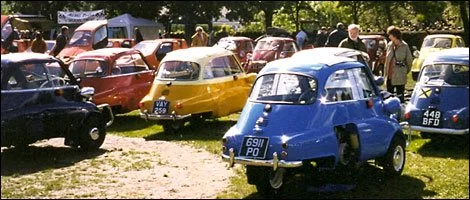

Other vehicles of the bubble - past and future
It is then this world of disparate, disconnected bubbles, that has perhaps fuelled so many other dangerous trends in society, of distorted facts, untruth and extremism. But that’s how the machine works. As Curtis variously describes in that documentary: “Angry people click more … social media algorithms constantly feed you back to you. So again nothing changes — and you learn nothing new that would contradict how you feel .... the system cocoons us and makes us feel safe. And that means we have become terrified of all change.”
Five years prior to that groundbreaking film, Pariser's book describe and predicted similar things: “The filter bubble tends to dramatically amplify confirmation bias—in a way, it’s designed to. Consuming information that conforms to our ideas of the world is easy and pleasurable; consuming information that challenges us to think in new ways or question our assumptions is frustrating and difficult. This is why partisans of one political stripe tend not to consume the media of another. As a result, an information environment built on click signals will favor content that supports our existing notions about the world over content that challenges them.”
And all the while comes quoting this telling remark: “if you’re not paying for something, you’re not the customer; you’re the product being sold,” by Andrew Lewis, under the alias Blue_beetle, on the website MetaFilter.
We can only do what we can do, and hope then to cross barriers and burst bubbles. Here at Bar, the idea is both to enjoy and share, perhaps in the metaphorical champagne or other beverages of widespread musical taste, but to also pop them. If we can do that a little and continue do do so, it's something at least to celebrate this festive season during this rapidly changing, unpredictable world.
So then, whatever thoughts or musical discoveries you've had over the past 12 months, please feel free to share them in the comments boxes below on anything you care about or enjoy.
That just leaves me to wish you Merry Christmas time and a Happy New Year to all of our fantastic contributors and readers, to thank you very much for all you've already brought to the Bar this year so far, and see you in 2026 for even more.
Your good health, one and all!
Cheers!
Your friendly Landlord

Enjoy your bubbles this Xmas. May they be tasty and transparent …
New to comment? It is quick and easy. You just need to login to Disqus once. All is explained in About/FAQs ...
Fancy a turn behind the pumps at The Song Bar? Care to choose a playlist from songs nominated and write something about it? Then feel free to contact The Song Bar here, or try the usual email address. Also please follow us social media: Song Bar X, Song Bar Facebook. Song Bar YouTube, and Song Bar Instagram. Please subscribe, follow and share.
Song Bar is non-profit and is simply about sharing great music. We don’t do clickbait or advertisements. Please make any donation to help keep the Bar running.