
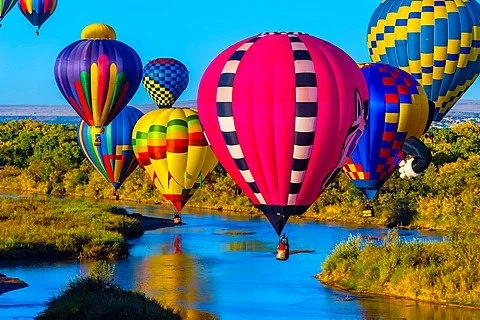
By The Landlord
“Balloon: A thing to take meteroric observations and commit suicide with.” – Mark Twain
“There are times in life when people must know when not to let go. Balloons are designed to teach small children this.” – Terry Pratchett
“Who knows if the moon's
a balloon, coming out of a keen city
in the sky - filled with pretty people?” – e. e. cummings
“Nobody can be uncheered with a balloon.” – A. A. Milne
“Did I miss?" you asked. "You didn't exactly miss," said Pooh, "But you missed the balloon." "I'm so sorry," you said, and you fired again, and this time you hit the balloon and the air came slowly out, and Winnie-the-Pooh floated down to the ground. – A. A. Milne, Winnie-the-Pooh
“Darkness at the break of noon
Shadows even the silver spoon
The handmade blade, the child's balloon
Eclipses both the sun and moon
To understand you know too soon/
There is no sense in trying.” – Bob Dylan
“I used to get a shiver if I thought about holding balloons, because I was scared of floating away.” –Fiona Apple
“I tied a bunch of balloons to a beach chair and tried to float up to heaven. There's no heaven, and birds tried to kill me!” – Thom Yorke
"There is no doubt that a Zeppelin is a wonderful thing; but that did not prevent it from becoming a horrible thing." — G.K. Chesterton
“Above me I saw something I did not believe at first. Well above the haze layer of the earth's atmosphere were additonal faint thin bands of blue, sharply etched against the dark sky. They hovered over the earth like a succession of halos.” – David G. Simons (on Project Manhigh, setting a high-altitude balloon flight record in 1957 at 19 miles)
“The soul, light as a feather, fluid as water, innocent as a child, responds to every movement of grace like a floating balloon.” – Jean-Pierre de Caussade
Pop! There is something oddly profound, fragile and beautiful, joyous yet tragic, about balloons for us humans. For small children, that helium-filled gift on a piece of string is a magical new companion, filling their world with floating, running, skipping ecstasy, but in an instant, with a careless loss of grip, it can quickly flee into the sky forever, a drift into the great void. Or if suddenly explodes, it’s instant trauma. Life extinguished. Hopes destroyed, lessons learned.
Adding to the various guests’ remarks above, Lenny Kravitz is also in the Bar today, and recalls: “Me being in my grandmother's yard in Brooklyn. I must have been about 3. I had this red balloon. I let go of it, and it went up into the sky and just kept going and going. I completely flipped out, because I didn't understand why.”
But first, back to the beginnings. When, inspired by Chinese paper lanterns (the Chinese perhaps did everything first … while such apparatus was also used in the Mongolian invasion of Poland in the 13th century), in 1783 the French Montgolfier brothers Joseph-Michel and Jacques-Étienne of Paris first launched their groundbreaking hot air balloon, it must have been an extraordinary sight. For the first time people were able to see above the limited height of buildings, to glimpse the city in full and the landscape beyond. It was a breakthrough in psychology, and also for cartography.
It is unknown whether, as is floated in history, all this may have previously already occurred in China, or possibly, after Portuguese Jesuit priest Bartolomeu de Gusmão in colonial Brazil envisioned an aerial apparatus named Passarola, which was the predecessor of the hot air balloon, that in 1709 came the first flight in the west. But officially, with the resources and backing of France’s King Louis XVI, with a fire blazing beneath, and smoke filling a cotton balloon, came the experimental 10-minute flight on 19 September 1783, following by the deliberate successful experiment with animals - a duck, a chicken and a sheep (it was unknown whether the sheep, like humans could survive at altitude), before the first human flight occurred, decorated with Louis as the sun king, manned not by criminals (as was the monarch’s initial preference), but by a soldier and a physicist). Thus balloons had already covered their four primary functions - advertising, warfare, science, and the leisure industry.
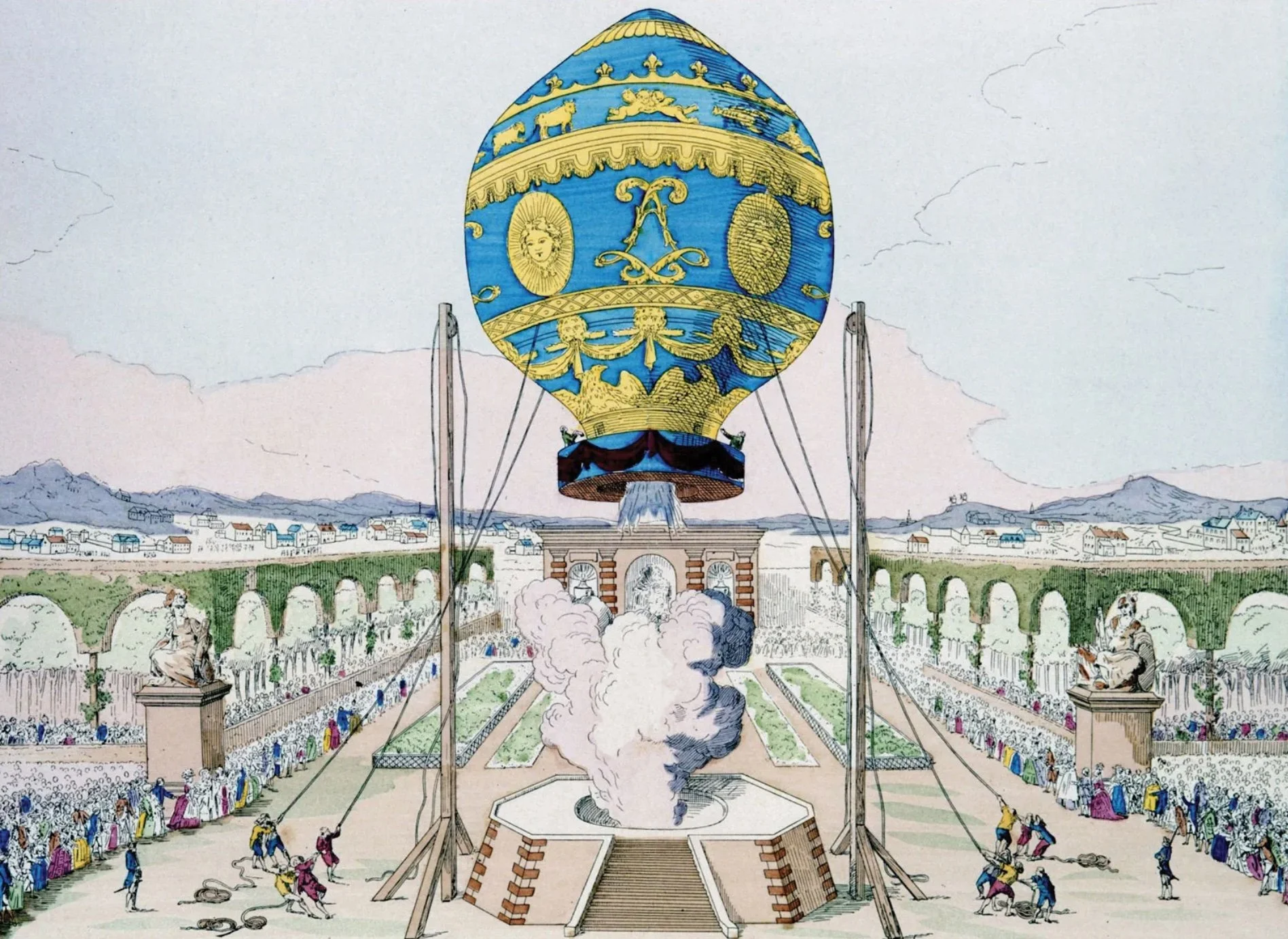
Montgolfier first flight in Paris, 1783
Ballooning, in its many forms has a colourful, beautiful and also tragic history. This week then we’re seeking high and low for songs about any form, from a child’s balloon to tales of hot air trips of all forms, from the early stages to the dirigibles, those steerable airships – blimps and zeppelins, through war and travel.
It might then cover melancholic or moving images and metaphors of balloons in general, or include historical stories, including of course the daddy of them all, the Hindenburg,that massive German commercial passenger-carrying rigid airship, the largest aircraft ever built at 245 meters (804 feet) long. Completed in 1936, it was a symbol of German engineering but used highly flammable hydrogen for lift. It was destroyed in a, tragic, 37-second fire on May 6, 1937, in Lakehurst, New Jersey, effectively ending the age of airships that was, because of aeroplane, already on its way to the great gig in the sky.
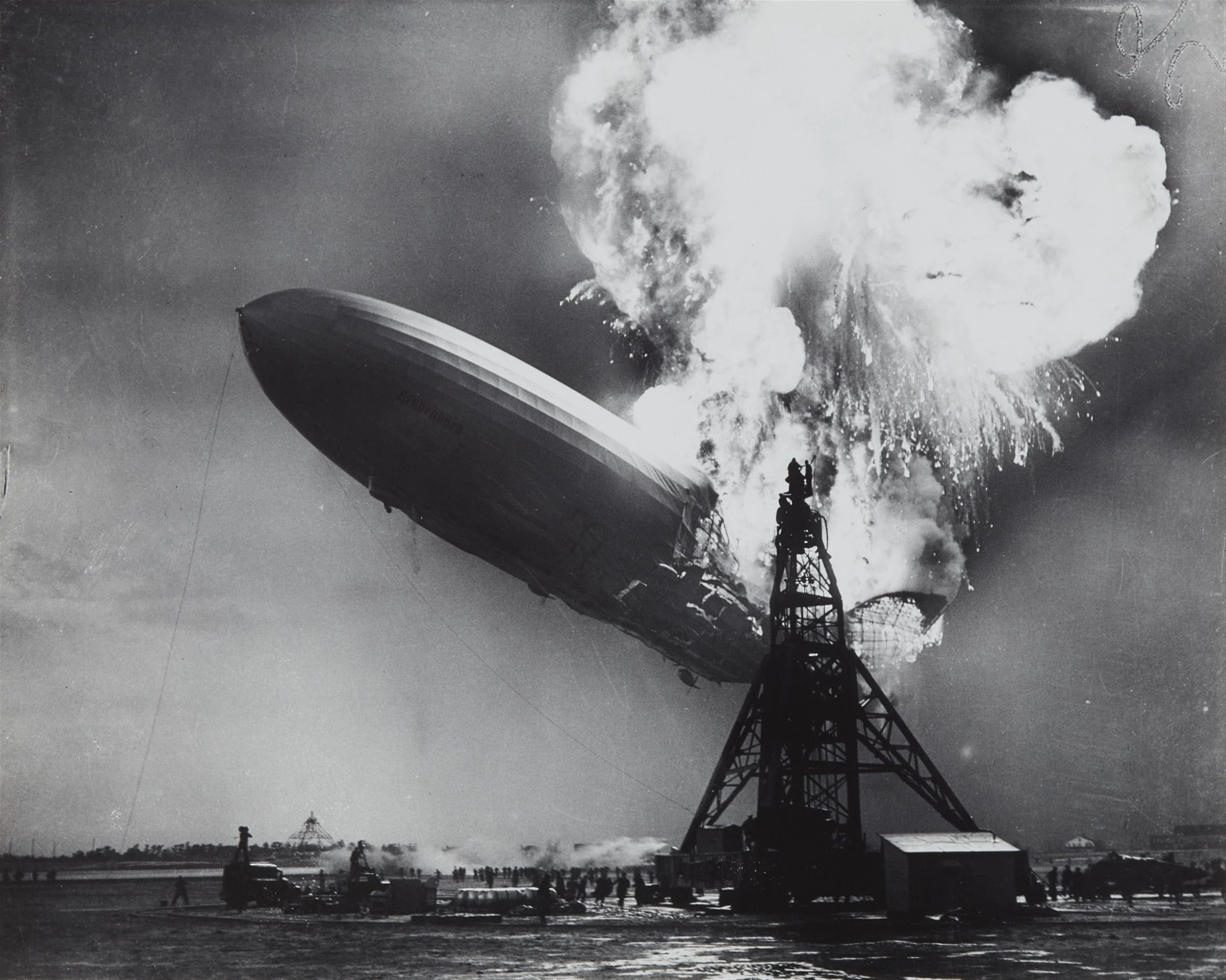
The Hindenburg, 1937
Zeppelins, dirigible, rigid-design airship named after the German inventor Ferdinand von Zeppelin who pioneered rigid airship development at the beginning late 19th and early 20th century. But is it really over? What of the possible future for this form of travel? Here’s an interesting short video looking back at its ups and downs.
There’s something highly romantic but also extremely disastrous about big balloon travel. It is silent, gentle, and floating, but can also ignite into extraordinary tragedy. When on that first manned Mongolfier-designed flight, scientist Pilatre de Rozier survived, it was only because he and his co-pilot spent much of their time dabbing out small fires with a wet sponge on the end of a pitchfork. Some years later, when he attempted to cross the English Channel, he combined a hot smoke filled model with a bag of hydrogen (which became the preferred form), but being highly flammable, you can guess the rest.
From the 1700s and early 1800s tethered trips up in hot air balloon across Europe and America became the fairground ride of the age.
But just eight months after the first manned flight, the first woman to fly in an untethered hot balloon was French singer Élisabeth Thible On 4 June 1784, she flew with a Monsieur Fleurant on board a hot air balloon christened La Gustave in honour of King Gustav III of Sweden's visit to Lyon. She is also worth a mention because she went up dressed as the Roman goddess Minerva, while she and Fleurant sang two duets from Monsigny's La Belle Arsène, a celebrated opera of the time. The flight lasted 45 minutes, covered 4 kilometres, and achieved an estimated altitude of 1,500 metres before, showing great courage to keep the fire burning but also steering the ground, the pair survived a rather bumpy. What a spectacle and a sound. Music had hit new heights, but what goes up must come down. Tragically Thible died the following year, age just 27 in Paris.
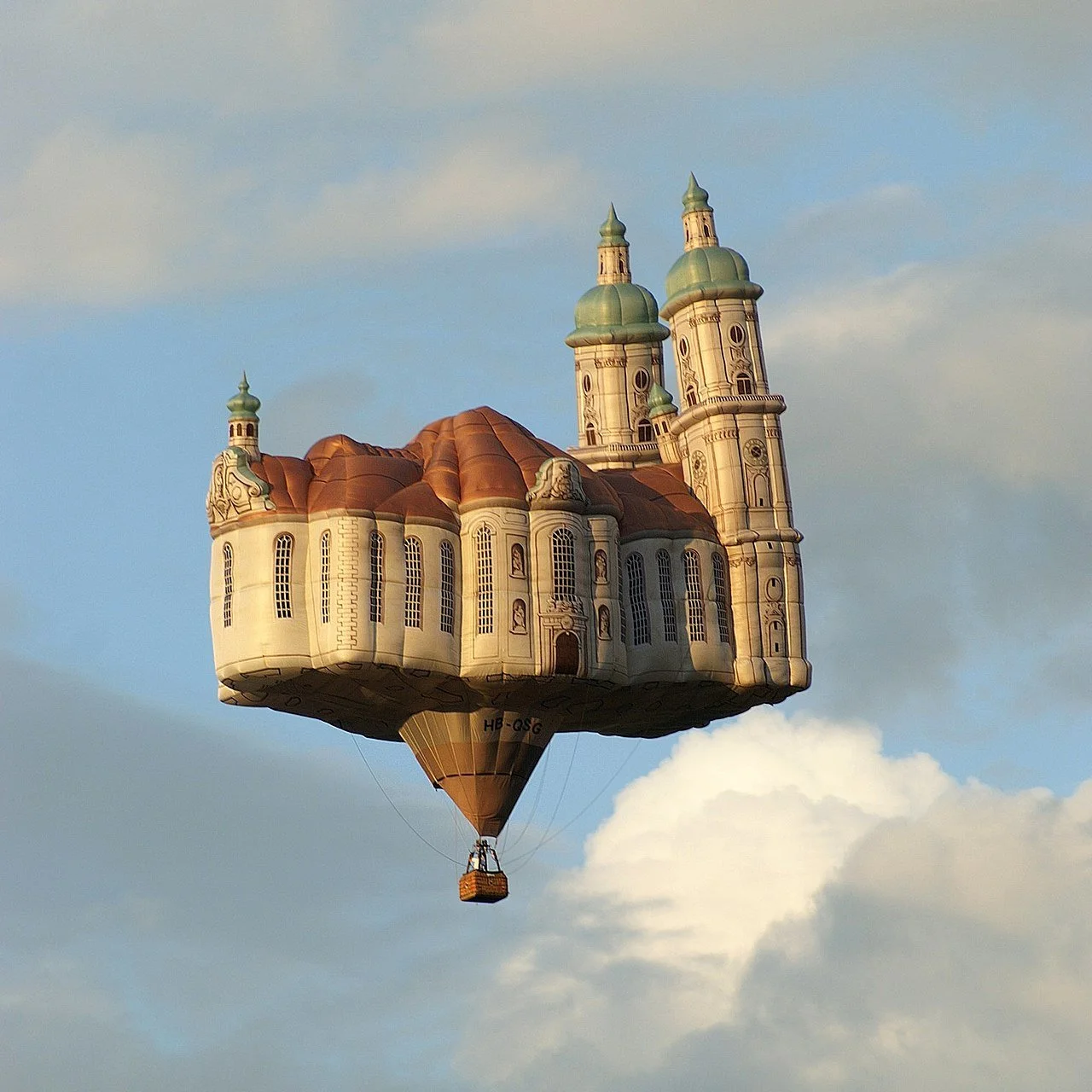
Getting closer to God? A novelty hot air balloon resembling the Abbey of Saint Gall
There are numerous stories about ballooning that might be captured in song, from epic journeys to the famous balloonists themselves, whether it is across the world or up into space. Including in these might be Sophie Blanchard, commonly known as Madame Blanchard (1778-1819) the French aeronaut, the first professional female balloonist and the wife of ballooning pioneer Jean-Pierre Blanchard. Famous throughout Europe, even after her husband’s death she continued ballooning, making more than 60 ascents including an ascent in Milan in 1811 to mark Napoleon’s 42nd birthday. Inevitably though, it was bound to end in tragedy. On 6 July 1819, in the Tivoli Gardens in Paris, her hydrogen-filled balloon caught fire and Blanchard, entangled in the surrounding net, fell to her death.
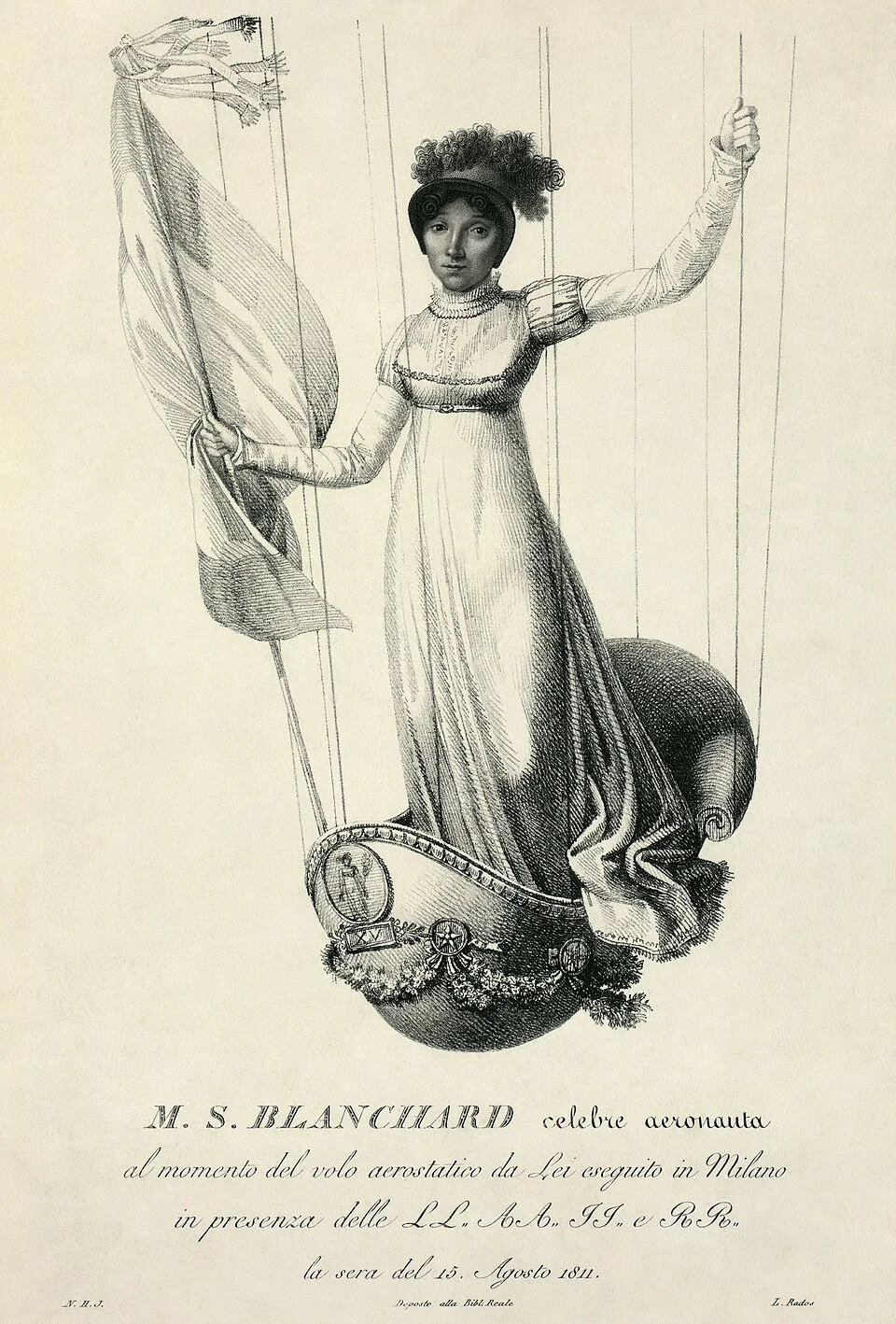
The ups … Mme Blanchard depicted in Milan in 1811 to mark Napoleon’s birthday
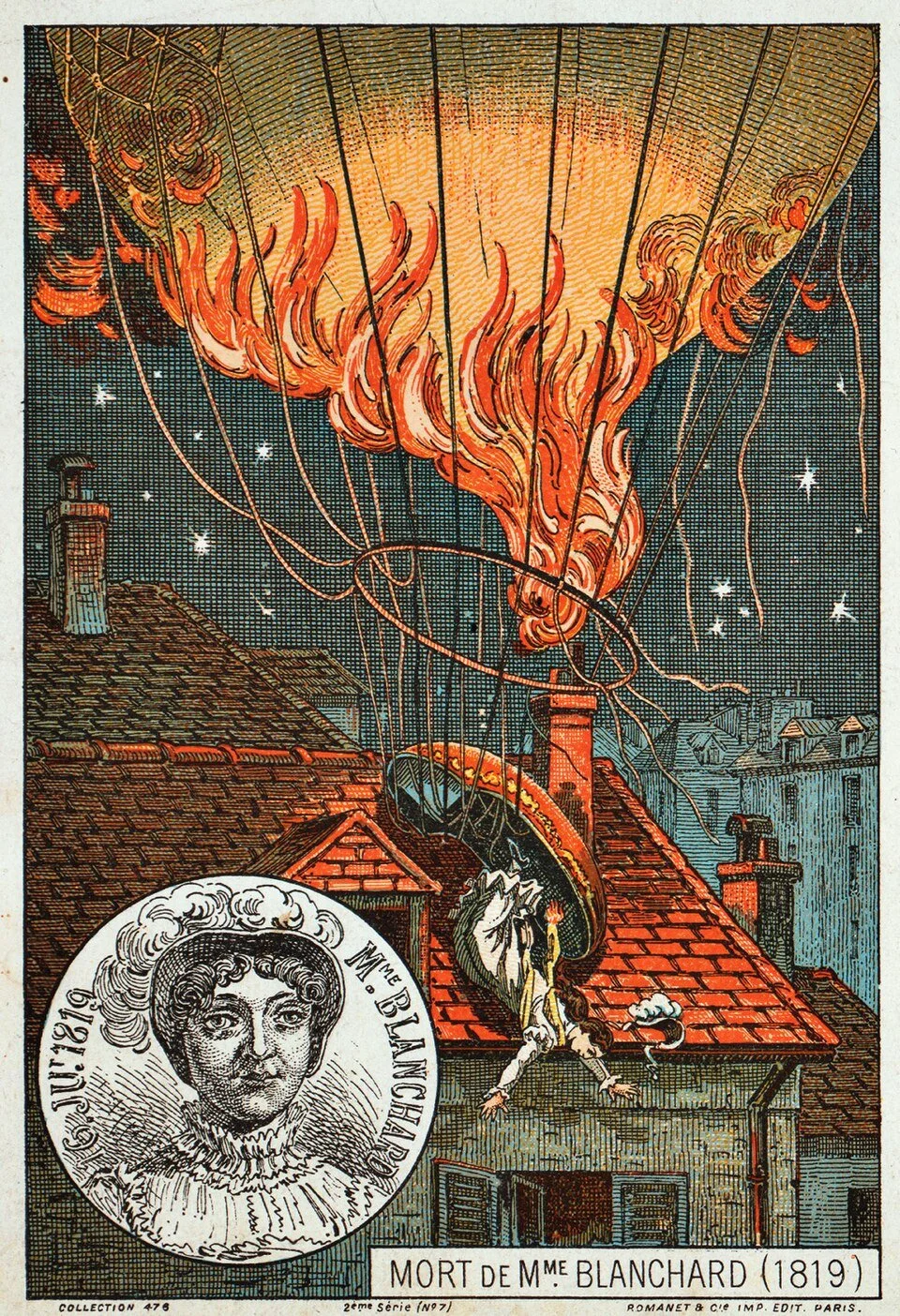
And the downs … death in Paris, 1819
“History repeats itself, first as tragedy, second as farce,” wrote Karl Marx from his 1852 work The Eighteenth Brumaire of Louis Bonaparte, inspired by the ideas of Hegel. That seems to very much apply to the world of balloons and ballooning in all forms.
In a more modern context, let’s jump then to 1986. The city of Cleveland, Ohio, was very much in need of a boost. It had been the focus point of environmental disaster, with the Cuyahoga River having so polluted with oil it regularly went up in flames, notably in 1952 and 1969. So Balloonfest '86, held on September 27, 1986, was a huge charity event that did relese nearly 1.5 million helium balloons from Public Square, but not quite as planned. Organised by the United Way, it was a huge publicity stunt, and the spectacle aimed to break the world record of helium balloon release (set by Disney at Disneyland) by launching 2 million balloons, blown up by hundreds of volunteers all prepared under a huge net construction, but also to symbolise a new bright future for the city. But with September winds suddenly building, the release had to start early.
Unfortunately, the cold air and forces of nature turned it into a disaster. The mass release did not behave as planned or imagined all the coloured orbs disappearing perfectly into a scattered beautiful spectacle into the ether. Instead, like some unwieldy, out-of-space rubbery creature, most of balloons stuck together, and failed to rise due to the air temperature, at first clung to a building, then scattered on the ground all over the city and into Lake Erie. It caused traffic accidents, shutting down airport runways, injury to horses, and even caused a search party for two lost fishermen to be called of because of the hundred of thousands of gallons on the lake. The men didn’t survive, likely all because of the balloons.
But let’s end with something altogether gentler and more beautiful, the poetic short film, Le Ballon Rouge (1956) directed by Albert Lamorisse, capturing childhood joy, hopes, dreams and emotions through the balloon’s fragile companionship:
So then, how will this fly? Will it all be a lot of hot air, or be extremely uplifting? Ready to fill lungs, hearts and imaginations, and for take off, let’s welcome this week’s brilliant balloonist to check your inflations and flights - pejepeine! Release your balloon-inspired songs in comments below for deadline at 11pm on Monday UK time, for playlists published next week. Up and away …
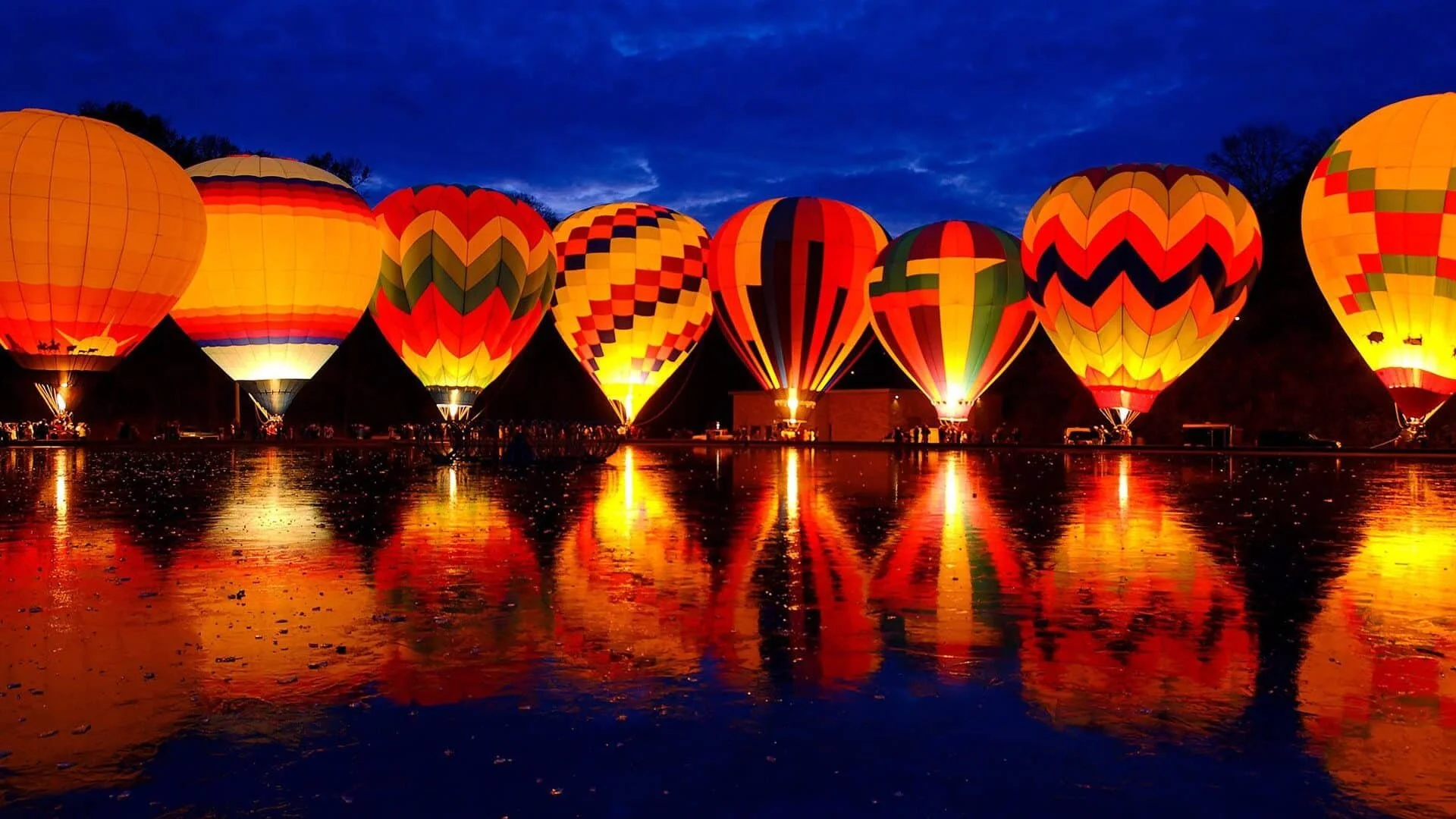
Balloons bring much to reflect on …
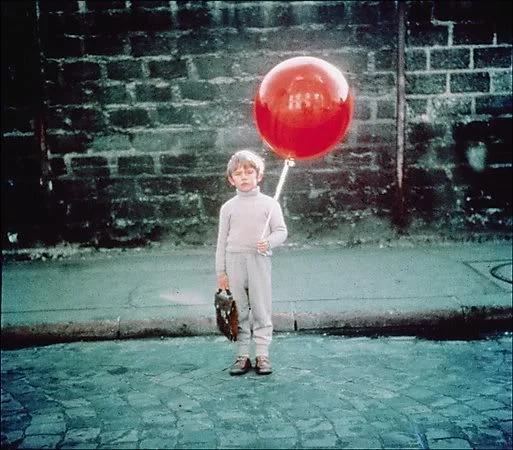
Hold on, but when do you release it?
New to comment? It is quick and easy. You just need to login to Disqus once. All is explained in About/FAQs ...
Fancy a turn behind the pumps at The Song Bar? Care to choose a playlist from songs nominated and write something about it? Then feel free to contact The Song Bar here, or try the usual email address. Also please follow us social media: Song Bar X, Song Bar Facebook. Song Bar YouTube, and Song Bar Instagram. Please subscribe, follow and share.
Song Bar is non-profit and is simply about sharing great music. We don’t do clickbait or advertisements. Please make any donation to help keep the Bar running.