
By The Landlord
“Hypnotism had been of immense help in the cathartic treatment, by widening the field of the patient's consciousness and putting within his reach knowledge which he did not possess in his waking life …but ….” – Sigmund Freud
“You have to realise that hypnosis doesn't exist: it just works on people's natural suggestibility, their expectations and capacity to unconsciously role play. You can't make someone do anything they don't want to do.” – Derren Brown
“By combining elements such as hypnosis, magic, neurolinguistic programming and psychology, I can make it appear that I can hack into people's brains.” – Keith Barry
“You use hypnosis not as a cure but as a means of establishing a favourable climate in which to learn.” – Milton H. Erickson
“The collective dream is the hypnosis of social conditioning. Only sages, psychotics and geniuses manage to break free.” – Deepak Chopra
“I just love the hypnosis of a single bass drum.” – Jon Hopkins
“Within the next generation I believe that the world's leaders will discover that infant conditioning and narco-hypnosis are more efficient, as instruments of government, than clubs and prisons, and that the lust for power can be just as completely satisfied by suggesting people into loving their servitude as by flogging them and kicking them into obedience.” – Aldous Huxley, Letter to George Orwell, 21 October, 1949
“Now I will believe that there are unicorns…” – William Shakespeare, The Tempest
Are you sitting comfortably? Lie back and look into my ... words. Are we all sometimes at least partially under it, in some form or another?
History can sometimes review periods when society seems to have been under a mass popular delusion or peer-pressure hypnosis. From insanely stupid savage slaughters and propaganda-fuelled warmongering, to restlessly rising religions, Salem witch trials, the Dutch Tulipmania economic speculation of 1634-1637, ridiculous fads and fashions such as huge foppish wigs of the 1770s Macaroni period, feverish crowd-crushing sales of Cabbage Patch dolls in the 1980s, or any movement voting for brazenly lying popularists. For much of the time, perhaps half of the population of many nations have believed the other to be under some sort of fatally flawed spell, some awful attraction to something very wrong indeed, and vice versa.
Many of us might be amazed and appalled by sights of, for example, crassly ill-informed MAGA and xenophobic rallies, or mass ranks of people paying top dollar to see a clearly rubbish band. But if aliens are watching us, they must also regard much of our regular activity as truly delusional. Why are they getting so feverishly excited about people kicking a bag of air? Why are they staring at those screens for so long when they are clearly adapted to other activities? Why do they believe in imagined geographical borders? Why are they destroying their brain cells with that liquid, poisoning their offspring with that food, or their own surroundings with all that toxic stuff? Why do they repeat the same activities and mistakes day after day, and believe in the value of something that is nothing more than paper or digital fiction?
But this week we go deeper into the very idea of hypnosis itself, that mostly human condition induced by others, or even the self, resulting in highly focused and sometimes selective attention, reduced peripheral awareness, and an enhanced capacity to respond to suggestion. And so then, songs about this lyrically, or perhaps also in the music itself too, could be about the inducer or the induced, the altered state of mind or trance and the results or emotions produced.
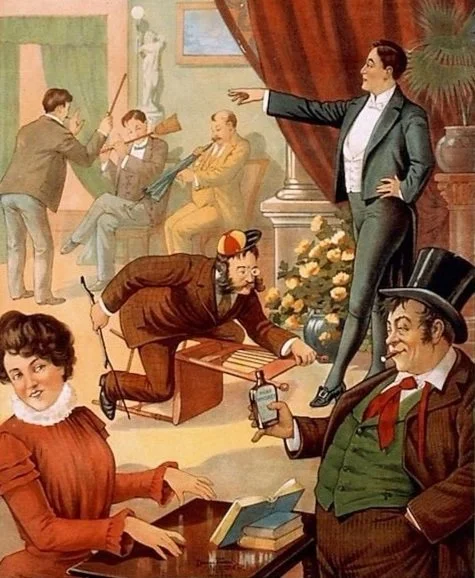
Hypnosis then can be on a professional level, as a medical treatment, as a form of entertainment, or used as a psychological tool for oratory or other performance. Hypnosis is used in many ways. From a way to give up smoking, to dig out and cure deep distress and memories, to focus on difficult tasks, from the medical to the mystical, the cerebral to sexual, and ways to sell, or about being naturally hypnotic. It's all about the mesmeric, a modern and ancient form of mind magic.
Any genre of popular music itself is, arguably, a form of hypnosis, a fever that has caught fire since the mid-20th century. The mesmeric pendulous swing of Elvis's snake hips. The woozy, acidic colours and buzzy guitar textures of psychedelia. The spine-tingling, deep rumbles and syncopations of reggae. The shape-shifting beats, intricate electronic squiggles and tidal energy of dance music.
So many human interactions can be seen as a form of hypnosis to, if enough presentational skill is involved in giving out, and sufficient willingness is present to receive. Whether that be storytelling, brand selling, performing, persuasion, seduction or even regression.
The terms hypnosis, hypnotism and neuro-hypnotism (nervous sleep), were were coined in the 1820s by Étienne Félix d'Henin de Cuvillers (1755–1841), a French magnetizer and an early practitioner of mesmerism as a scientific discipline. This is not about use of magnets, of so-called mesmerism or animal magnetism, a theory invented by German doctor Franz Mesmer in the 18th century, positing the existence of an invisible natural force (Lebensmagnetismus) possessed by all living things, including humans, animals, and vegetables. He claimed that the force could have physical effects, including healing.
With the Scottish surgeon James Braid and others, hypnosis became an increasingly popular form of medical treatment as well as entertainment in the later stages of 19th century, from Freud to a variety of different, sometimes dubious practices.
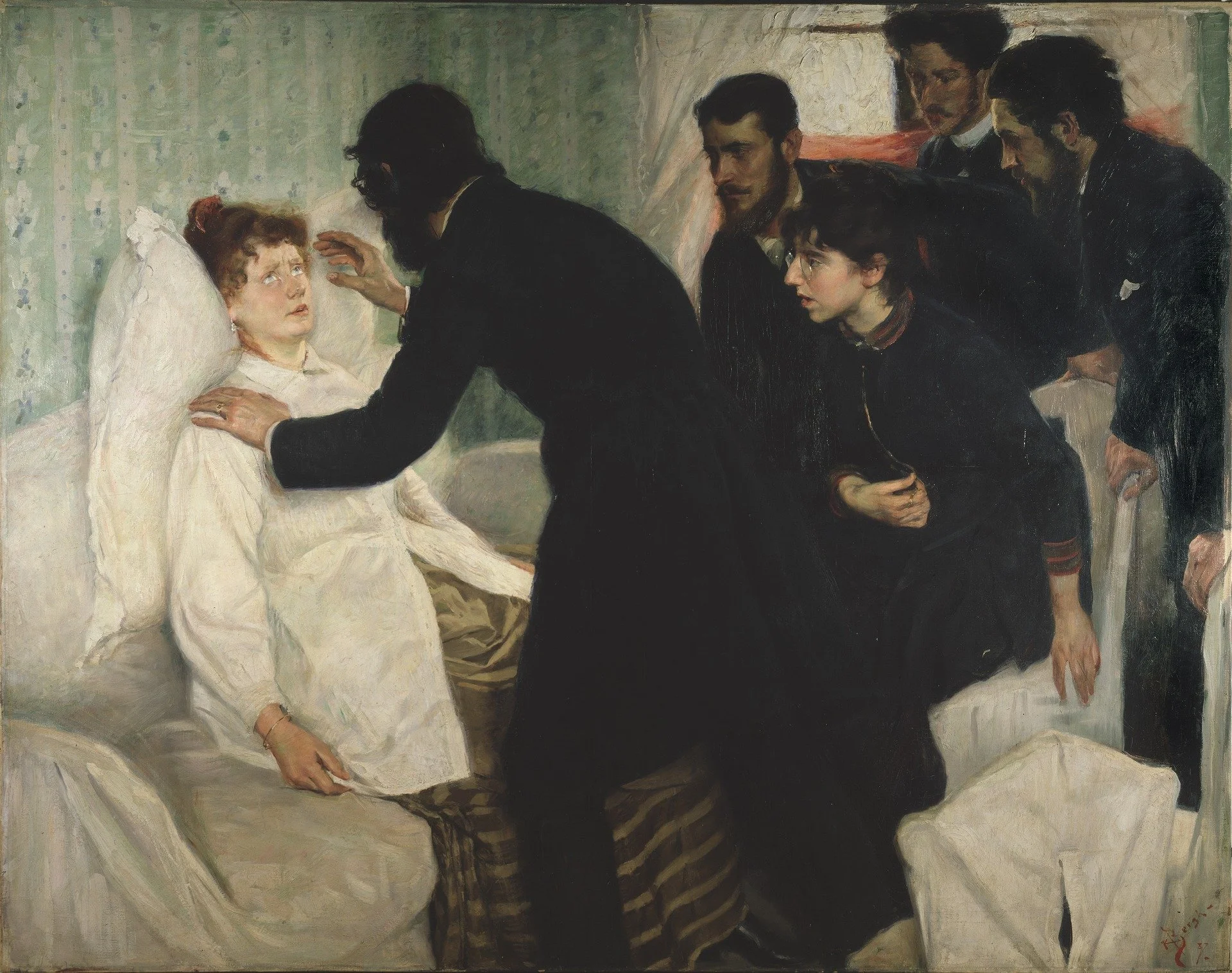
Hypnotic Séance. Painting by Richard Bergh, 1855
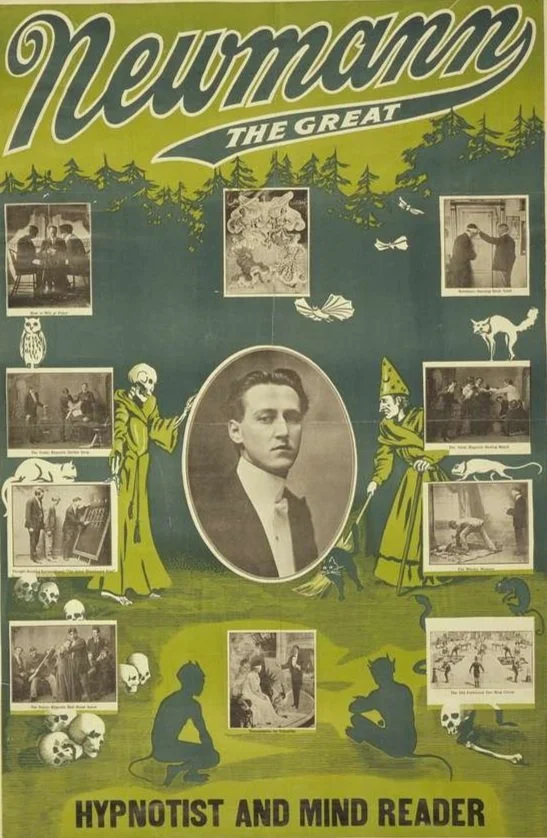
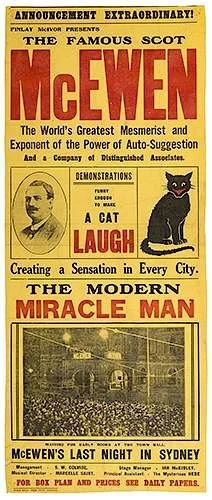
The Great Newman
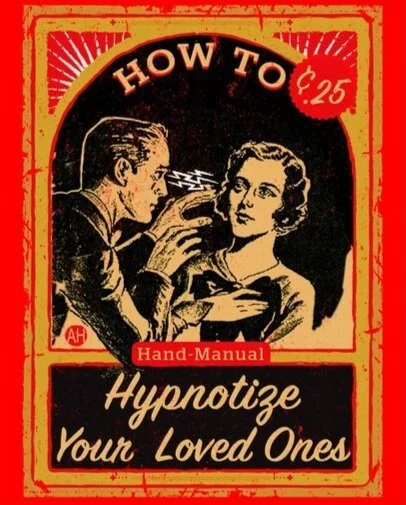
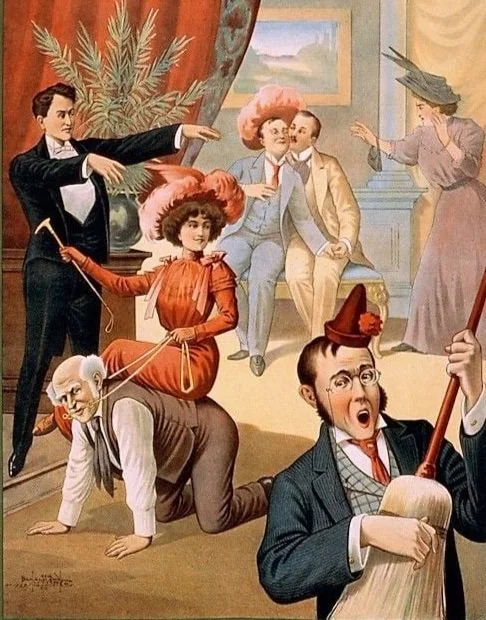
More fun from 1900
And into the 20th century, here is short silent film, Photographic Studies in Hypnosis, Abnormal Psychology (1938), appearing to show how easily the mind can be persuaded under a hypnotised state:
Personally I've never undergone any kind of hypnosis. Well, as far as I know. Apart from being in a mass state of musical, lyrical dreamland. Out of curiosity, and persuaded by friends, I once attended a group session of so-called regression therapy, but my ever very active imagination gave into equally vigilant analytical scepticism. While one person in the group, apparently when ‘under', claimed they were back to a former life as a French revolutionary, and another was enjoying munching leaves during their times as a giraffe on the Serengeti, I just smiled with my eyes closed, and concluded that this was really because some people are naturally more prone to being put into a dream state.
Hypnotism can be regarded as science and a form of woolly mysticism, depending on how it is practised. Here’s the remarkably talented British entertainer, magician and hypnotist Derren Brown again, but reveals some more personal motivations to his art:
“The people who are most susceptible to hypnosis - the rugger bugger types - were also the ones who intimidated me most at school, so on an unconscious level I suppose I'm turning the tables on them.”
Irish entertainment hypnotist Keith Barry is also back in the room, explaining more that “Hypnosis is about shutting down the conscious mind and re-igniting the unconscious and the imagination, so while I give instructions to them under hypnosis, the contestants might interpret those instructions in all kinds of ways …
“There's a lot of different styles of hypnosis. There's conversational hypnosis, which, even though we joke about it, politicians use conversational hypnosis. I've been hired back at home in Ireland by certain politicians to assist them in specific language patterns that will just tip people over into their, you know, into their zone,” he adds.
But taking a more music- and writing-focused angle there’s a few creatives also in the Bar today. John Fogerty recalls how when struggling with the writing process “I was deluding myself that the song was almost not important, but I think the real thing that was happening was almost like self-hypnosis or meditation. The guitar lick was the transcendental key that unlocked my brain. It freed me. And then it all became easy. It's funny now, because I've had times when it wasn't easy.”
There’s also a few fiction writers here who also describe their work in hypnotic terms. “Writing is like being in a dream state or under self-directed hypnosis. It induces a state of recall that - while not perfect - is pretty spooky,” says Stephen King.
Martin Amis also describes the process in a parallel way: “When things are going well, you do have the sense that what you’re writing is being fed to you in some way. Auden compared writing a poem to cleaning an old piece of slate until the letters appear. The only way you could reveal your god is perhaps under hypnosis. It’s sacred and it’s secret, even to the writer.”
American historian David McCullough describes the focus to work in similar terms: “People often ask me if I'm working on a book. That's not how I feel. I feel like I work in a book. It's like putting myself under a spell. And this spell, if you will, is so real to me that if I have to leave my work for a few days, I have to work myself back into the spell when I come back. It's almost like hypnosis.”
And here’s Alan Moore more about the intended effect on the reader: “As I see it, a successful story of any kind should be almost like hypnosis: You fascinate the reader with your first sentence, draw them in further with your second sentence and have them in a mild trance by the third. Then, being careful not to wake them, you carry them away up the back alley of your narrative and when they are hopelessly lost within the story, having surrendered themselves to it, you do them terrible violence with a softball bag and then lead them whimpering to the exit on the last page. Believe me, they'll thank you for it.”
It seems appropriate to end, as we started, to enjoy a bit more of Shakespeare’s The Tempest, with a speech by Caliban with a musical context, from the play that is all about being in a state of hypnosis, centuries before that term was coined:
“Be not afeard; the isle is full of noises,
Sounds, and sweet airs, that give delight and hurt not.
Sometimes a thousand twangling instruments
Will hum about mine ears; and sometime voices,
That, if I then had waked after long sleep,
Will make me sleep again: and then, in dreaming,
The clouds methought would open, and show riches
Ready to drop upon me; that, when I waked,
I cried to dream again.”
So then, it’s time to click fingers, count numbers, or climb down metaphorical steps into the mind library of your own musical recollections and ideas, whether that be about hypnosis itself, the hypnotic, the hypnotisers or the hypnotised. But who will swing this week’s watch? It’s the sharp, sensitive, and always vigilant VikingChild! Over to you then, with your inspiration, and suggestions (they are not subliminally suggested here) of songs on this subject in comments below, for deadline on Monday 11pm UK time for playlists published next week. Back in the room!
New to comment? It is quick and easy. You just need to login to Disqus once. All is explained in About/FAQs ...
Fancy a turn behind the pumps at The Song Bar? Care to choose a playlist from songs nominated and write something about it? Then feel free to contact The Song Bar here, or try the usual email address. Also please follow us social media: Song Bar X, Song Bar Facebook. Song Bar YouTube, and Song Bar Instagram. Please subscribe, follow and share.
Song Bar is non-profit and is simply about sharing great music. We don’t do clickbait or advertisements. Please make any donation to help keep the Bar running.