
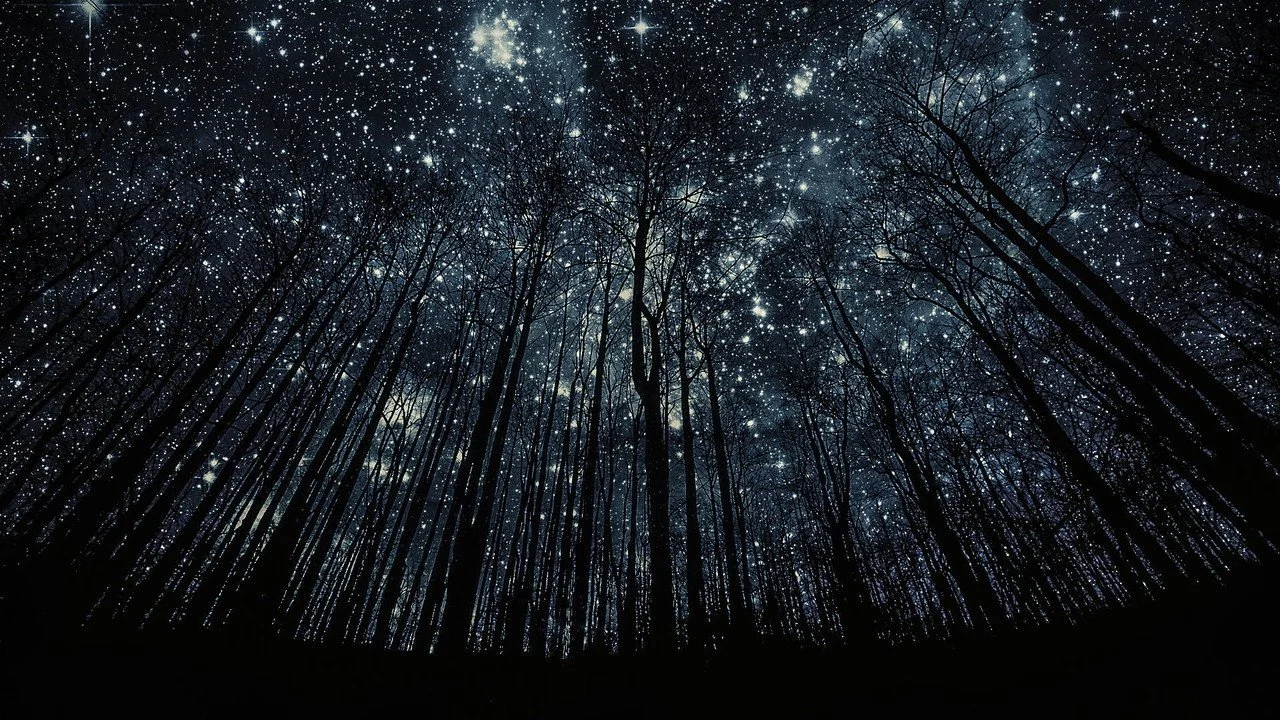
By The Landlord
“Creativity - like human life itself - begins in darkness.” – Julia Cameron
“Character, like a photograph, develops in darkness.” – Yousuf Karsh
“Darkness is to space what silence is to sound, i.e., the interval.” – Marshall McLuhan
“The darkness, the loop of negative thoughts on repeat, clamours and interferes with the music I hear in my head.” – Lady Gaga
“Knowing your own darkness is the best method for dealing with the darknesses of other people.” – Carl Jung
“All I know is a door into the dark …” – Seamus Heaney, The Forge
“I am terrified by this dark thing
That sleeps in me;
All day I feel its soft, feathery turnings, its malignity.” ― Sylvia Plath, Ariel
“I am a forest, and a night of dark trees: but he who is not afraid of my darkness, will find banks full of roses under my cypresses.” ― Friedrich Nietzsche, Thus Spoke Zarathustra
“I am going into the darkness of the darkness for ever.” – Dylan Thomas
“There must be darkness to see the stars.” – Ursula K. Le Guin, The Farthest Shore
“His was an impenetrable darkness. I looked at him as you peer down at a man who is lying at the bottom of a precipice where the sun never shines.” ― Joseph Conrad, Heart of Darkness
“Stars, hide your fires; Let not light see my black and deep desires.” – William Shakespeare, Macbeth
“What's a song? A thing begot within a pair of minutes, thereabout, a lump bred up in darkness.” – Thomas Kyd, The Spanish Tragedy
“It cannot be seen, cannot be felt,
Cannot be heard, cannot be smelt,
It lies behind stars and under hills,
And empty holes it fills,
It comes first and follows after,
Ends life, kills laughter.” ― J.R.R. Tolkien, The Hobbit
Darkness, in the height of summer? Sometimes you have to think counterintuitively. It’s a tool of creativity. And while in the northern-western hemisphere, light currently lingers until 9pm, 10pm, or for some, even later, then in the early dawn it rudely might reappear at 4.30am when some extra eye–kindness would be welcome for sleep, there are of course other reasons why this topic may be timely with contrasting tones. Darkness has a huge spectrum of associations – positive and negative.
In the news, is of course the shocking proliferation of pure evil across the world especially in the Middle East, or further murky scandals coming out of the black about a certain president. Then also of course, in another context entirely, earlier this week, the sad, but inevitable passing of that comedy-tragedy ‘Prince of Darkness’ heavy metal hero Ozzy Osbourne.
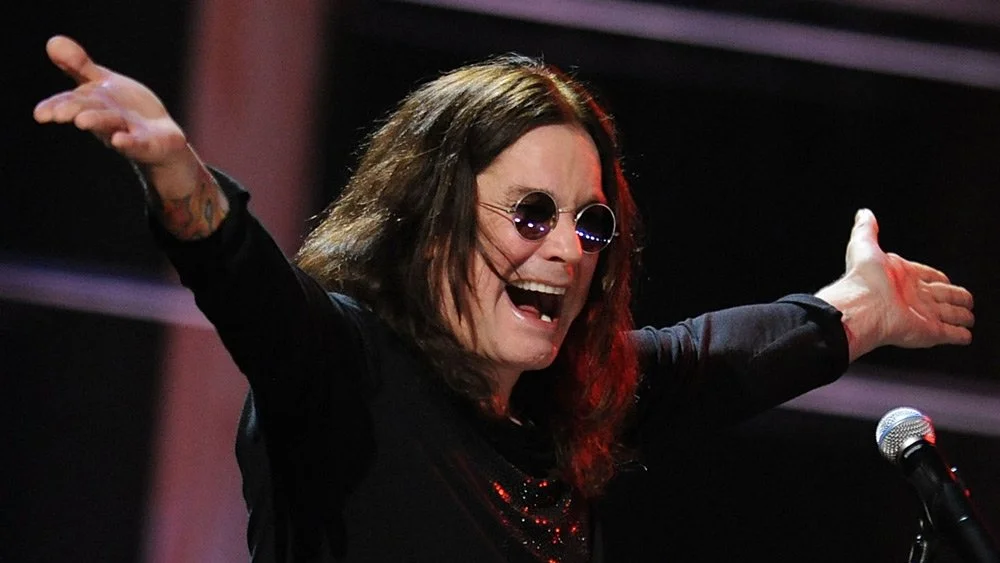
Ozzy, RIP.
Another association with darkness at this time of year for me personally always comes on a lighter note, with a social media post by an old friend who happens to be a clever, darkly humorous writer. Now something of an institution for many mates, and a post you can set your watch by – it always arrives first thing on 22nd June, just after the year’s longest day, over the hump of the summer solstice. Accompanied sometimes by a downbeat cartoon it’s a simple phrase: “Well, the nights are drawing in…”
But the goal this week is to capture a breadth of emotions, images and meanings of what darkness summons in our minds through song. While plenty of light-associated topics have come up, aside from shadow and night, darkness alone has, surprisingly not, so it opens up rich, dark fertile soil for our imaginations. What lurks there? Is it the unknown, fear, cold, death, or evil, or depending on your mood, safety, warmth, protection? Perhaps its a black hole which swallows up all light. Perhaps it's a measure of how you may feel from one day to the next.
On the Ozzy-related front, while I never saw him perform live with Black Sabbath or under his own name, my closest experience to a comedy-horror heavy death-metal blackness experience came a few years ago at the truly alternative annual summer Supernormal Festival, a haven for alternative and underground artists held in a field somewhere in Oxfordshire. At random, and, admittedly under the influence, I wandered past a small caravan and was beckoned inside by someone dressed as a giant lizard, who must have had some special voice effect box transforming it into a rasping, sinister whisper.
Entering the very dimly lit cave-like opening, I was taken by hand into a different tall figure in a goat mask and robes, and, with death metal playing at deafeningly high volume, and under flickering red lights, I could see skulls and other Satanic paraphernalia on all the walls and ceiling. Pushed forward, I was commanded by the goat figure, who had a differently frightening voice, to kneel down, pushing me into position in front of a huge throne. Suddenly from behind it appeared a devilish figure, also masked, this time with multiple horns, clad in red and black, this time who appeared to be female. I say that because she pulled back her robes to reveal, not two, but three breasts, the middle one of which, I imagine, and could just about make out, was false (well, it was a bit rubbery). It was then squeezed by the devil’s clawed hands, squirting out what I hope and perceived was a blood-like red wine. How did I know? Because my mouth was forced onto it by said she-devil’s other hand and by her deep, terrifying voice, telling me in no uncertain terms to “Drink!”. While this went on, the death metal continued at deafening volume to a climax. It was all over a about 20 seconds later, uncoupled from that horned figure and led away, as I stumbled out of the caravan into a dizzying daylight-blinking state of bedevilled bewilderment. I wondered what had hit me. Now that’s what I call a festival entertainment experience darker than the darkest of darknesses.
So when what kind of darkness summons up in your minds? Perhaps nothing as extreme as that, and hopefully and no doubt with more nuance. There’s a shadowy cast of visitors to the Bar here too, eager to add to the spectrum of darkness. First up here are a few musicians, brought to us by the magic of time and place.
One artist who wouldn’t have been out of place in that caravan is the extraordinary Arca, who, sometimes slightly reminiscent in appearance of my caravan experience tells us: “It’s impossible to exorcise the darkness out of you. We can pretend it's not there until something bursts.”
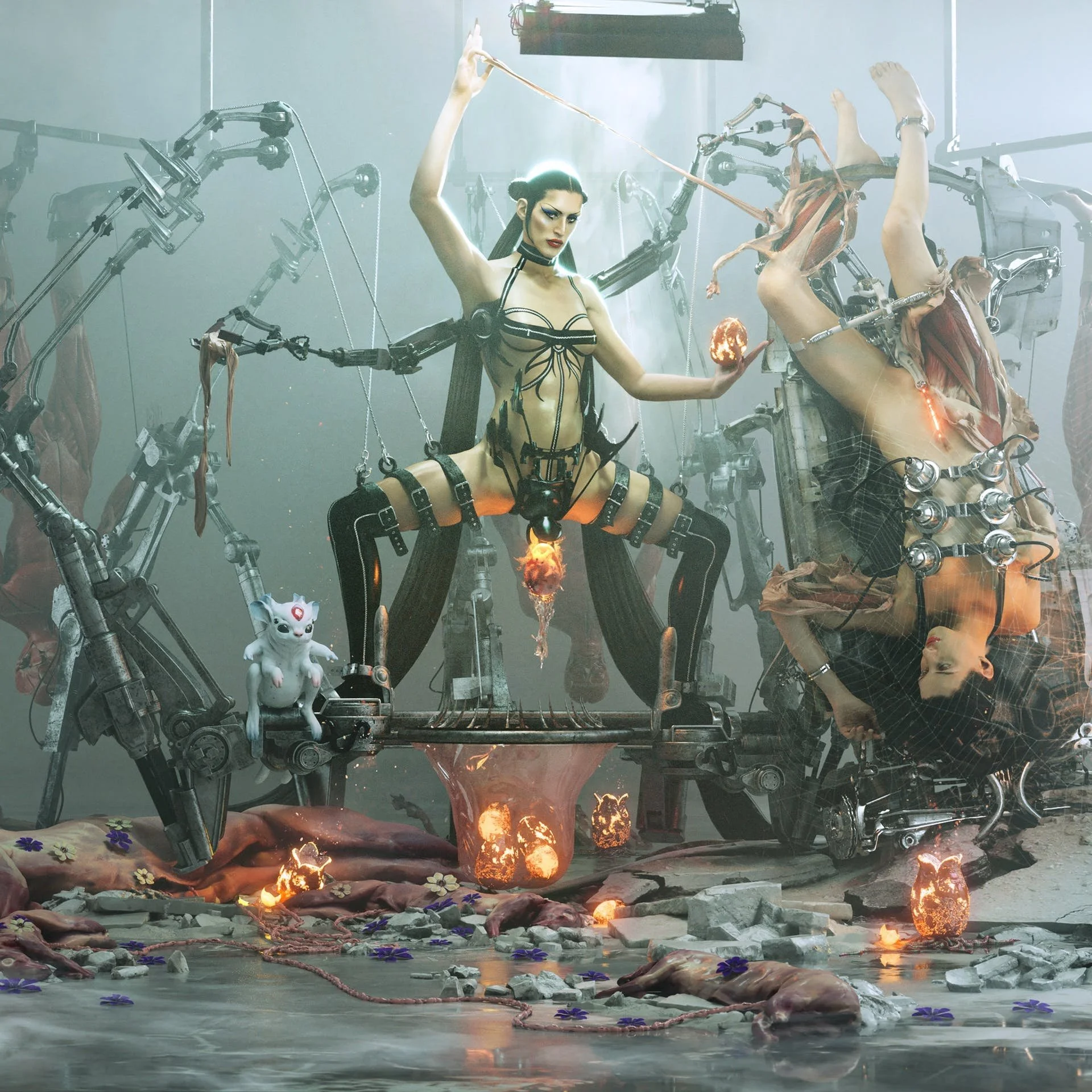
Arca
On the other end of the style scale, perhaps with his religious phase in mind, is Little Richard: “I try to be a guide for people, to make their darkness bright and to make the pathway light, and never to condemn or control or criticise.”
Jeff Buckley is also here, comparing aspects of lyric and delivery in context. “Words are really beautiful, but they're limited. Words are very male, very structured. But the voice is the netherworld, the darkness, where there's nothing to hang onto. The voice comes from a part of you that just knows and expresses and is.” There is certainly an innate, unspoken darkness to some performers, and he was certainly one of them.
Radiohead’s famously melancholy Thom Yorke discusses his oeuvre and beyond in darker contexts. “I've never believed that pop music is escapist trash. There's always a darkness in it, even amidst great pop music.” There he is then, laying down a challenge to find it.
Swedish singer-songwriter Jens Lekman always looks for a mixture: “When you're writing about difficult things and darker issues, it's nice to offer some sort of light at the end of the tunnel. Some sense of hope. Sometimes, the best way to do that is by offering it in the music, so that you can dance your way out of the darkness.”
Negative darkness is always at hand. Donald Trump’s fascist one-time aid and generally evil plotter Steve Bannon is knocking at the Bar door. “Darkness is good. Dick Cheney. Darth Vader. Satan. That's power,” he announces with a smirk. Fuck off, Bannon, you’re not welcome here.
But inevitably light must be defined by its opposite. Elizabethan philosopher and poet Francis Bacon has slipped in for a flagon of ale. “In order for the light to shine so brightly, the darkness must be present,” he announces.
Another literary figure, this time the contemporary novelist Mark Haddon, is another who tells us that some darkness is necessary: “From a good book, I want to be taken to the very edge. I want a glimpse into that outer darkness.”
And on the subject of edges, there have been few better TV dramas than the 1985 BBC drama Edge of Darkness, written by Tory Kennedy Martin and starring Bob Peck, a complex drama about undercover plots, nuclear power and corruption at the heart of more than one government.
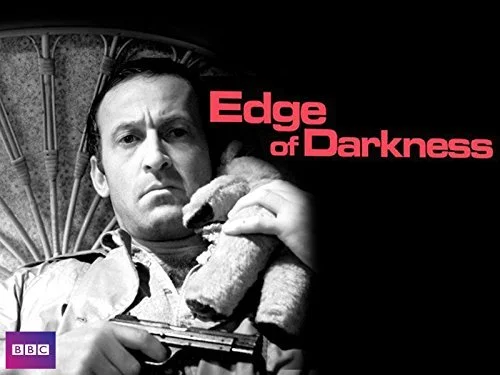
Shadowy excellent thriller, Edge of Darkness (1985)
Is darkness more prevalent where people inhabit, or in the unlit countryside? While the latter is likely to be darker, darkness may reside more powerfully in our imaginations. Song Bar Somerset Maugham is back, and reckons: “In the country the darkness of night is friendly and familiar, but in a city, with its blaze of lights, it is unnatural, hostile and menacing. It is like a monstrous vulture that hovers, biding its time.”
Elias Canetti agrees in a criminal context: “The fear of burglars is not only the fear of being robbed, but also the fear of a sudden and unexpected clutch out of the darkness.”
Let’s hear also from a few other writers who have undoubtedly inspired many songwriters likely to come up this week.
On land, Game of Thrones writer, George RR Martin, from this novel from which part of that series derives, A Dance with Dragons, describes darkness as a position of positive power. “The strongest trees are rooted in the dark places of the earth. Darkness will be your cloak, your shield, your mother's milk. Darkness will make you strong.”
Helen Keller, who lived a life mostly in darkness and silence, writes also in a positive context in her book, Optimism: “Once I knew the depth where no hope was, and darkness lay on the face of all things... But a little word from the fingers of another fell into my hand that clutched at emptiness, and my heart leaped to the rapture of living.”
Also with an oddly positive, and also creative angle, the great Irish poet Seamus Heaney brings darkness into focus in his poem Opened Ground:
“It said, ‘Lie down
in the word-hoard, burrow
the coil and gleam
of your furrowed brain.
Compose in darkness.
Expect aurora borealis
in the long foray
but no cascade of light.”
With a different depth, Japan’s Haruki Murakami, reading from The Wind-Up Bird Chronicle, brings us a perspective of another part of our world that lies in undiscovered darkness, our oceans: “The real world is in a much darker and deeper place than this, and most of it is occupied by jellyfish and things. We just happen to to forget all that. Don't you agree? Two-thirds of earth's surface is ocean, and all we can see with the naked eye is the surface: the skin.”
Lord Byron’s powerful poem Darkness came from another part of Earth and an historic climate event. It was inspired by the eruption of Mount Tambora in Indonesia, which drastically altered the weather conditions across the world and led to 1816 being branded “the year without a summer’. The same event also led to Byron’s trip to Lake Geneva and his ghost-story writing competition, which produced Mary Shelley’s masterpiece Frankenstein. In the poem, the extermination of the sun is described like a dream, yet it was ‘no dream’ but a strange and almost sublimely terrifying reality. When you think about what is happening to our planet now, that’s very dark indeed.
“I had a dream, which was not all a dream.
The bright sun was extinguish’d, and the stars
Did wander darkling in the eternal space,
Rayless, and pathless, and the icy earth
Swung blind and blackening in the moonless air;
Morn came and went—and came, and brought no day …”
You want it even darker? That may remind you of another poet, and songwriter, but who darker than a bit more from Joseph Conrad, with that classically chilling description of the dark heart of Kurtz from his timeless novel about colonialism, Heart of Darkness:
“I saw on that ivory face the expression of sombre pride, of ruthless power, of craven terror--of an intense and hopeless despair. Did he live his life again in every detail of desire, temptation, and surrender during that supreme moment of complete knowledge? He cried in a whisper at some image, at some vision--he cried out twice, a cry that was no more than a breath:
‘The horror! The horror!’”
It’s a vast subject, rich and varied, full of contexts and moods, but now it’s time for you, learned readers to suggest songs on this topic. Please add a brief description or lyrical excerpt with your nominations. This week’s friendly prince of darkness helping shed light on your nominations is the ever perceptive ParaMhor! Deadline for nominations is 11pm UK time (and after dark) on Monday, for playlists published next week. Blink and you’ll miss it. Maybe keep your eyes, and ears, open …
Which darkness songs are lurking in your imaginations and collections?
New to comment? It is quick and easy. You just need to login to Disqus once. All is explained in About/FAQs ...
Fancy a turn behind the pumps at The Song Bar? Care to choose a playlist from songs nominated and write something about it? Then feel free to contact The Song Bar here, or try the usual email address. Also please follow us social media: Song Bar X, Song Bar Facebook. Song Bar YouTube, and Song Bar Instagram. Please subscribe, follow and share.
Song Bar is non-profit and is simply about sharing great music. We don’t do clickbait or advertisements. Please make any donation to help keep the Bar running.