
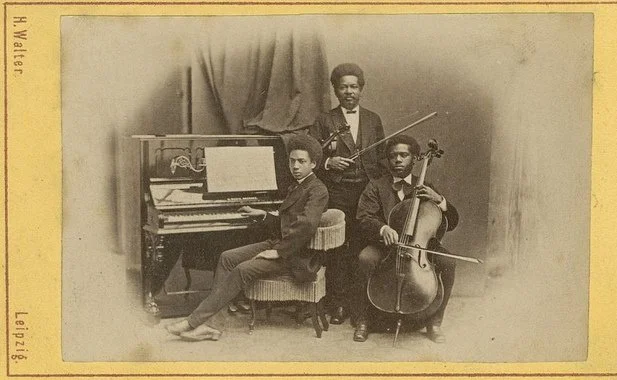
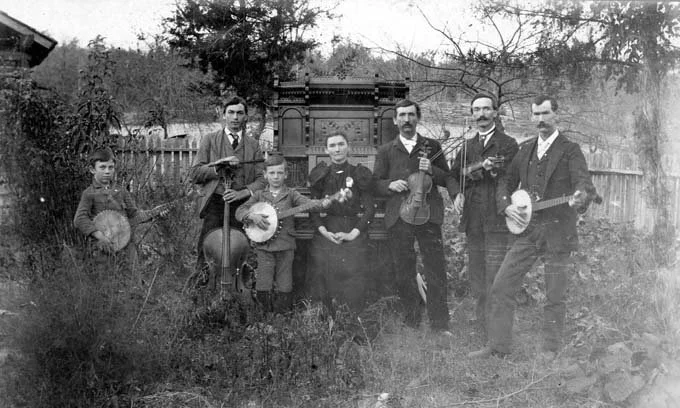
Travelling Gill family band, Missouri 1890

Adelaide Boys band, New South Wales, 1937
By The Landlord
“Don't play what's there, play what's not there.” – Miles Davis
“I wouldn't want to cover a Hank Williams song in a country-western way. It doesn't occur to me instinctually to re-create productions. I'm interested in recreating songs. Putting different clothes on them.” – M. Ward
“They're singing your praises while stealing your phrases.” – Charles Mingus
“The real innovators did their innovating by just being themselves.” – Count Basie
“When I find a cover song that I like, I'll work away at it until I kind of believe that I wrote it.” – Nick Lowe
“Why do they cover Paul's songs but never mine?” – Yoko Ono
It's a trend that rises and falls in popularity in the industry, but never fades away. Musicians have always covered songs, whether in pre-recording days, and all forms of traditional, folk or classical up to the 19th century; emerging first releases of jazz and blues to the spread of popular song in the early to mid 20th century; then exploding into the 1950s with rock'n'roll and pop, and subsequently flooding out into multiple genres. Then the 21st century saw the return of TV talent shows and the exponential growth of online platforms such as YouTube, awash with wannabe young musicians developing and airing their talents in the hope of making it big, some achieving immense commercial, if not creative success.
It's all become so much easier. Online resources are readily available with chord websites and videos, with cover versions are not just a learning tool, but a platform for exposure.
Yet the cover has been useful way in for budding stars for a very long time. Many of the most famous artists had their first commercial success with a cover version, whether that those during a big a covers era – Elvis Presley doing Big Mama Thornton’s Hound Dog, or Bill Haley doing Big Joe Turner's Shake, Rattle and Roll, or Jerry Lee Lewis slamming on his piano to Big Maybelle's Whole Lotta Shakin’ Going On, all within a couple of years of the originals. The same pattern occurred in the blossoming careers of the major pop and rock songwriter performers. The first releases by The Beatles, The Rolling Stones, and even Bob Dylan were mostly covers. In some cases it was cultural appropriation, or vigorous, market forces opportunism as well as other factors, and whether originality or cross-cultural is open to argument. But there's always something key about a cover version – it's driven by a love of the original.
So after last week's lake and watercourse theme, this week we're opening new musical floodgates, this time seeking cover versions that cross into a new genre, nationality language or express another cultural switch. They must therefore be markedly different from the originals. Covers are inevitably a topic looked at in the playlist-creating past, from unlikely covers, those that are regarded as better than the originals, and the most recent, but still almost nine years ago here at the Bar, covers performed by the opposite sex, resulting in these splendid selections. Some of those may overlap, but this time the transition is wider, often across borders, and certainly always into new musical territory.
But what is it about a song that inspires a cover, and makes it successfully travel or transition? That might be a memorable, inspiring lyrical phrase with international appeal, but most likely of all it will be a melody that simply strikes a chord in the soul, a tune or riff sung or played, that sings out with some universal human appeal well beyond borders and languages.
Your suggestions don't necessarily need to have travelled internationally or to another language, but should be performed with a cultural crossover. Bluegrass, country or folk versions of death metal? Why not? African interpretations of glam rock? Go for it. Jazz improvisation of classical pieces or hip hop? Traditional Japanese interpretations of blues standards? Of course. You get my drift.
It's the mess-around that sparks creativity. Tribute bands are fun, but a straight cover, surely, offers nothing. I've personally dabbled in lots of playful, tongue-in-cheek cover band performances, and the rule with my fellow band members is that it should always be different to the original. I've done a post-punk version of the theme song from the Morecambe and Wise Show - Bring Me Sunshine (it was even mischievously aired, some years ago on BBC Radio 1), a Slade-style version of the disco classic I'm So Excited (originally by The Pointer Sisters), a gypsy-klezmer version of Kraftwerk's The Model, and Irving Berlin's Steppin’ Out With My Baby, popularised by Fred Astaire, but reworked in the style of Talking Heads. No, I'm not going to post them here.
There's no shortage of cover versions to discover. It's impossible to know exactly how many, but it's estimated that roughly 4 million new songs, or recordings of songs are uploaded to streaming platforms every year. And perhaps 10 percent, maybe many more of these may be covers, not including the many that also sample or are heavily influenced or borrowing from existing works.
Successful YouTubers of the 21st century have made full use of the technology available. Here is one, Texas's Austin Mahone, of whom until today of I’ve barely been aware, and is perhaps unlikely to meet the cross-cultural criteria of this week's topic, but their candid, targeted approach shows how pervasive and easy it has become:
“I would go on the iTunes chart and see the hottest songs, then I'd cover them. People would go on YouTube and search for those songs. That's how I got my views. I'd post two or three songs a week.”
Yet you, the always learned readers of Song Bar, will no doubt unearth many far more interesting gems from your collections. But there are some very useful resources out there, including well sites such as Discogs, Cover.info, and Secondhandsongs.com, the last of which reveals some fascinating data about cover versions.
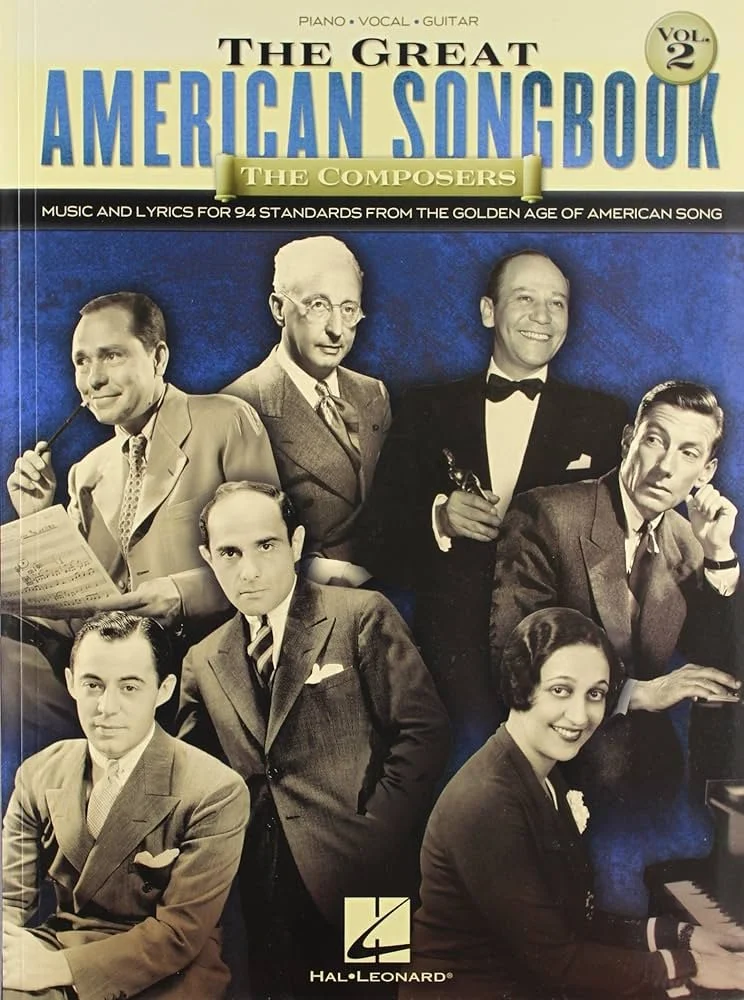
Popularly covered …
Which songs are the most covered in history? Commercial opportunity has made Christmas numbers continuously high up, with secondhandsongs.com listing in its top three of all time, the at number 1, the carol Silent Night, or Still Nacht, Heilige Nacht by Joseph Mohr and Hans Gruber, and at 3, Irving Berlin's White Christmas (originally sung by Bing Crosby). But flooding the tops of the covers data charts, even in recent years are many others by the great songwriters of the early 20th century, especially, at no 2, Summertime by Ira and George Gershwin, as well as My Funny Valentine by Richard Rodgers and Lorenz Hart, Over the Rainbow by Harold Arlen and EY Harburg, Night and Day by Cole Porter and of more relative recent vintage, with hundreds of covers, Hallelujah by Leonard Cohen. Much more can be perused here and there are some surprises too.
But I've no doubt that whatever is unearthed from the streams this week will not be obvious. Songs have travelled down through the stream of history in all sorts of evolutionary states. But as a sweeter, and as it's a warm day, I decided to have an oblique look at the among the most jingly-jangly type of cover versions out there, the sort of tune you might hear from an ice-cream van. Here is a countdown list:
There are others of course, including the ‘Just One Cornetto’ tune, an appropriation of the operatic aria O Sole Mio, by Eduardo di Capua and Alfredo Mazzucchi commonly heard in the UK echoing a TV ad campaign. But on this YouTube list, made in the US, and also perhaps reflecting ice cream vans around the world, the most popular tune is Turkey in the Straw. This song, however, has very dubious origins, gaining popularity in the 1830s, and with claimed authorship by the 19th century singer and performer George Washington Dixon who popularised the song, as well as Bob Farrell and George Nicholls, it comes from the minstrel shows of the time. The tune may have come from and Irish/Scottish/English ballad, The Old Rose Tree or the folk songs, but Turkey In the Straw was originally called Zip Coon or Old Zip Coon, and referred to a figure who is a freed slave, but with many racist overtones.
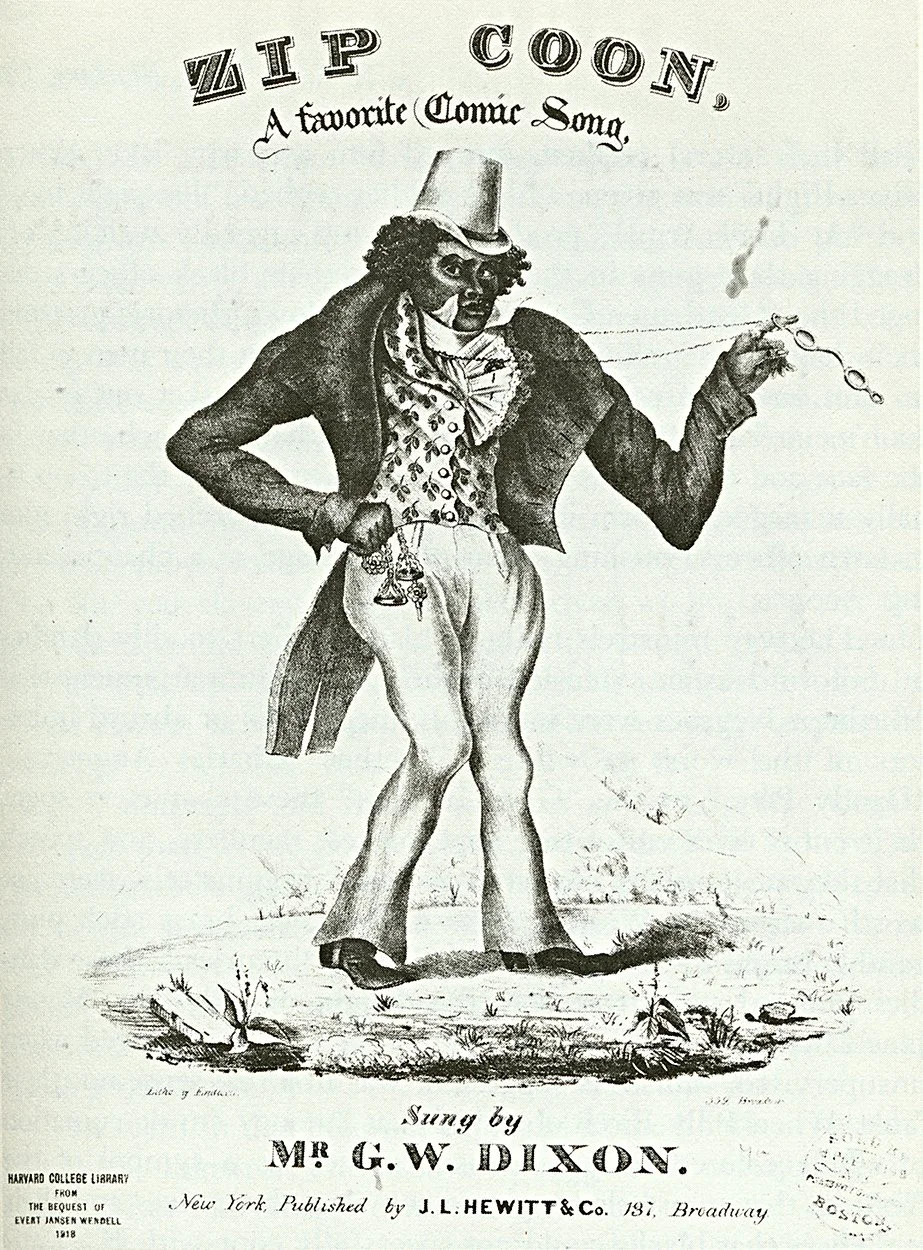
The world’s most popular ice cream jingle derives from a very dodgy song …
The song was even adapted into a song called Nigger Love a Watermelon, Ha! Ha! Ha! performed by Harry C. Browne and produced by Columbia Records in 1916. Followers of British politics may recall that calamitous former Prime Minister Boris Johnson revived that stereotype with the phrase watermelon smiles in one of his newspaper columns. ‘Nuff said.
So melodies can have a rich history, and cover versions bring many meanings. An interesting twist a few years ago is that in a campaign for awareness, Wu-Tang Clan’s RZA instead wrote a new ice-cream van jingle to try and rid the streets of that old racist song:
So then, how will your covers cross over the streams of music history and geography? Steering through it all is the nimbly knowledgeable Nilpferd! Place your songs in comments below for deadline at 11pm UK time on Monday for playlists published next week. We’ve got it covered.
New to comment? It is quick and easy. You just need to login to Disqus once. All is explained in About/FAQs ...
Fancy a turn behind the pumps at The Song Bar? Care to choose a playlist from songs nominated and write something about it? Then feel free to contact The Song Bar here, or try the usual email address. Also please follow us social media: Song Bar X, Song Bar Facebook. Song Bar YouTube, and Song Bar Instagram. Please subscribe, follow and share.
Song Bar is non-profit and is simply about sharing great music. We don’t do clickbait or advertisements. Please make any donation to help keep the Bar running.