
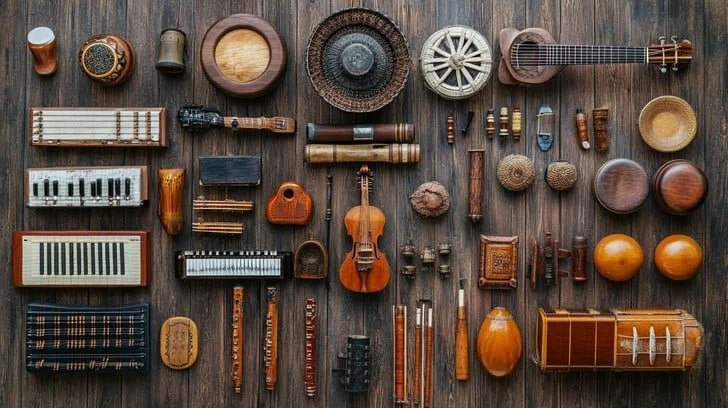
By The Landlord
“When you stand up acoustic in front of an audience, you really are a man without any clothes on. And that can be fun - it depends how much of an exhibitionist you are, I suppose. I quite enjoy it.” – Richard Thompson
“There's times to rock and roll, and I love that too. But I think my first love is acoustic music.” – Graham Nash
“When you break out the acoustic guitar, the words are the focal point unless you're the Jimi Hendrix of the acoustic guitar. So the words have to have meaning.” – Chris Cornell (Soundgarden/Audioslave)
“It's amazing what the acoustic guitar can bring to the picture.” – John Waite
“When I write a song, I always start on acoustic guitar, because that's a good test of a song, when it's really open and bare. You can often mislead yourself if you start with computers and samples and programming because you can disguise a bad song.” – Martin Gore (Depeche Mode)
“I've always been an acoustic guitar player, and I've pretty much continued to play acoustic guitar throughout all of the Sonic Youth periods. My material for Sonic Youth often started on acoustic guitar.” – Lee Ranaldo (Sonic Youth)
“I can't think of any punk who's put on an acoustic and hasn't just tried to sound like James Taylor.” – Buzz Osborne
“If you can't play it on an acoustic guitar or a grand piano then it's not a song.” – Christopher Cross
Stripped back, exposed, the bare bones, visceral, human, intimate. Sometimes the squeak of fingers sliding on strings, audible breaths and suddenly, previously unheard chords, progressions, melodies, structures, lyrics and meaning. Strangely familiar, yet strikingly different, some songs might even appear to be entirely new.
Acoustic versions of previously recorded louder, more distorted, or more complex versions of songs can sometimes be a revelation. Suddenly there is less voluminous power, and greater space, intimacy, simplicity, but intricacy, and overall, a different electricity.
So this week, we’re taking a different angle, exploring songs that have been performed and recorded anew, or perhaps even before they turned into big rock and pop numbers (or other genres) in what could be defined as acoustic, or ‘unplugged’ versions. That latter term is confusing, as unplugged performances are usually still plugged in, with pickups and amps, but are in a purer, more undistorted, and almost always quieter form.
And after all ‘acoustic versions’ are usually the kernel of a song, the place they started, written on a guitar, a piano, or other non-amplified instruments, whether they are are naturally so, such as banjo or dobro resonator, or any other instrument, with the natural sounds of wind and string and wood.
Acoustic versions this week can count in different forms - performed by the original artists, or as covers by others, as newly released recordings, or even one-off performances on stage or on radio or TV shows. As long as there’s something markedly different to the original, it’s worth putting forward.
Some perhaps are lost in time, but hopefully they are available somewhere. I’ll never forget the hairs-on-the-back-of-the-neck moment, on the night I got to see Prince, at one of his sudden guerrilla gigs in 2014, playing songs from the height of mid-80s Purple Rain pop panache period, breaking them down into their purest form, songs including When Doves Cry, suddenly become something almost folk or even bluegrass, simpler and somehow even stronger, the lyrics gaining new meaning, while his finger-picking brilliance brought greater complexity on those exposed steel strings and wooden guitar body moments after moments of astonishing unleashed acoustic joy.
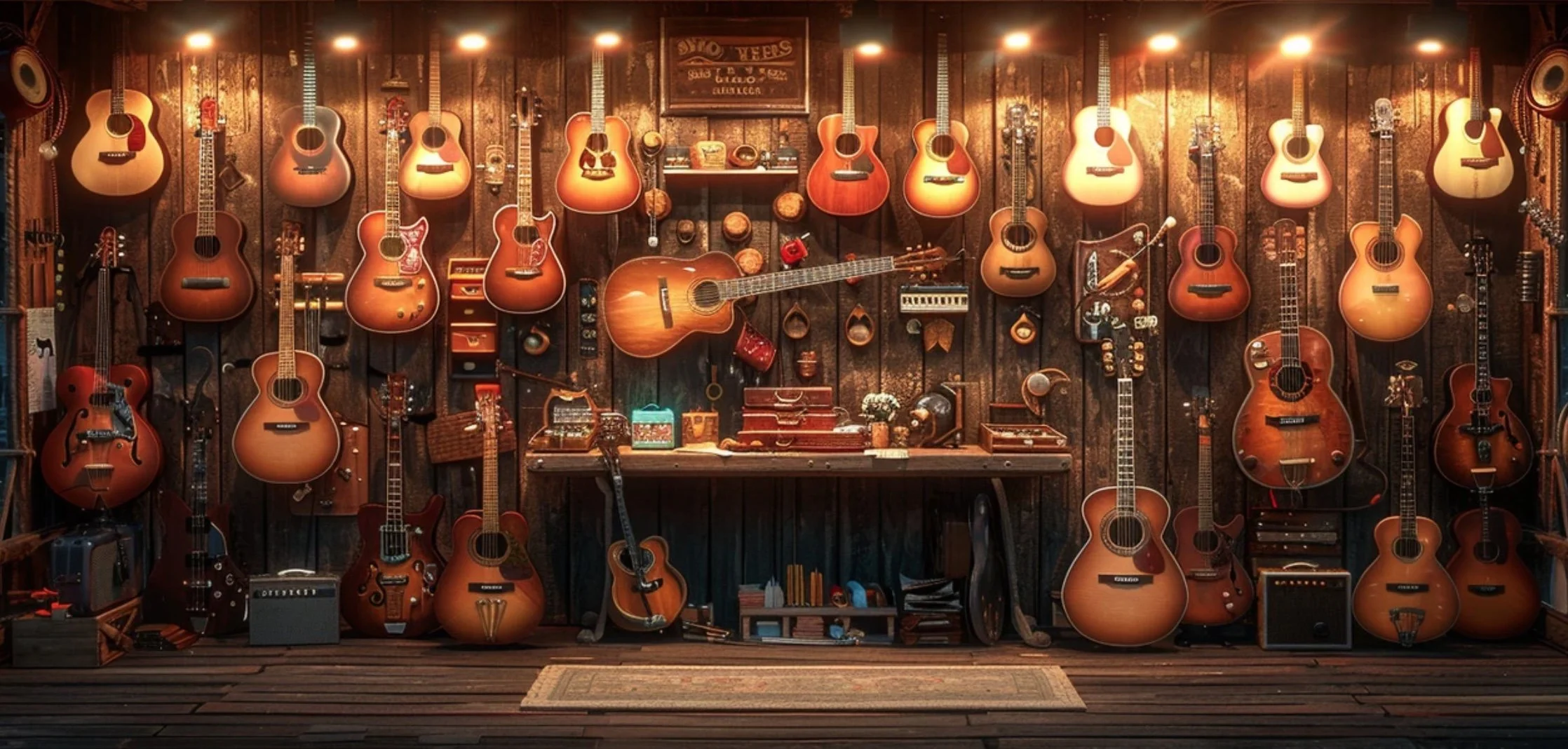
So then, gathered around our battered old piano and collection of banjos and guitars hanging up around the Bar, there are more musicians eager to enthuse about the acoustic version.
Elliott Smith is back with us, alive and well playing and singing in the corner of the bar quietly and superbly, and remarks, with a dry humoured gentle smile: “If you play acoustic guitar you're the depressed, sensitive guy.”
Richard Thompson is still around, enjoys this, and while not actually naked, joins in with his own jokes: “Yep. And stand up on a stage alone with an acoustic guitar requires bravery bordering on heroism. Bordering on insanity.”
Many also find it inspirational. The great songwriter Jerry Leiber tells us that: “My early influences, in many ways, were in Baltimore. I was passing open windows where there might be a radio playing something funky. In the summertime, sometimes there'd be a man sitting on a step, playing an acoustic guitar, playing some kind of folk blues. The seed had been planted.”
“Well, John Martyn is my biggest hero. My mom got me into his music when I was a kid. I've looked up to him more than anyone as a songwriter. And Bert Jansch is one of the pillars of acoustic music, the holy grail,” says Ben Howard.
Blur’s Graham Coxon is hanging out too, showing off his “little Martin acoustic guitar. It’s quickly becoming a prize possession. It's a lovely guitar. I bought it at the Cambridge Folk Festival in 2001.”
Fleetwood Mac’s Lindsey Buckingham is also here: “My foundation is acoustic guitar, and it is finger-picking and all of that and sort of an orchestral style of playing. Lead guitar came later, more out of the necessity to do so because of expectations in a particular situation.”
Few artists write songs without the aid, and foundation of an acoustic instrument. Even the wildly complex work of electronic American artist Oneohtrix Point Never, aka Daniel Lopatin, reveals that “the way I think about things or hear things in my head is actually much closer to acoustic instruments. I don't have weird synthesized fantasy of music in my head.”
Dweezil Zappa is also hanging out, thinking about the complexities of riffs and sections, channelling no doubt the influence of dad Frank, and yet “the reality is when you write a song, you should be able to strip away all the instruments and just have a song right there with an acoustic guitar and a voice, and the song should be good.”
Tom Petty is here too: “I tend to write on an acoustic guitar or the piano. I have kind of a rule: if I can't sit down and play this and get the song over, I don't take it to the band, because most any good song, you can sit down and deliver it with a piano or a guitar.”
Peter Frampton agrees: “Most of everything I've ever written actually was written on acoustic. 'Do You Feel' was written on electric. 'I'm in You' was written on piano.”
Joe Bonamassa meanwhile is keen to compare the difference in soloing without an electric: “The first thing you realise very quickly when you decide to do an acoustic version of an electric song is your solo either becomes either very truncated, very different, or non-existent, because even if you play a clean solo, it's different with the Kryptonite... with the acoustic.”
And lastly, here’s Bar regular Mark Knopfler, pointing out that it’s changing instruments that can bring new creativity: “If you feel that you're not getting enough out of a song, change the instrument - go from an acoustic to an electric or vice versa, or try an open tuning. Do something to shake it up.”
So then, it’s time to shake things up here, whether that be with maracas, tambourines, or any other acoustic instruments. Hip-hop or hardcore or house on the harp or harpsichord, anyone? Disco on the dobro? Heavy metal on the mandolin? Breakbeat or Britpop on the upright bass? You get the idea.
This week’s acoustic aficionado is the excellently everywhere Loud Atlas! Place your acoustic version song suggestions in comments below for deadline at 11pm on Monday UK time for playlists publishing next week. For handy comparison, please also post links to the original with or just below your nomination. Now, unplug and play!
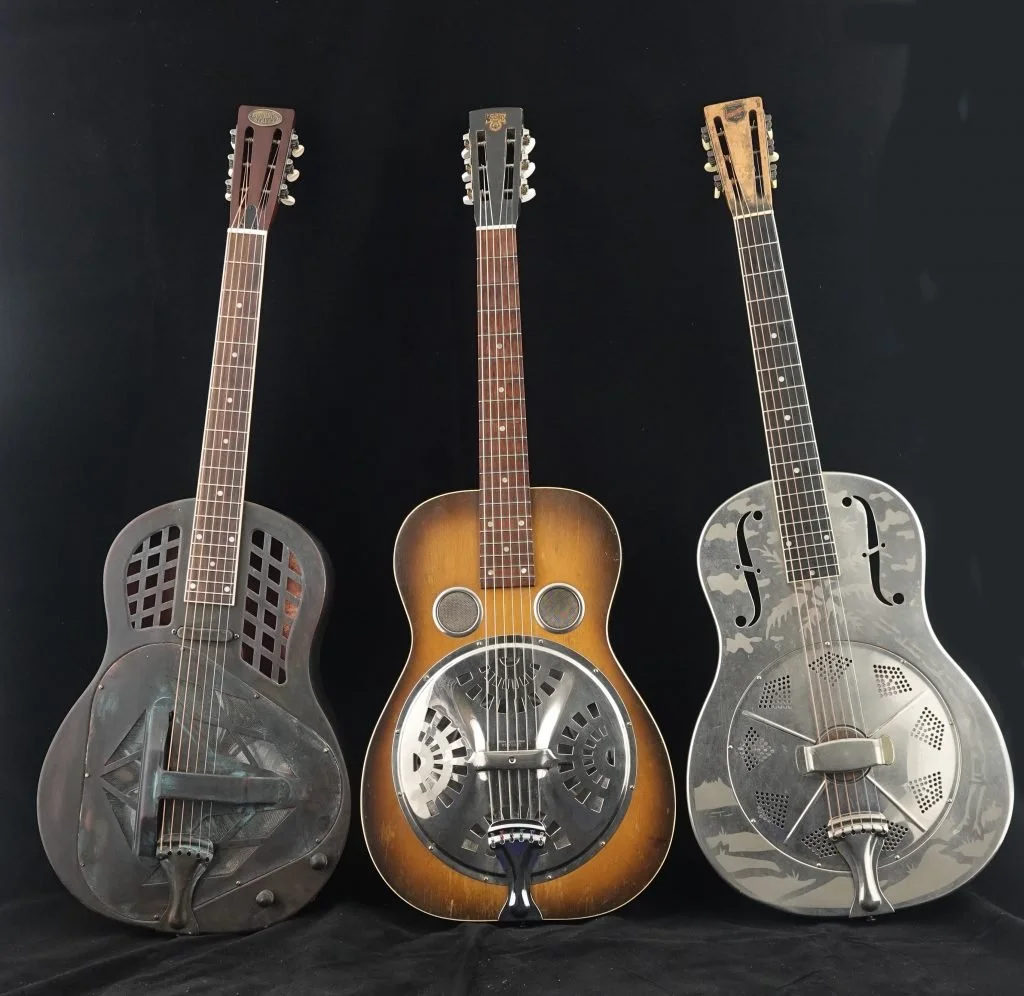
Resonators made variously with wood and metal
New to comment? It is quick and easy. You just need to login to Disqus once. All is explained in About/FAQs ...
Fancy a turn behind the pumps at The Song Bar? Care to choose a playlist from songs nominated and write something about it? Then feel free to contact The Song Bar here, or try the usual email address. Also please follow us social media: Song Bar X, Song Bar Facebook. Song Bar YouTube, and Song Bar Instagram. Please subscribe, follow and share.
Song Bar is non-profit and is simply about sharing great music. We don’t do clickbait or advertisements. Please make any donation to help keep the Bar running.