
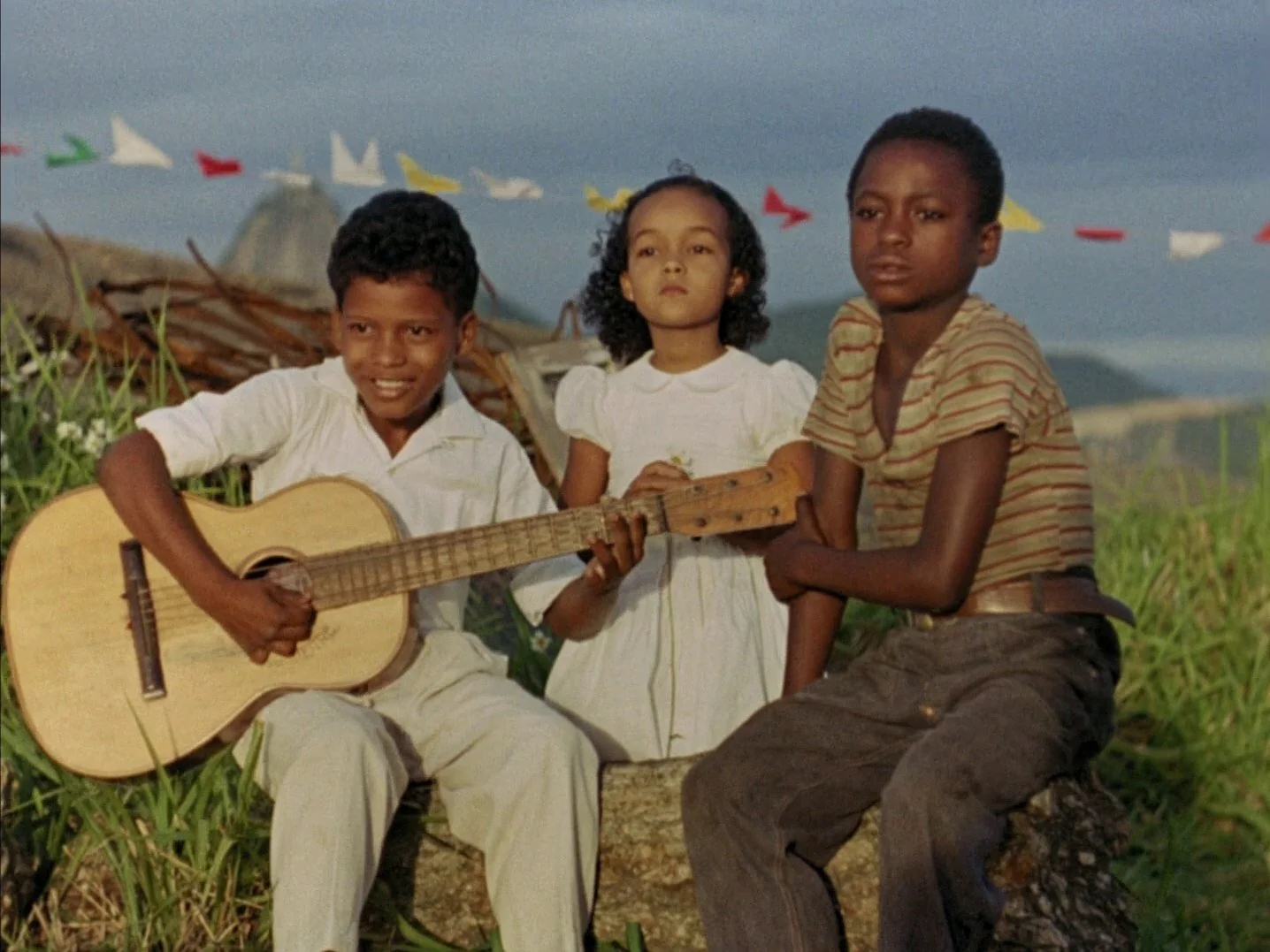
By The Landlord
“When I sing, I think of a clear, open space, and I'm going to play sound in it.” – João Gilberto:
“João Gilberto on guitar could read a newspaper and sound good.” - Miles Davis
“I love bossa nova. It's the most beautiful genre of music in the world.” - Camila Mendes
One, and two, and - one - and two and ...
It's a style, sound, and particularly a rhythm that I was probably not alone in first experiencing in its most non-authentic form – as a kitschy sample, accessed via a button on a cheap Casio keyboard. Instantly recognisable, it's a syncopated, slow, shuffle beat, with a romantic, cocktail bar sort of melody, and when artificially produced at first seems cheesy, and yet remains oddly charming. But the heart of this genre, evolved from Brazilian samba, is far from that – full of rhythmic variants, is one of cool sophistication, non-convention and elegance, with a broad spectrum of innovative chords and progressions, and also that has brought enormous influence over all sorts of other music around the world.
Hot nights? Sizzling summer? The story of its origins begins on a seaty backstreet in Rio de Janeiro…
Emerging in the 1950s, it is thought to have emerged and evolved in the bars of a bairro of Copacabana, specifically down in a small, dead end alley of Beco das Garrafas (Alley of the Bottles). Here, down these 'clubes', accompanied by singers, guitar playing styles simplified and stylised the rhythm produced by a samba school band, replacing the beat of the surdo with the lower string on th thumb while the index, middle and ring fingers phrased the part of the tamborim.
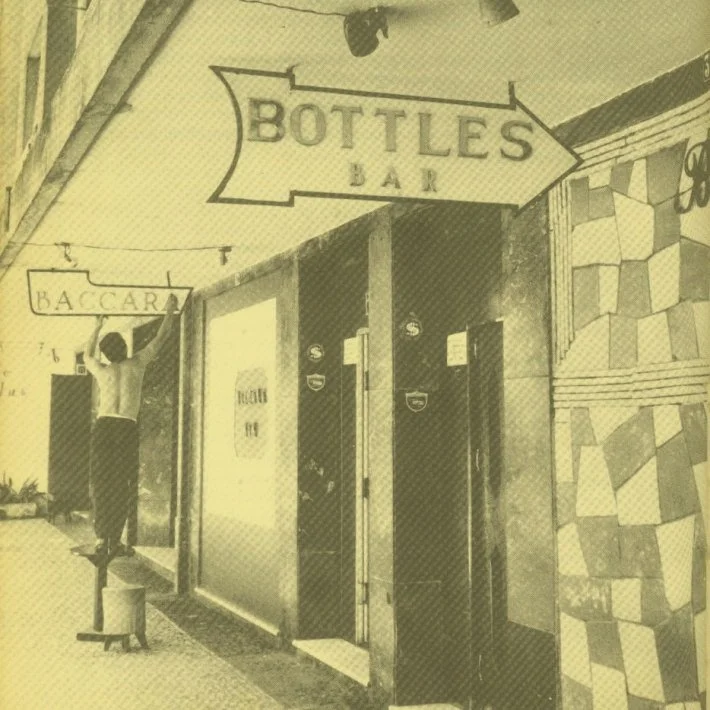
Beco das Garrafas
The term bossa, old-fashioned slang for something done with charm, was first coined in 1932 in a musical context by Rio singer-songwriter Noel Rosa, who himself gave traditional samba a new urban twist with his group Bando de Tangarás. As he put it: "O samba, a prontidão e outras bossas são nossas coisas, são coisas nossas." (Samba, readiness and other bossas are our things, are things from us.)
But as the phrase bossa nova, it translates literally as "new trend" or "new wave" in Portuguese, and by the 1950s it was commonly used to indicate a skill for playing with an idiosyncratic charm. Among the key exponents emerging were Tom Jobim (with lyrics by the poet Vinícius de Moraes), but particularly Jobim's friend and collaborator João Gilberto, who was actually born in Juazeiro in the semi-arid Sertão region of Bahia, but with his guitar-playing finesse and innovation, is considered the true father of bossa nova.
One early key song was Desafinado (meaning, amusingly 'out of tune' or 'off key’), often sweetly and intimately sung, even whispered, and famously later coveeed. Jobim and Gilberto were joined by the singer Elizeth Cardoso and in 1968 recorded the album Canção do Amor Demais, considered a foundation work of bossa nova. But it was especially Gilberto's release of the 1959 album Chega de Saudade, with the title track and Bim Bom, in which bossa nova was truly born.
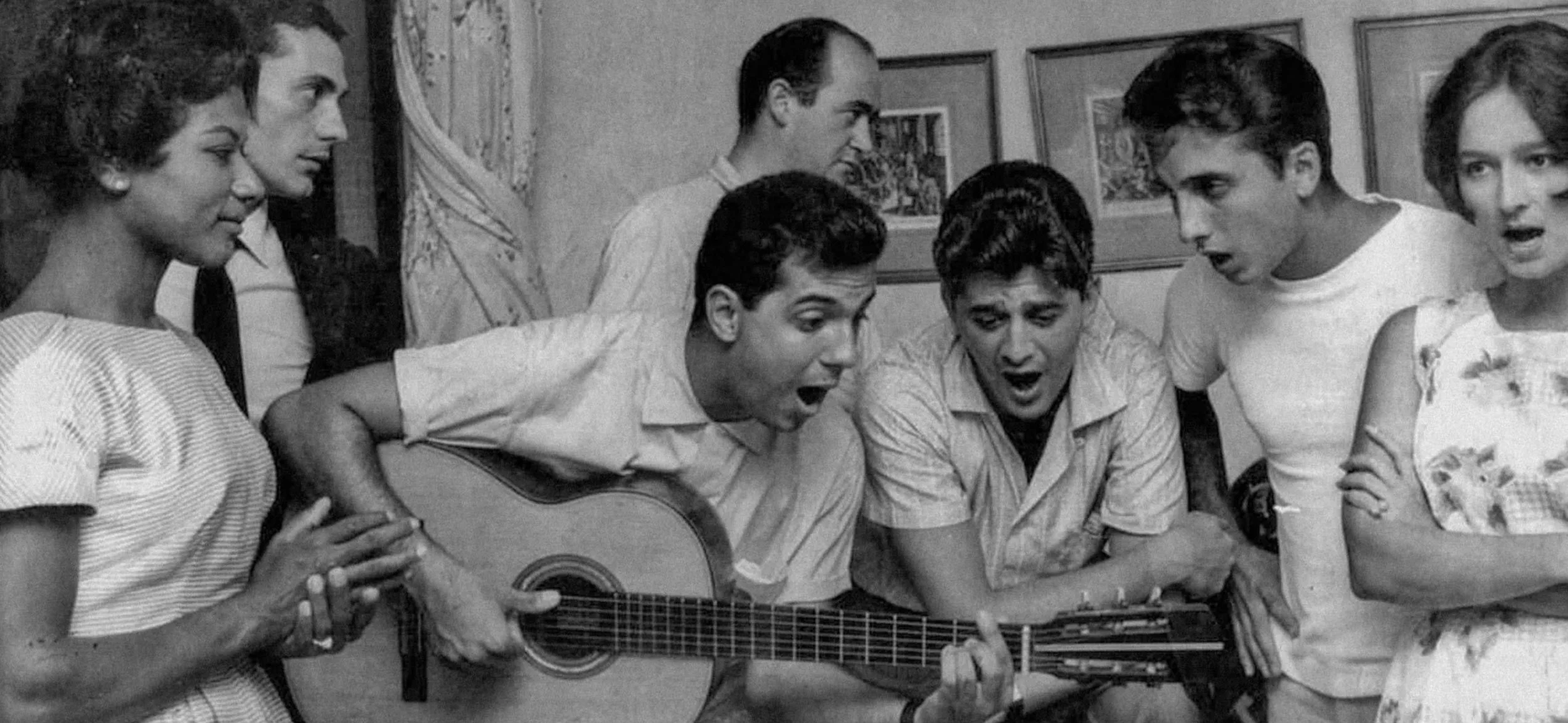
João Gilberto and friends in the early days of bossa nova
One of the lesser heralded heroes, or indeed heroines of bossa nova at that time is Brazilian singer-songwriter Alaíde Costa, seen here in on the left in this lively, joyous scene with Gilberto and friends above, but whose input was also vital to its development
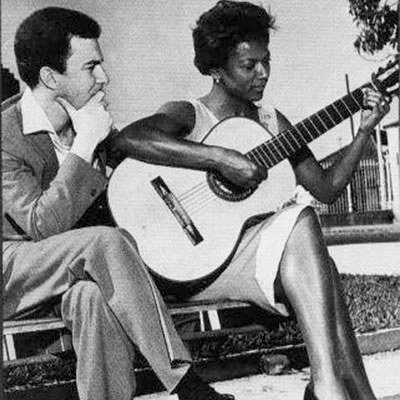
Alaíde Costa
But 1959 was a hot year for all sorts of music, including of course, rock'n'roll. Jazz in particular was undergoing all kinds of innovations with some landmark releases, but it was very big for bossa nova. This music, and Brazilian culture in general, became far more widely known with the release of the Palme d'Or-winning 1959 film Black Orpheus (Orfeu Negro) directed by French director Marcel Camus but featuring a mostly Brazilian and black cast, a tragic love-triangle story, but also wonderful portrayal of a culture that dances and parties while coping with poverty, with carnival street scenes and oodles of music, including by Luis Bonfá and Tom Jobim. Here's a couple of clips in which children begin to play and dance, as well as a trailer capturing the feel of the film as a whole. One to watch in full this weekend if you have time as well as sourcing some classic bossa nova tracks.
Bossa nova simplifies and slows down samba's more complex rhythms, but it also added sophisticated jazz chords and progressions, not so much influenced by, but in parallel to jazz, and as cultures intertwined, naturally the two combined as Gilberto collaborated with others, including Stan Getz. Joining that famous saxophone, Gilberto's wife Astrud sang with a supercool style on the track The Girl Grom Ipanema ( Garota de Ipanema), a song inspiring and covered by hundreds of artists.
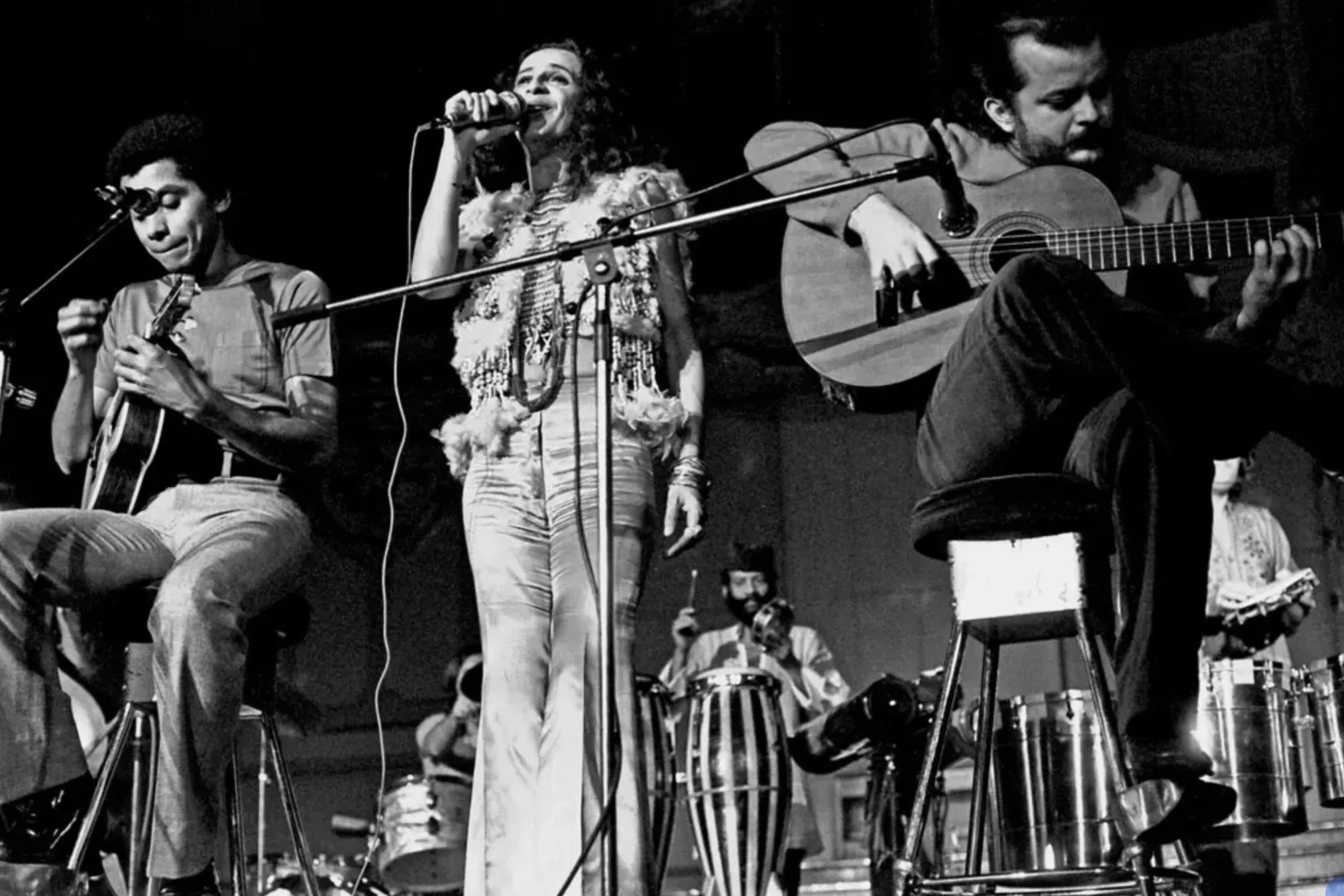
Bossa nova brings the news
Bossa nova also had a socio-political context. It had arrived during a brief period of Brazilian democracy between the early 1950s and the mid-60s, nestled in between two spells of military dictatorship. During this time, the prime minister, Juscelino Kubitschek, was a social democrat who made great strides in industry, education, health and labour rights. But that was unfortunately short-lived. Marechal Castelo Branco rise to power in the military coup of1964 hindered much of this progress, including the rise of bossa nova at the national level, because it was considered “intellectually too much to the left". Bastards! But music will always rise against authority and it flourished internationally. Many young Brazilian musicians, such as Gilberto Gil and Caetano Veloso exiled themselves spreading the style to Europe and elsewhere, with a new wave including Toquinho, Chico Buarque, Airto Moreira, Sergio Mendes, and Baden Powell.
Bossa nova had its influences from classical music, but has criss-crossed with and seeped into it, and many other genres. So part of the joy of this week's topic is to see how it can be found nestling in and influencing all sorts of styles, from pop to rock and punk, folk to jazz, hip hop, electronica, more recent dance music and beyond, from Bauhaus to Beabadoobee, Edwin Collins to Doors to Fat White Family, Grace Jones to Goat Girl, Greentea Peng to King Gizzard, Richard Hawley to Holy Fuck, Edith Piaf to Pet Shop Boys, Sade to Esperanza Spalding? You get the idea. Listen out for the rhythm and there are many gems to find from the beaches and bars of Copacabana to all around the world.
So then, it's time to start stirring your musical caipirinhas or batidas for bossa nova songs, whether traditional, or with twists, and many more that this genre has flavoured. Helping serve, inspire and gather, is this week's líder musical and perceptive boss nova, pejepeine! Please place your nominations in comments below for the deadline at 11pm UK time, for playlists published next week. Vamos tocar a música!

Let’s play on the Copacabana
New to comment? It is quick and easy. You just need to login to Disqus once. All is explained in About/FAQs ...
Fancy a turn behind the pumps at The Song Bar? Care to choose a playlist from songs nominated and write something about it? Then feel free to contact The Song Bar here, or try the usual email address. Also please follow us social media: Song Bar X, Song Bar Facebook. Song Bar YouTube, and Song Bar Instagram. Please subscribe, follow and share.
Song Bar is non-profit and is simply about sharing great music. We don’t do clickbait or advertisements. Please make any donation to help keep the Bar running.