
By Marco den Ouden
With the advent of the Scottish Enlightenment, thinkers from Thomas Hobbes to Francis Bacon to John Locke forged a revolution in thinking. In his essay What Good is Nature? (Philosophy Now, Feb/March 2015), David Dobereiner writes: “Early in the Seventeenth Century, the Enlightenment was switched on by René Descartes and Francis Bacon, and animals lost their souls and became mechanisms. Even human bodies were relegated to machine status. Existence was split in two: there were disembodied, non-material minds on the one hand, and a non-conscious physical world on the other. Minds occurred in two places only, in humans and in God.”
Nature was seen as something negative and destructive or something to be exploited. Christian theology backed this view. Humans should “Be fruitful and multiply, and fill the earth and subdue it; rule over the fish of the sea and the birds of the air and every creature that crawls upon the earth.” (Genesis 1: 27-28)
But others, starting with Jean-Jacques Rousseau, saw the state of nature as idyllic and bucolic. This inspired the English High Romantics such as the poets Coleridge, Wordsworth and Southey who saw that human nature could not be separated from the rest of the natural world. Nature is not a threat to be overcome but something to celebrate and be joyful about. As the poet William Blake put it in his poem Four Zoas:
And trees & birds & beasts & men behold their eternal joy.
Arise you little glancing wings, and sing your infant joy!
Arise and drink your bliss, for every thing that lives is holy!
This gave rise to the modern conservation movement. But the extraordinary success of the Enlightenment and its fostering of reason and science led to such spectacular success in creating material wealth, eliminating disease and poverty, and extending human lifespans, that it was a force not to be ignored or cast aside. Today we seek a via media, a path that fosters science and progress while recognizing the value of nature and the need for its preservation. A holistic philosophy best described as stewardship.
Unfortunately the ethos of stewardship has often been thrown aside in the quest to exploit nature. And the result has been something we live with today. The extinction of some species and the threatened extinction of others. The International Union for Conservation of Nature and Natural Resources (IUCN) tracks a wide and expanding range of plant and animal species and rates their vulnerability.
Tragically, as noted, many species have become extinct, either through elimination of viable habitat or predation. The most famous is the dodo, a flightless bird endemic to the island of Mauritius, first noted by Dutch sailors in 1598 and hunted to extinction between 1688 and 1715.
Glenn Jones gives us an instrumental history of The Last Passenger Pigeon. Once reputed to be the most prevalent animal on the planet with a population between three and five billion, the huge flocks of passenger pigeons were said to make daytime seem like night when they flew over. The last passenger pigeon, died on September 1, 1914, at the Cincinnati Zoo. Nominator BanazirGalbasi poignantly describes the music thus: “A long guitar meditation that starts slow then marches past like an enormous flight of birds. But the slow meditation returns as the birds all pass with no more to come, ever.”
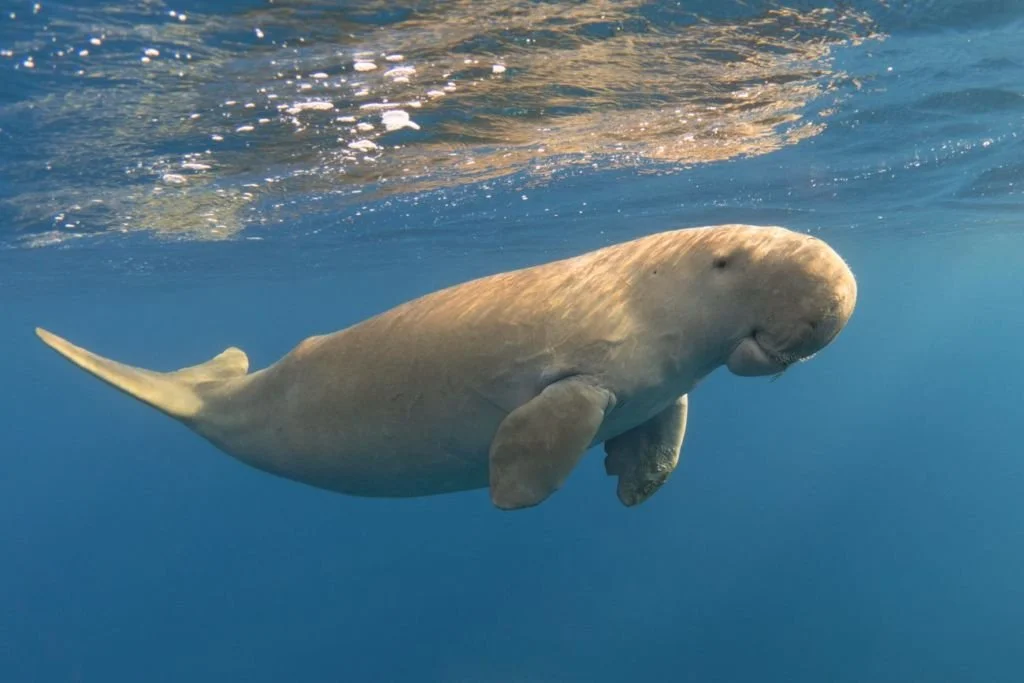
Japanese singer Kokia sings of the lament of the Dugong (rated as vulnerable by the IUCN) as it contemplates its own possible demise as so many other species have gone extinct before him. Dugong Sky (Dugong no sora) is a haunting song, beautifully rendered.
I was quite surprised that some species I thought were quite common are actually endangered. Take lions and tigers, for example. While the lion is only listed as vulnerable by the IUCN, an article at Earth.com notes that only a hundred years ago 200,000 lions roamed across Africa and Asia. Today they number only 20,000, a 90% reduction. It is extinct in at least 26 countries where it used to thrive. The lions in North Africa, suited to desert climates, have all disappeared. (Eric Rails, Are Lions Endangered? It's Complicated. Earth.com) Burning Spear sings about the Lion. “Don’t kill the lion,” he sings. “Lion have the right to live.”
As for tigers, 93% of their historic range has been erased and it is listed as endangered by IUCN. A good number of songs about tigers were nominated but I was quite enchanted by Patient Tigers by Fox, a lament hoping that one day the tigers will come back. With patience and care, they may stand a chance.
There were several songs sung from the endangered animal’s point of view. Andrew Belew offers the lament of a Lone Rhinoceros. He’s in a zoo.
I stand alone in my concrete cell
Where people stare and toss me Coke cans
I guess it's better than being poached
But I'd give my horn just to see my homeland
I am a River Dolphin sings Big Baby Driver. Five species of dolphin and six subspecies out of 41 are endangered according to the IUCN ratings. And river dolphins are more in danger than their ocean going brothers. The dolphin in the song wishes she could fly away like a bird and be free, but “I'm tied down and cry all day.”
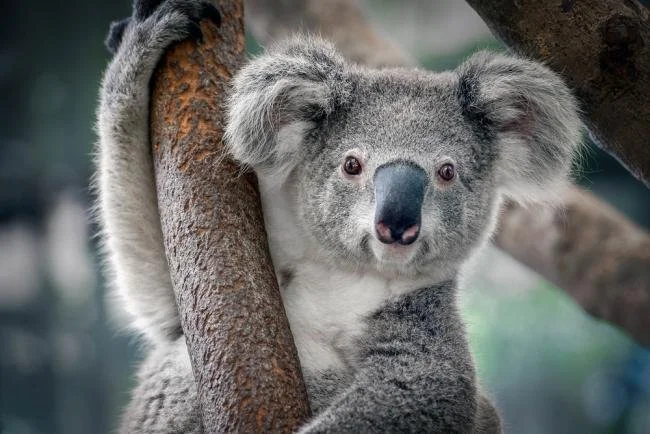
Koalas face loss of habitat
While the koala is listed as vulnerable by the IUCN, the Australian government has designated the koalas of Queensland, New South Wales and the Australian Capital Territory as endangered. Song For the Koala by Dave Norman also gives us the animal’s POV, a lament over loss of habitat.
Southeast of Australia lie the islands of New Zealand, another country with a number of species endemic to those isles. Like the extinct dodo, the kākāpō is a flightless bird made vulnerable by its lack of ability to escape predators by flying. It is listed as critically endangered by IUCN. Song for the Kakapo is an instrumental by Rob van der Touw that reflects the deep rhythmic bass tones of the mating call of the kākāpō.
I was quite surprised to learn that chimpanzees are endangered. Both the Bonobo and the common chimp are so listed. Let’s Eat Grandma sing about Chimpanzees in Canopies. An odd but enchanting ditty. “Chimpanzees swing alternately in canopies yodelling through mountain springs,” they sing.
But while many species have gone extinct and many are endangered, there are success stories. The bison was formerly rated as endangered but in 2003 was downlisted to near threatened. As many as 60 million bison had roamed North America in the mid-19th century. They were a staple for the indigenous people of the plains who sometimes harvested them by stampeding them over cliffs. The colorfully and accurately named Head Smashed In Buffalo Jump in Alberta, Canada is one such location. Today only 20,000 remain but the population is stable due to active conservation efforts. Bison have even been commercialized which has aided conservation though I have never had a bison burger myself. We had the pleasure of seeing bison in the wild at Yellowstone National Park many years ago. Japanese group Shonen Knife sing Bear Up Bison.
Pandas were considered endangered up until 2016 when they were reclassified as vulnerable by the IUCN. The government of China has been active in promoting conservation and repopulation. The panda is the official symbol of the World Wildlife Fund. But back in 1989 when they were still listed as endangered, the Jefferson Airplane sang about their plight in Panda. “Oh panda bear, my gentle friend,
I don't want to say goodbye. Oh panda bear, when will the killing end? When will we see the light?”
The hunting of whales goes back to pre-historic times and whaling as an industry reached its peak in the 19th century. It was hunted for whale oil among other byproducts, and the discovery of crude oil helped dampen the industry. But whaling continued until 1982 when the International Whaling Commission put a moratorium on whale hunting, limiting the catch allotted to each nation. The efforts of organisations such as Greenpeace and the Sea Shepherd Society brought whaling to widespread attention and today it is widely condemned. Wikipedia reports that of 86 cetacean species recognised by the International Whaling Commission, only six are listed as critically endangered, endangered, or vulnerable. Jethro Tull offers an interesting perspective on whaling in The Whaler’s Due. It’s a whaler’s lament, as he finds himself caught between a rock and a hard place. “Been accused of deep murder on the North Atlantic swell but I have three hungry children and a young wife as well.” Meanwhile Bathed in Sound is another song sung from the perspective of the animal, in this case a whale contemplating his world. Cosmo Sheldrake does the honours. Whale sounds add to the moodiness of this gentle song.
A great many of Australia’s rare and exotic species are in decline and many are considered endangered. And I was pleasantly surprised when our resident Australian Nicko suggested several songs from the Bowerbird Collective, a production house creating multimedia presentations “that tells conservation stories, with the aim of strengthening emotional connections to the natural world.” Jane Goodall is a patron and the Government of Western Australia one of its sponsors. So we end our playlist with the actual sounds of a variety of endangered Australian birds. The track is marvellously animated with drawings from Australian school children. I found Songs of Disappearance: Australian Bird Calls thoroughly enchanting.
Urgent Endangered Species A-List Playlist:
The Last Passenger Pigeon - Glenn Jones (BanazirGalbasi)
Dugong Sky (Dugong no sora) - Kokia (ajostu)
Lion - Burning Spear (Nicko)
Patient Tigers - Fox (severin)
Lone Rhinoceros - Andrew Belew (PAF!)
I am a River Dolphin - Big Baby Driver (TarquinSpodd)
Song for the Koala - Dave Norman (Naguchi)
Song of the Kakapo - Rob van der Touw (Naguchi)
Chimpanzees in Canopies - Let’s Eat Grandma (severin)
Bear Up Bison - Shonen Knife (TarquinSpodd)
Panda - Jefferson Airplane (ShivSidecar)
The Whaler’s Due - Jethro Tull (BanazirGalbasi)
Bathed in Sound - Cosmo Sheldrake (Nicko)
Songs of Disappearance: Australian Bird Calls - Bowerbird Collective (Nicko)
The Rare Beasts B-List Playlist:
To the Last Whale - Crosby, Stills & Nash (SweetHomeAlabama) - Status: some species are endangered though whaling has largely been curtailed
The Whale Song - The Partridge Family (severin) - Status: as above
La Ballena Azul - Vainica Doble (pejepeine) - status: the blue whale is listed as endangered by the IUCN
Bat’s Mouth - Bats for Lashes (happyclapper) - Status: almost 8% of bat species are rated as endangered or critically endangered by IUCN.
Porpoise Song - The Monkees (happyclapper) - Status: most porpoises are listed as least concern by IUCN but a few such as the vaquita are listed as critically endangered
O Boto - Antonio Carlos Jobim (pejepeine) - Status: various species of river dolphin are listed as endangered or critically endangered
The Lion Sleeps Tonight - The Tokens (Naguchi) - Status: Lions are not considered endangered but are listed as vulnerable by IUCN.
Hippopotamus - Desmond Dekker (TarquinSpodd) - Status: hippos are considered vulnerable but not endangered. The pygmy hippo is endangered.
Bébé Requin - France Gall (TarquinSpodd) - Status: the IUCN lists one third of all shark species as being at risk of extinction due to fishing and finning
Sanctuary - Ian Anderson (BanazirGalbasi) - Status: unsure what animal the song refers to but sounds like the tiger which is listed as endangered
The Great Bear - Great Lake Swimmers (tincanman) - Status: the Kermode or Spirit bear is not a separate species but a variant of the black bear which is not endangered or even rare though a significant conservation movement arose to preserve the Great Bear Rainforest for its cultural significance
The Seal Lullaby - Eric Whiteacre (BanazirGalbasi) - Status: two species of seal have become recently extinct and ten more are listed as either vulnerable or endangered by the IUCN (out of 36 species)
Delfini Delfinaki - Yiannis Kalantzis (happyclapper) - Status: various species of dolphin are listed as endangered
Gainde (Lion) - Omar Pène et Le Super Diamono (Nicko) - Status: lions are listed as vulnerable by IUCN
Lion and Tiger - Linval Thompson (Nicko) - Status: lions are vulnerable and tigers are endangered
Gavião de Penacho - Renato Teixeira (pejepeine) - Status: one of the four species of hawk-eagle (Genus: Spizaetus) is listed as endangered as are several that have been reclassified to the Genus Nisaetus such as the Flores Hawk-eagle.
Save the Rhino - Unknown artist (Naguchi) - Status: listed as critically endangered by IUCN
Songs of Disappearance: Australian Mammal Calls - Bowerbird Collective (Nicko) - Status: actual sounds of various endangered Australian mammals
The Polar Bear Song - Tom Rugg (Naguchi) - Status: listed as vulnerable by IUCN (listed separately below as a children’s song can’t be part of a playlist)
Endangered Species C-List (Instrumental)
Last Bird - Jan Golfuss (Maki)
Far Eastern Curlew Lament - Bowerbird Collective (Nicko)
Bodies of Water - Cosmo Sheldrake (Nicko)
Jaguar - John Gregory & his Orchestra (pejepeine)
Mandrill - Mandrill (pejepeine)
My Gorilla is My Butler - Sly & the Family Stone (TarquinSpodd)
Coral Keys - Walter Bishop Jr. (Nicko)
Danger Reef - Sven Libaek (Nicko)
Penguin Cafe Single - Penguin Cafe (TarquinSpodd)
Don’t Buy Ivory - Henri Texier & Azur Quartet (Nilpferd)
Turtle Spa - Hans Zimmer, Jacob Shea & David Fleming (Loud Atlas)
Guru’s Wild Animals Pick:
Bless the Beasts and the Children - The Carpenters
“Bless the beasts and the children for in this world they have no choice”.
These playlists were inspired by readers' song nominations in response to last week's topic: Lost tracks, wild releases, rarely herd: songs about endangered animal species. The next topic will launch on Thursday after 1pm UK time.
New to comment? It is quick and easy. You just need to login to Disqus once. All is explained in About/FAQs ...
Fancy a turn behind the pumps at The Song Bar? Care to choose a playlist from songs nominated and write something about it? Then feel free to contact The Song Bar here, or try the usual email address. Also please follow us social media: Song Bar X, Song Bar Facebook. Song Bar YouTube, and Song Bar Instagram. Please subscribe, follow and share.