
By The Landlord
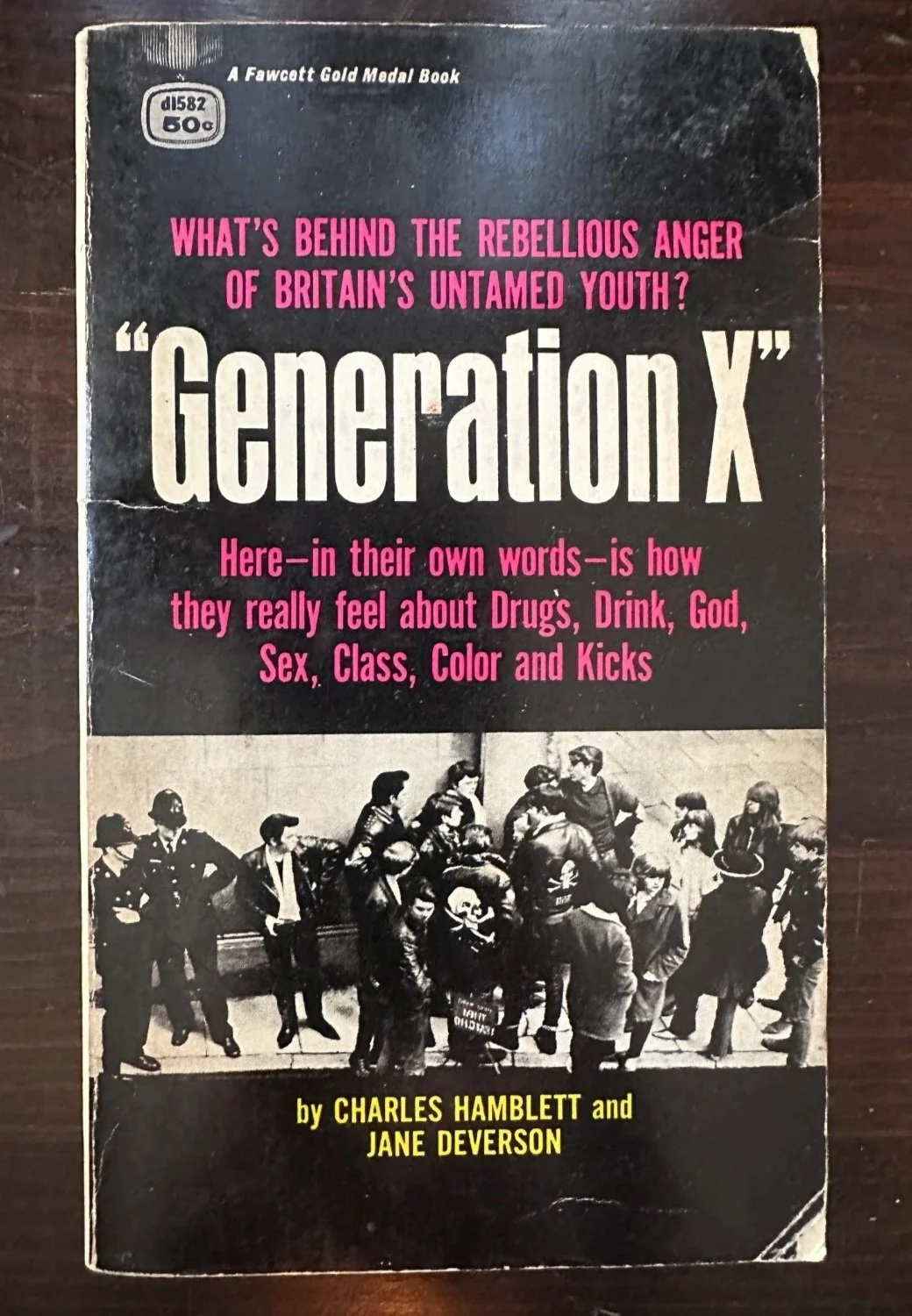
“I think old people are ridiculous. So phoney, everything they do is false. I'm rude to my mum and ignore my dad, and that's how it should be.” – David, 19, London, from Generation X by Charles Hamblett and Jane Deverson
“The fact that people are born at the same time, or that their youth, adulthood, and old age coincide, does not in itself involve similarity of location; what does create a similar location is that they are in a position to experience the same events and data, etc., and especially that these experiences impinge upon a similarly 'stratified' consciousness.” – Karl Mannheim, 1928
“Every generation trash-talks younger generations. Baby boomers labeled Generation X a group of tattooed slackers and materialists; Generation Xers have branded millennials as iPhone-addicted brats.” – Neil Blumenthal
“The baby boomers are getting older, and will stay older for longer. And they will run right into the dementia firing range. How will a society cope? Especially a society that can't so readily rely on those stable family relationships that traditionally provided the backbone of care?” – Terry Pratchett
“The baby boomers owe a big debt of gratitude to the parents and grandparents – who we haven't given enough credit to anyway – for giving us another generation.” – Steven Spielberg
“These two trends—overprotection in the real world and underprotection in the virtual world—are the major reasons why children born after 1995 became the anxious generation.” ― Jonathan Haidt, The Anxious Generation: How the Great Rewiring of Childhood Is Causing an Epidemic of Mental Illness
“I think the American Dream is kind of a myth, especially for millennials.” – Weyes Blood
“When someone tells you they’ve just bought a house, they might as well tell you they no longer have a personality. You can immediately assume so many things: that they’re locked into jobs they hate; that they’re broke; that they spend every night watching videos; that they’re fifteen pounds overweight; that they no longer listen to new ideas. It’s profoundly depressing ... As the expression goes, we spend our youth attaining wealth, and our wealth attaining youth.” – Douglas Coupland, Generation X: Tales for an Accelerated Culture
"Why don't you all f-f-fade away?" - Pete Townshend, 1965
So then, when talkin' 'bout my own generation, or any other, is it ever possible to be accurate in identifying key characteristics, or is it all mere generalisation? In a constantly shifting and uncertain world, particularly now, as the younger and older eye each other with a mixture of property-owning or can-never-afford-it situations, litter-spilling or picking-up, un-PC, ‘woke’ rows, screen-staring, social-media-versus-going-outdoors tensions, blame, guilt, dependence as well as hope, often distorted incoherent forms of messy mass online anger and miscommunication, hasn't it always been this way, in one form or another? Perhaps so, but social generation labels have arguably never been so prevalent or starker in our language and culture, whether that be Boomers, Millennials, Gen Zs or any other.
So then, those are some of the reasons for this topic, with a century or more of music to access and share, across which these large social groups have lived and been defined. So it’s all about songs that refer to specific generations, with names, or even traits referred, parts played, shaped variously by wars fought or threatened, technology and media experienced, disasters or diseases or struggles undergone, fears and desires, new sexual pleasures and drugs taken, clothes and music and dancing and styles adopted and many more influences. If songs specifically refer to a generation, then in our era-spanning Bar, it has its own time here.
Generations over decades are like vast waves of overlapping themes in a slow human symphony, with sometimes imperceptibly rising, falling and often returning motifs, but how are such groups captured in song lyrics, or indeed in the music itself?
Are such generational terms potentially as meaningless as always finding things in common with people who share your birthday, birth year, or star sign? Or as much as being from the same city or country as you? We all live under the influence of both nature and nurture, and yet also to an extent we can't escape the times in which we live, and there so seem to be palpable traits at play here.
It's a fascinating subject for me personally, because my cross-generational experience stretches quite far. I am, by several years, the youngest sibling in my family, conceived quite probably by accident, but apparently also happily so, by older parents. Stretching back into the end of the 18th century by not many generations, in my family history there have been a series of long-living older parents, some who even started a new family after the death of their first partner. I had a great-great-grandfather who did this at the age of 72 with a new marriage. And his father, in turn, begat him at 76. What a bunch of remarkably youthful but admittedly dirty old gits.
But back to the categories. Youth-age tensions and axes of the past are often echoed in the present, and all rebellious, loud-music playing, street protesting motorbike-riding teens inevitably tend to change and evolve their values, moving generally from the left to the right politically, or at least becoming more conservative with the small ‘c’, quieter, less energised, more cautious, but always with a few caveats and exceptions, from the Harley-owning mid-life crisis ponytail man, to grandparent protesters arrested over climate change sit-ins, or for banners attempting to support Palestinian rights. What an ironic time to be alive.
But is this a blip? Perhaps in the last 10 or 15 years to have seen some palpable shifting, or even switching goalposts. Teenagers in greater numbers are, for example, staying in and not drinking. These new, perhaps even conservative puritans. Their parents meanwhile still seem to be up for partying and pill taking, some even asking their children’s music to be turned up or saying, instead of ‘what time do you call this?’, instead ‘why don’t you get out more?’. More on that in a bit, but first, a bigger picture.
So are there specific trends, shaped by history's undulations? Here then are the general types on a handy diagram, and they are all relevant for this topic referred to or expressed in lyrics or music. Almost anyone reading this will be in, or have had some contact, directly or indirectly with these generations, even if, only hearing second hand from parents or grandparents.
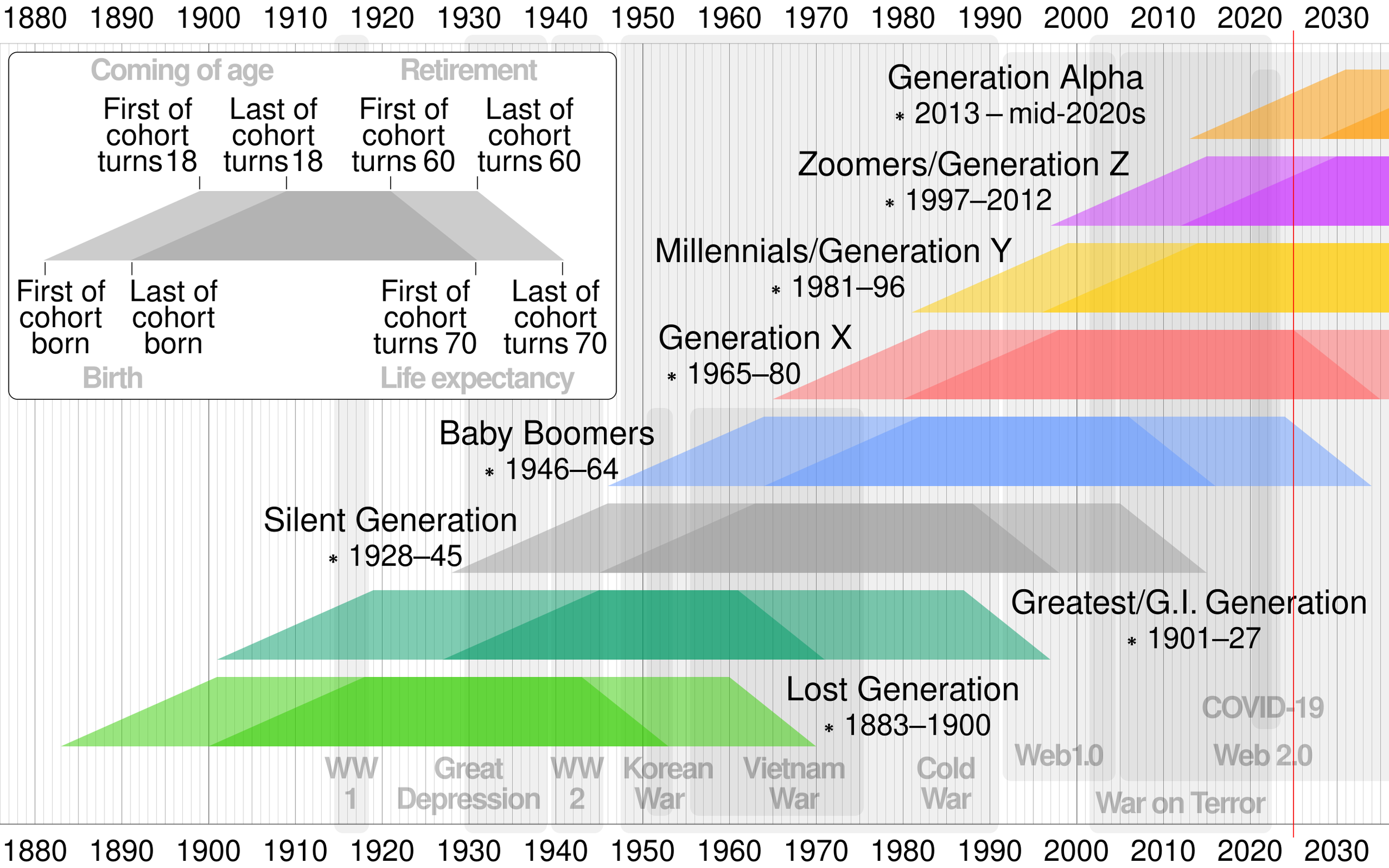
Generation timelines as defined by the Pew Research Center
The sociologist Karl Mannheim, quoted above, seemed to indicate that such generational labels have only been relevant from the 20th century onwards, when the world has gradually become more connected by common experience, such as by sharing new technology, perhaps in his time the automobile, or the telephone or radio. Writing in 1928, he cannot have imagined just how much the internet would do this even more in the 21st century:
“It is not difficult to see why mere chronological contemporaneity cannot of itself produce a common generation location. No one, for example, would assert that there was community of location between the young people of China and Germany about 1800. Only where contemporaries definitely are in a position to participate as an integrated group in certain common experiences can we rightly speak of community of location of a generation.”
These broad category terms in the diagram above weren’t all coined by the same person but, gradually over time. The Lost Generation, born also known as the "Generation of 1914" in Europe is a a term originating from Gertrude Stein to describe those who fought in World War I and who later began to enjoy the so-called Roaring Twenties before things took a darker turn in the Great Depression of the 1930s.
The Greatest Generation, born 1901 to 1927, later coined by journalist Tom Brokaw, are those who fought in, or had to sacrifice themselves in the efforts to fight in World War II. Owed a great debt by all those who followed, this is certainly a generation who were physically and morally strong.
The Silent Generation, born from 1928 to 1945, also known as the "Lucky Few" (that’s rather subjective) is the cohort who then came of age in the rebuilding post–World War II era. But were they silent? Not necessarily, but their perhaps hard-working, relatively sensible profile and role is certainly key to the relative period of stability that followed. But then came this loud lot …
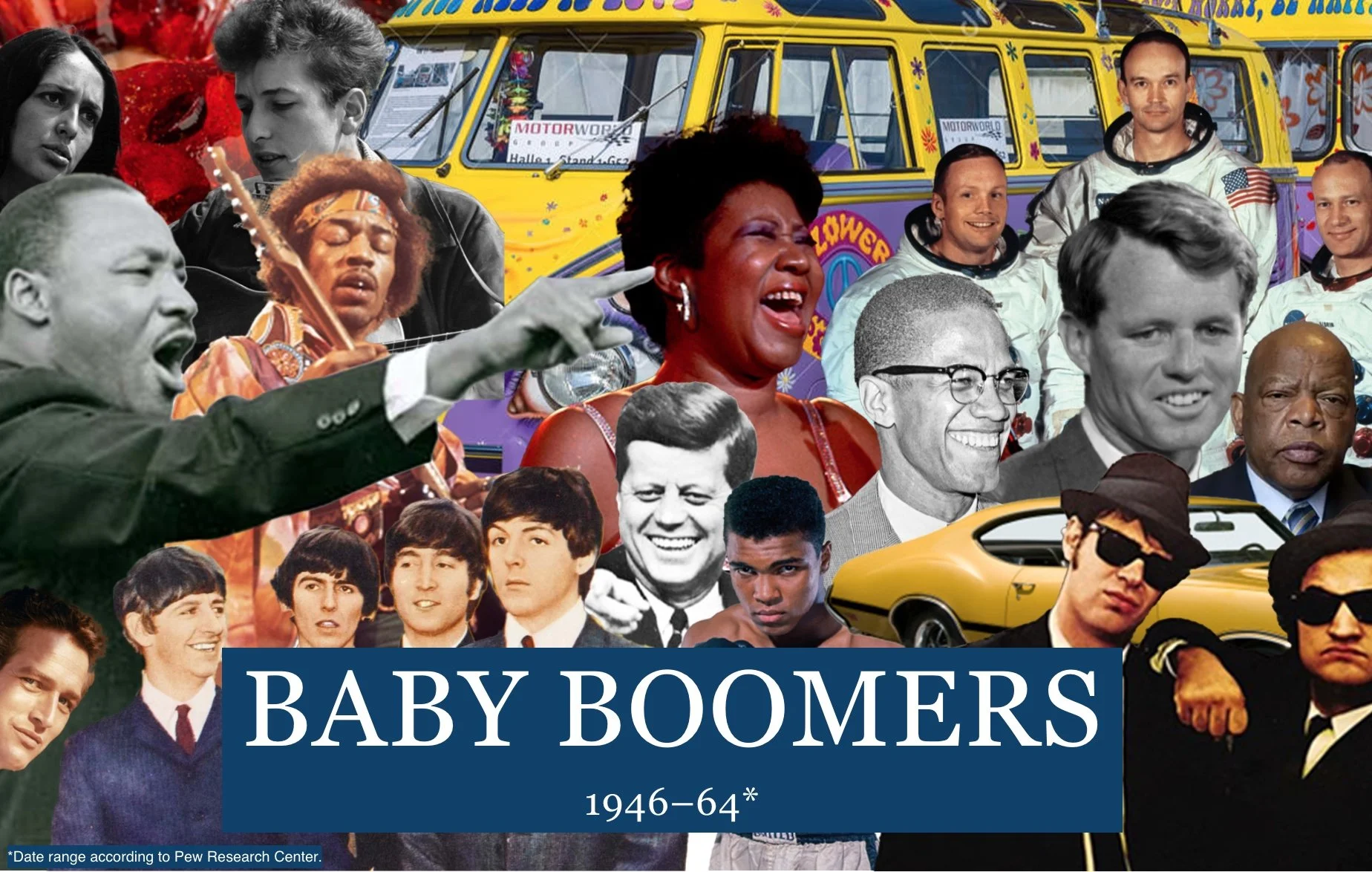
What became the biggest, and arguably culturally and politically most influential demographic to date, are the Baby boomers (also known as Boomers) born between 1946 to 1964. There are likely a quite few of you from this group out there reading this (as well as more in the later categories) the product of rapidly increasing birth rates during the post–World War II baby boom. This generation has experienced rapid social, cultural and political upheaval, and embraced such transformations, influenced by the Beatles , funk, prog and punk, but also being in the shadow of the Vietnam War. Yet there was also flower power movement and a period of new sexual freedom, as well an explosion of much other fantastic music in teenage years in the late sixties and early 70s, as well as enjoying many unprecedented welfare and pension advantages. That said, the younger of this large group, known as Generation Jones, who became teenagers in the so-called malaise of the 1970s, might not feel quite so lucky, and are beginning to feel the pinch in retirement, especially after the 2008 crash (see the film Nomads, for example). But when attending live gigs for example, my experience, being in the group younger than them, boomers seem to be loud and confident and always happy to talk about themselves. Is that fair or accurate? Already these generalisations are beginning to feel limited because there are always exceptions … But anyway, who’s next?
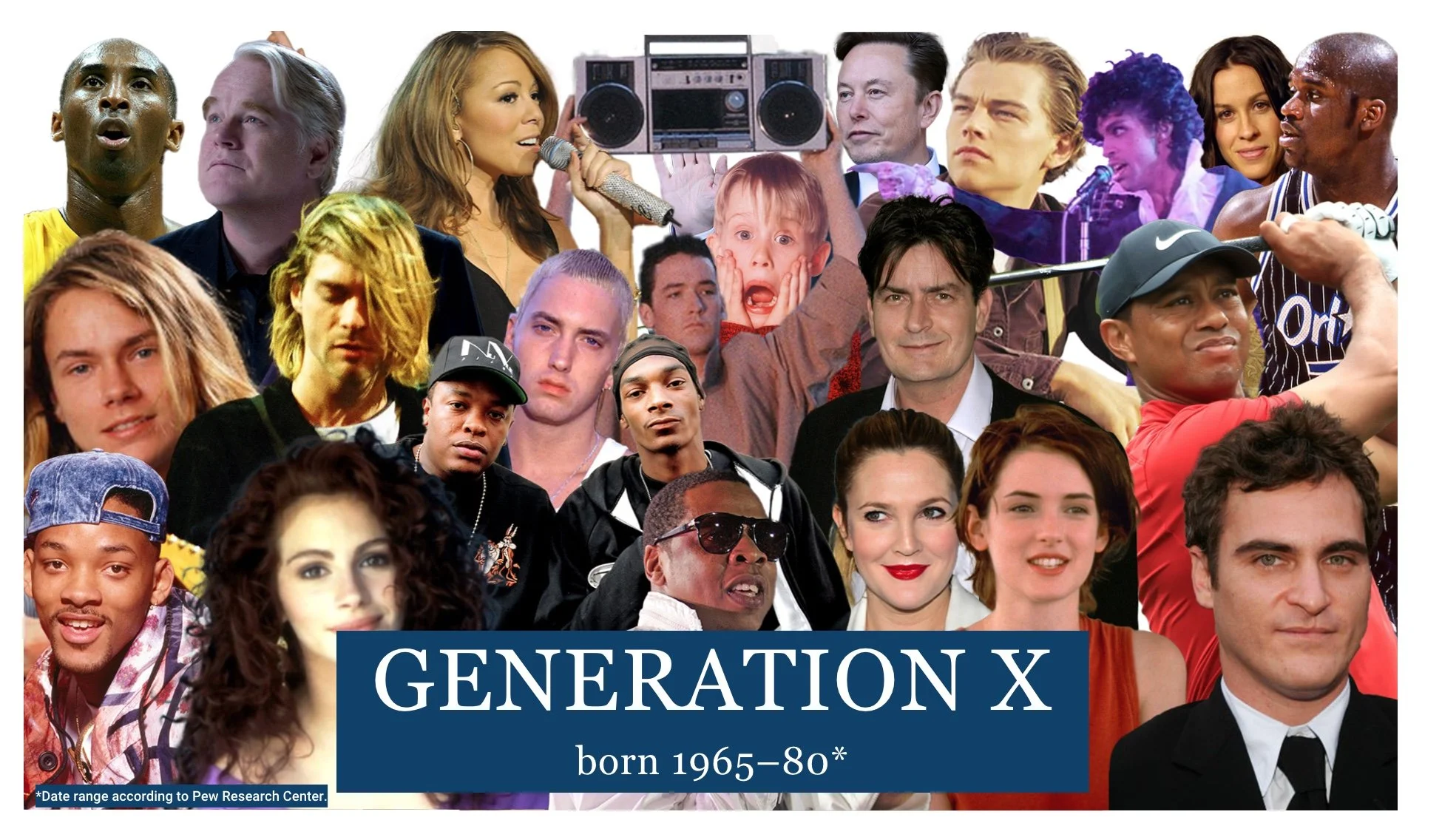
Generation X (born 1965-1980), which is my category, like the Boomers, experienced a lot of film and TV, and when growing up were arguably exposed to more mass media than any previous generation, but unlike now when there’s an infinity of entertainment, there were initially limited channels, so it was a shared experience we could talk about, in more analogue experience, in the playground or down the pub - whether than was Top of the Pops, or new bands, books, or new film releases. So we’re an eclectic bunch, who grew up without the internet and, like the Boomers, have good, confident social skills but then adapted to newer tech (moving from typewriters to Apple Macs and PCs). Yet we had also had some seriously scary teen fears in the 1980s (under a real threat of nuclear war and AIDS), but we did big hair, then with pills more than coke, partied hard, and still to a certain extent, refuse to grow up (he says, as if claiming to be the spokesperson for a generation). Then came a bigger wave …
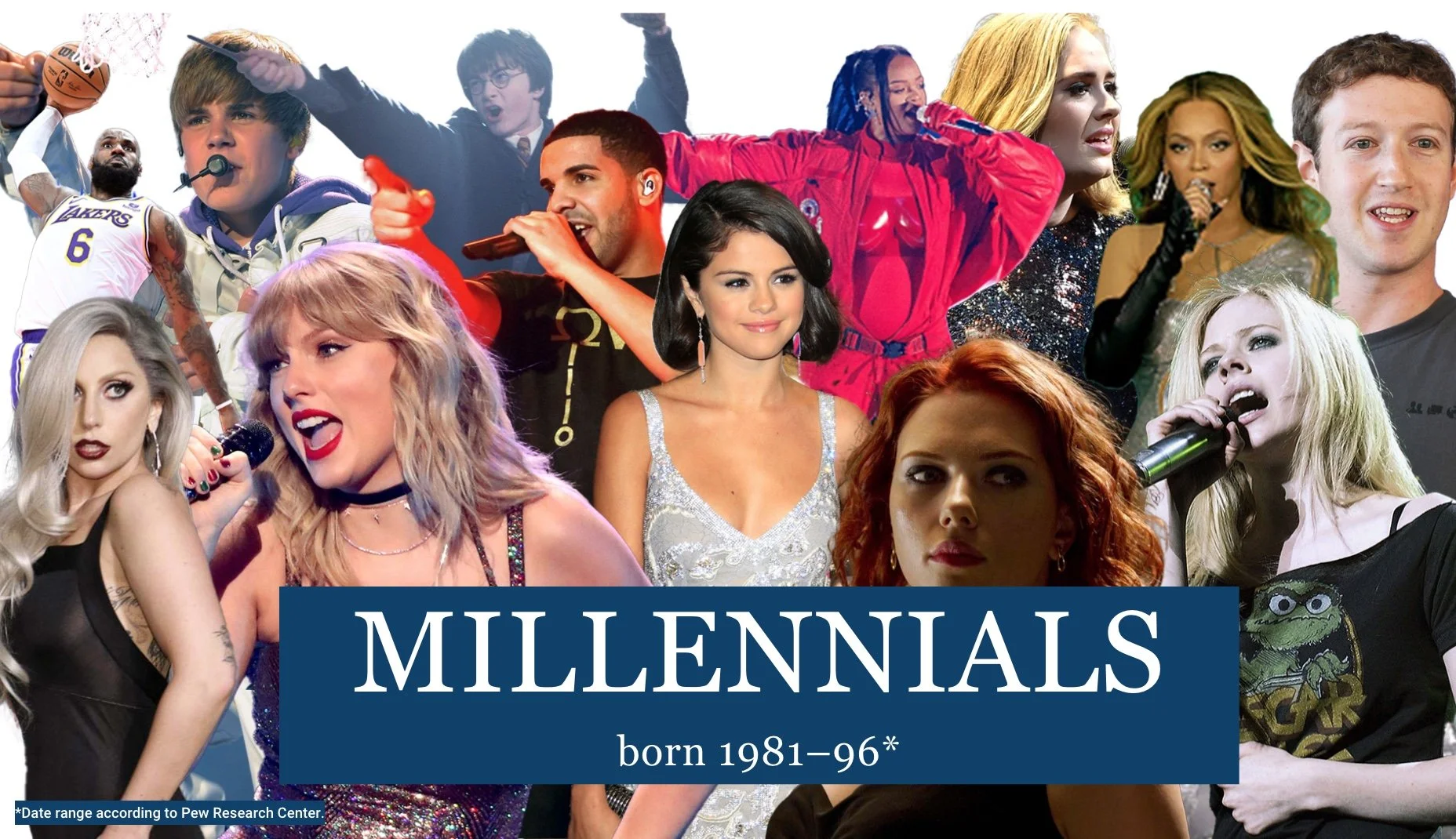
Millennials, or Generation Y, born 1981-1996, the children of the Baby Boomers, became the biggest group so far, and could arguably been regarded as a squeezed in-between, but are also navigators of the new digital frontier, highly adapted to technological leaps, reshaping communication, work dynamics, and social consciousness. They are, in other words, influential geeks. Yet they are in a strange position now, with many entering middle age and still stuck in a sort of awkward non-childhood childhood, living with their parents, unable to afford to buy property, but also knowing they might inherit much in the future. Is life getting better for those after? Not necessarily …
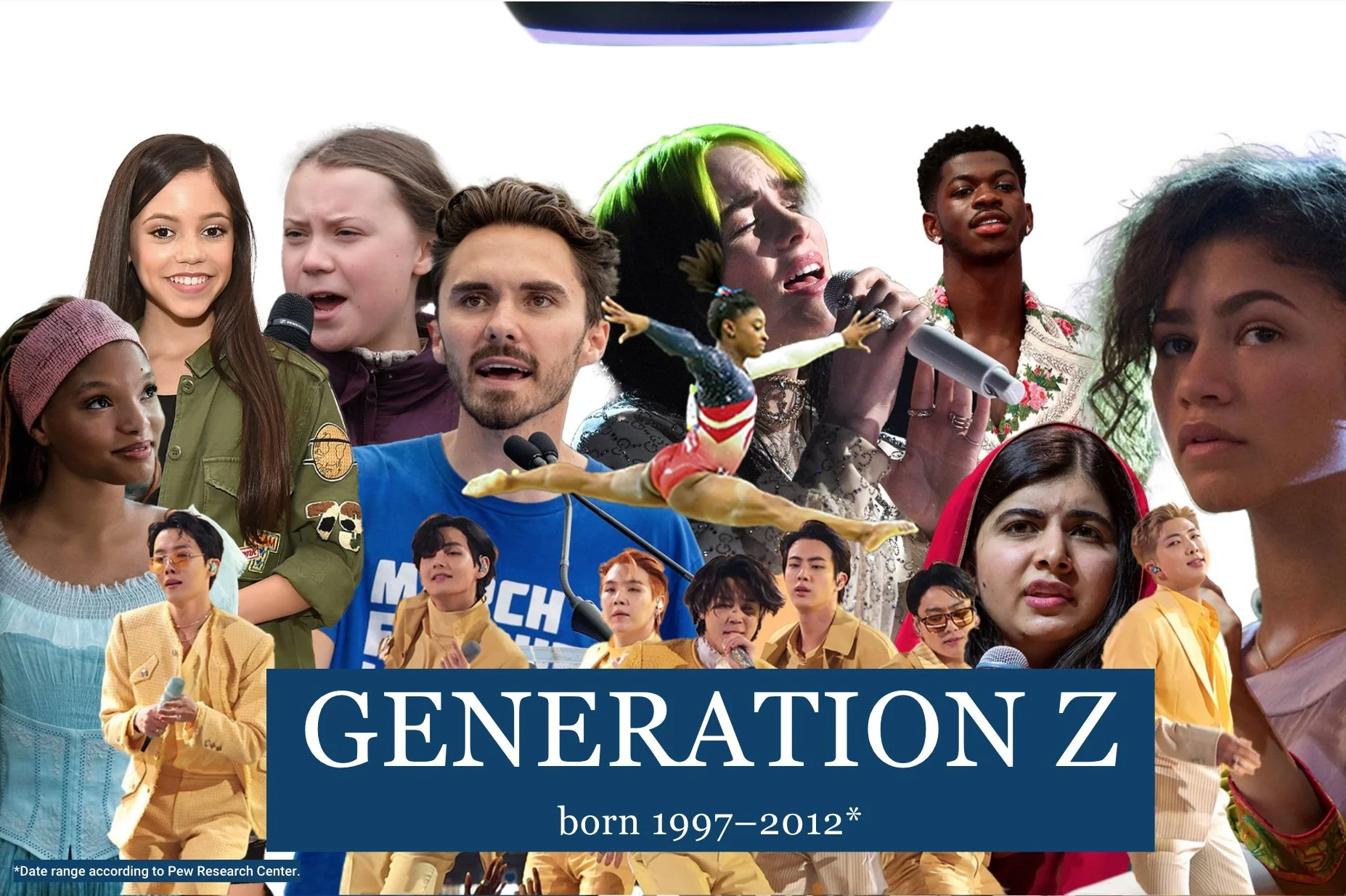
Generation Z, also known as Gen Z, are defined by the Pew Research Center graph as spanning from birth 1997 to 2012. They became the first to fully grow up with online media. Have the effects been harmful? Quite possibly. I recently heard an interview by the effervescent, charismatic Irish singer-songwriter CMAT ( age 29, so a millennial), in which she complained that at live music events, the Gen Zs just stare at their phones most of their time, heavily addicted to social media, unable to interact socially with anyone unless they are also online. Is this true? I have seen this at first hand, contrasting with the loud talking, fun-loving, flusher, Boomers buying lots of pints.
In his book The Anxious Generation, Jonathan Haidt also says: “Gen Z became the first generation in history to go through puberty with a portal in their pockets that called them away from the people nearby and into an alternative universe that was exciting, addictive, unstable, and unsuitable for children and adolescents.”
He highlights many problems brewing in this group, because this is a generation who grew up entirely online, as if on another planet and environment we are not evolved for. “Let children grow up on Earth first, before sending them to Mars,” as he puts it, where social skills are required to develop in the analogue world.
Haidt argues that parents of Gen Z weren’t sure of how to cope with this cultural shift, particularly in the period from 2010-2015 when social media began to have a huge impact on impressionable minds about being ‘liked’ by unknown peers and particuarly addicted to selfies and narcissism. One of the causes was that parents feared leaving children alone to external harm (such as child abuse etc), and so held them tight on the school run and so excluded them being able to experience play outside and other vital learning experiences, but found that it was just oo easy to entertain and leave them alone with the small screen:
“The two big mistakes we’ve made: overprotecting children in the real world (where they need to learn from vast amounts of direct experience) and underprotecting them online (where they are particularly vulnerable during puberty).”
“While the reward-seeking parts of the brain mature earlier, the frontal cortex—essential for self-control, delay of gratification, and resistance to temptation—is not up to full capacity until the mid-20s, and preteens are at a particularly vulnerable point in development.”
So ave generations become wiser (or at least more knowledgeable) with so much information at our fingertips, but physically weaker due to increased screen time but lack of exercise? In this interview Dr Daniel Lieberman expresses some worrying trends to confirm this:
And following Gen Z, comes today’s kids now entering their teens, a great unknown frontier of so-called Gen Alpha, born after 2012 up to 2025, and set reach a whopping nearly two billion in world population size this year, and then about to become born, the Betas (a term coined by futurist Mark McCrindle), but seems unlucky for them?). Who knows how they will turn out.
There are also many sub-groups of generations before Alpha and Beta and inbetween the others, such as those defined by huge upheavals in particular countries. For example, those growing up after Indian independence of 1947 and what effect that had. Or those in Northern Ireland after the Good Friday Peace Agreement of 1998 no longer in fear of sectarian violence. Or those changing in Europe’s eastern bloc after the fall of the iron curtain and Berlin Wall in 1989. Or the Post-80s children of China who seemd to possess greater optimism after the Cultural Revolution, or the Post-90s group, part of the single-child policy who developed particular resulting (perhaps spoilt) characteristics. Or the so-called Stolen Generation of Aboriginal Australians, forcibly removed from their families and culture, by Australian federal and state government agencies and church missions across the entire 20th century.
But what about where a variety of these generations come together? Here are a few images of families from different eras and cultures where five or six are all in the photograph. How different are they? Not a lot it appears, and perhaps it’s visual proof that people become their parents, with some of these middle generations barely distinguishable from another (perhaps only by 16 years in some cases). But of course not every picture tells a a story…
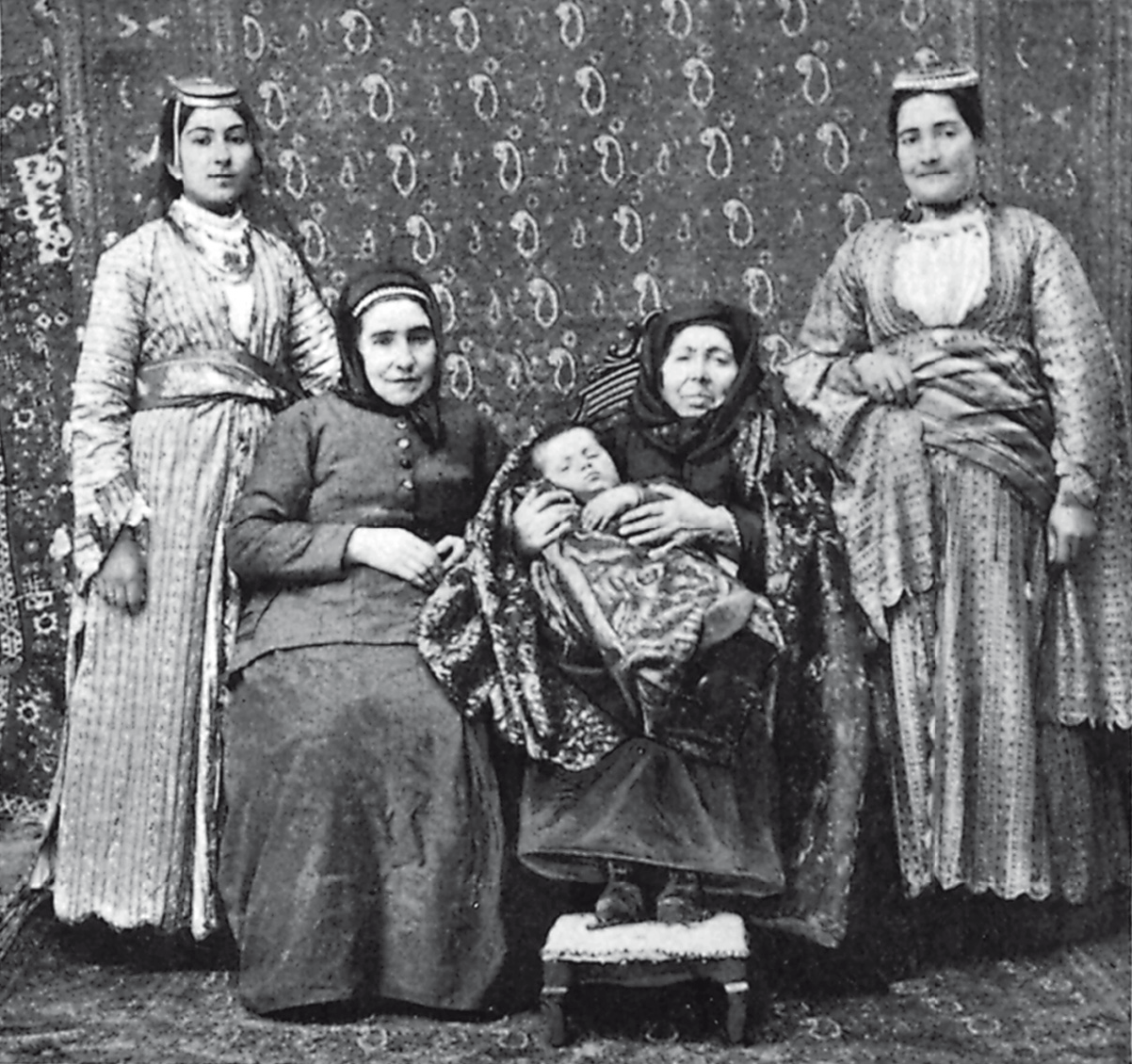
Armenian five generations, 1901
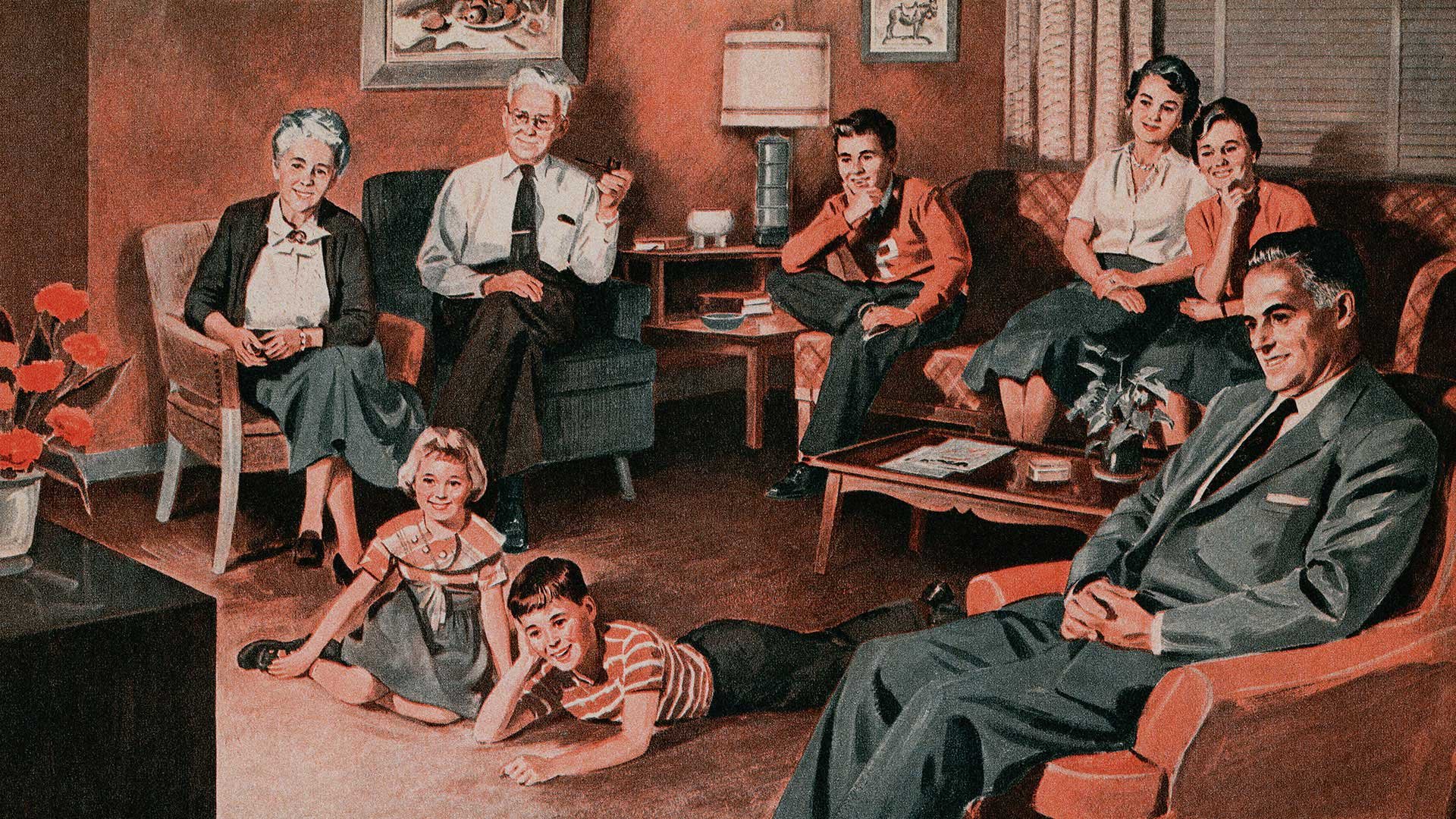
A 1950s idealised cross-generational family group joined by TV
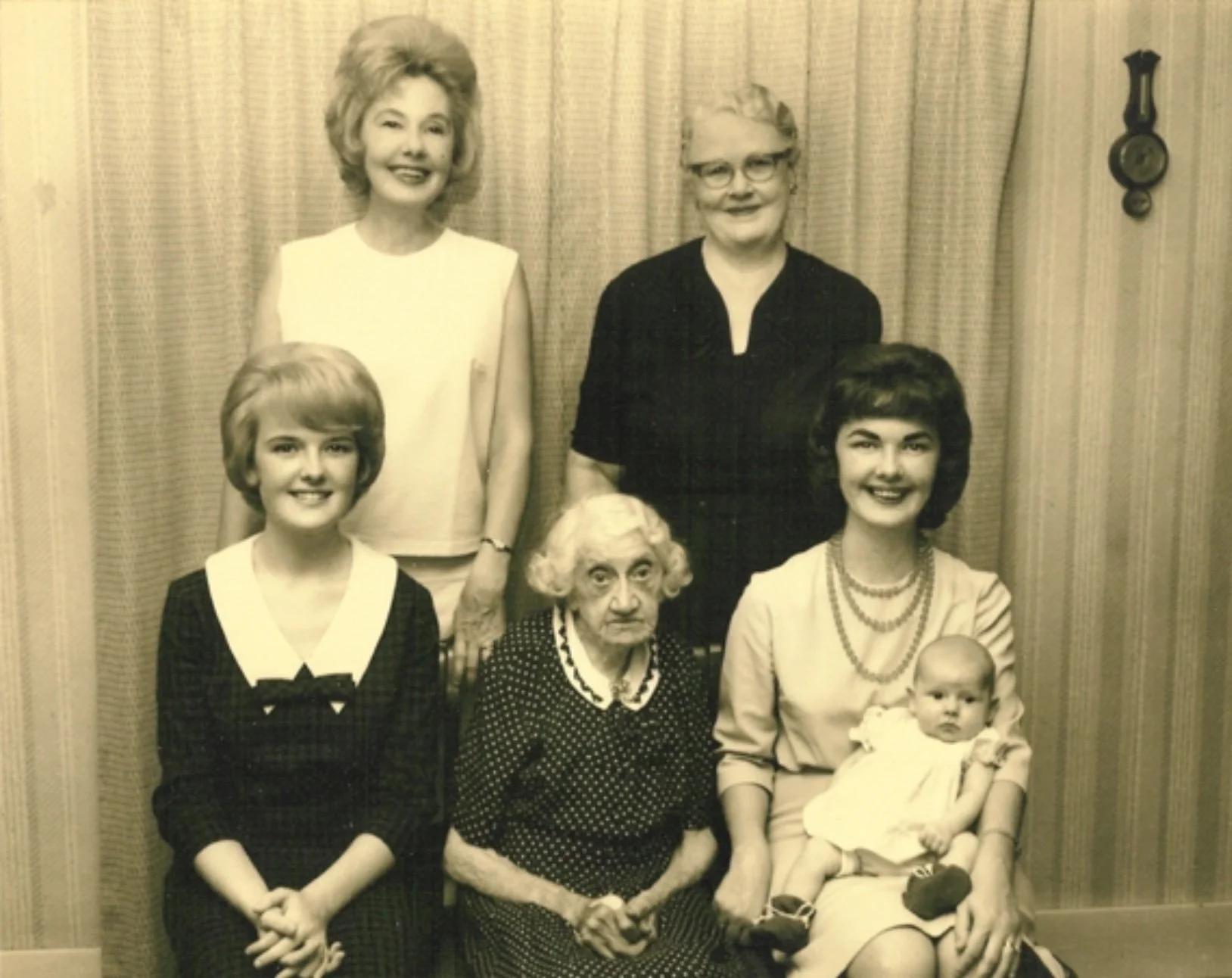
Six generations of first daughters, USA, 1965

Six generations of first daughters, UK, 2017 (aged 1 to 100)
So it’s potentially a vast subject, full of questions and perspectives and profound change, and one which it’s hard to have clarity when we are all products of our times, influences and experiences. But it’s also one explored in song in which different generations are defined to given reference. Feel free to post your views about generation traits.
So then, please particularly post your generation group-defining or referencing songs in comments below for deadline at 11pm on Monday night UK time, all for playlists published next week. Who will be our cross-generational playlist picker? It’s the all-seeing year-spanning Severin, one of the finest gurus of his generation! OK, let’s see what music we can generate …
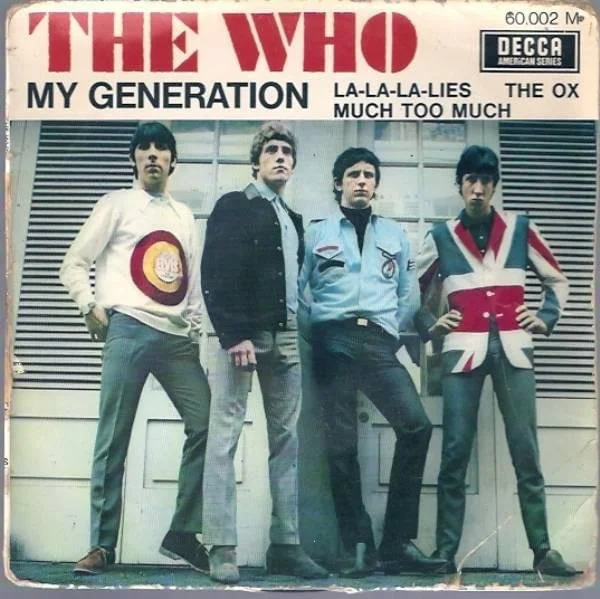
Nope, surely too obvious ….
New to comment? It is quick and easy. You just need to login to Disqus once. All is explained in About/FAQs ...
Fancy a turn behind the pumps at The Song Bar? Care to choose a playlist from songs nominated and write something about it? Then feel free to contact The Song Bar here, or try the usual email address. Also please follow us social media: Song Bar X, Song Bar Facebook. Song Bar YouTube, and Song Bar Instagram. Please subscribe, follow and share.
Song Bar is non-profit and is simply about sharing great music. We don’t do clickbait or advertisements. Please make any donation to help keep the Bar running.