

Keep your ears, eyes, and everything else open. It’ll all make sense …
By The Landlord
“I know numbers are beautiful,” said the prolific, highly eccentric Hungarian mathematician Paul Erdös when making an appearance at the Bar last week, ordering several strong cups of coffee, of which he continued to drink copious quantities. Throughout his life, cracking many knotty mathematical problems most other experts could not even begin to solve, he was described in Time Magazine as The Oddball's Oddball, living an itinerant lifestyle – most of his belongings would fit in a suitcase, constantly travelling between colleagues and conferences. His many awards, stipends, grants and other earnings were generally donated to people in need and various worthy causes. He would typically show up at a colleague's doorstep and announce: "My brain is open!". He then stayed long enough to work on a few papers before moving on a few days later. In many cases, he would ask the current collaborator details about who to visit next.
He saw his work as a constant collaboration, much as we do in this establishment, though as for maths, I could not even begin to understand his work in any detail. But at least in spirit, as a result of last week's nominations, the current knotty problem of a playlist about very specific numbers and amounts can be conceived as an idea begun by one (i.e. me), but then as a meeting of musical minds, with many readers' ideas coming into the equation.
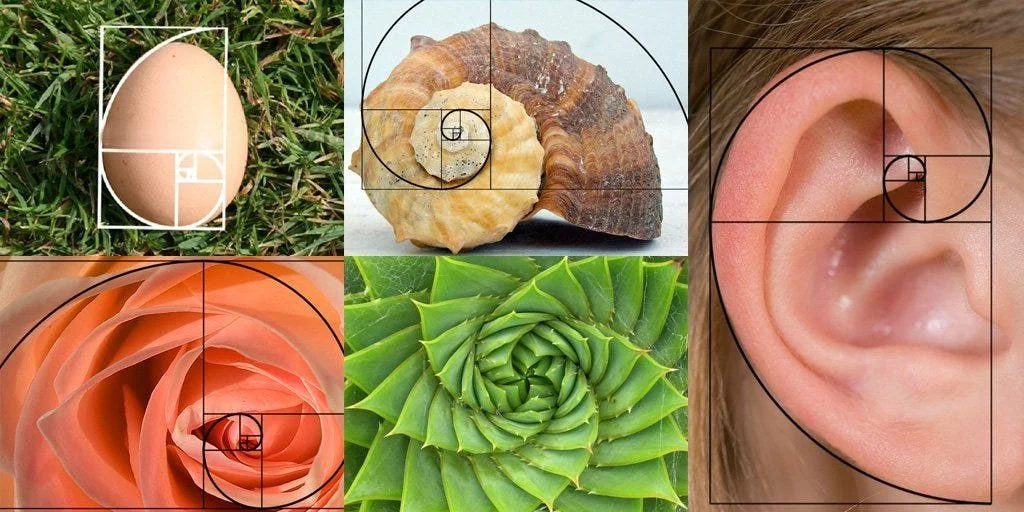
Also mentioned, last week, numbers are musical in themselves, and there's creativity in their fibre and form, as shown, also in last week's introduction, in the patterns of the Fibonacci Sequence, mirrored in nature and growth, on plants, shells and other organisms, as well as architecture and various artforms, each new item on the pattern influenced by a combination of two or more elements that have gone before them. It's a shape of life itself.
But where does it it start? Song titles and lyrics are bursting with numbers, so at first it all appears as a bewildering pile of numerical spaghetti. What it requires is a mix of the familiar and the wilder, less predictable. So let’s begin with another eccentric, LA's Doctor Steel, purveyor of his own form of industrial, experimental hip-hop, a man who liked the idea of performing with a robot band, and here's his explanation of the sequence, with Doctor Steel: Fibonacci Sequence.
The sequence has to begin with the figure one, but when added to itself, it becomes two, and both numbers are included, rather compactly, in the short, sharp 1 2 X U by Wire, from their fabulous, punchy 1977 debut Pink Flag. But while not getting our wires crossed, sometimes two wires have to touch to cause a spark, and to make them add up to the next number, 3, here’s a controversial second selection by them with Three Girl Rhumba, and some very pertinent lyrics:
“Think of a number
Divide it by two
Something is nothing
Nothing is nothing.”
Next in the sequence, adding 2 to 3 to make 5, and 3 to 5 to make it, it’s all handily contained within the time signature referencing frenzy and stylish, spicy mix of Armenian and jazz musicianship of John Berberian & The Rock East Ensemble’s 3/8 + 5/8 = 8/8.
So far this is all going nicely Fibonacci, but beware, chaos is on the horizon. But first, with 5+8, here’s yet more numerical echoes, neatly taking us to Oxford band Five Thirty’s 13th Disciple. They only released one album, Bed, in 1991. It’s nice to reawaken them.
The number 13 of course, with that Bible reference story, and related superstitions, seems unlucky for some, and so this is where we the sequence is going to twist, with another brilliant eccentric, shooting from the hip, adding a previous number 3, to give us in more than one way, Tom Waits - 16 Shells From A Thirty-Ought Six, from his first 1980s masterpiece of stylistic oddness Swordfishtrombones.
Twist again, or stick? It’s time to weigh it all up with another 16, tons that is, and the wonderful woodwind and deep-voiced plod of Tennessee Ernie Ford’s version of Sixteen Tons. Why that amount though? The song, attributed to Merle Travis about a coal miner and based on life in the mines of Rosewood, Kentucky apparently refers to a practice of initiating new miners. According to Archie Green’s 1972 book, Only a Miner: Studies in Recorded Coal-Mining Songs, in the mid-1920s, a miner was expected to haul 8 to 10 tons per day, whereas for new miners, the regulars would slack off so the new miner could "'make sixteen' on his very first day." It’s a dirty business.
It’s getting heavy now in several senses, and might get even heavier, with Seventeen Seconds by The Cure, as Robert Smith weighs in by adding just a number 1, and one song to the sequence, with 17 an apparently “arbitrary measure of time – one that seemed to be suddenly everywhere once the song was written”, a random reference to a moody song of dark longing and as in the lyrics "a measure of life”.
We’re in the heavy mood section now, where the numerical sequence is spiralling in on itself, just as depression tends to do so, and staying for a while on 17, an age arguably when everything is at its most intense but where music is the saviour. Do you remember those feelings?
But none of that is as intense as the subject matter of Ansell Collins’ Stalag 17, a fabulous reggae number named after the 1953 film about the prisoner- of-war camp Kriegsgefangenen-Mannschaftsstammlager 17. There are several other songs of that name but that beat really beats them.
Is there method in this madness? Yes, perhaps. Hopefully. The numbers and their sequence are expressing a part of life. Two songs about 16 and two songs about 17? It’s all craftily calculated, y’know …
So what next? Let’s add that 2 to the 17, and move us crazily onto 19th Nervous Breakdown by The Rolling Stones. Why 19? Perhaps Mick Jagger chose that figure just because it’s alliterative, but it also, very memorably has a feeling of excess about it, pertaining to the destructive side of rock’n’ rock hedonism and material possessions.
How do we get out of that nervous breakdown? Certainly, perhaps, not by trying to compile playlists out of numbers.
But maybe some might do so by writing more songs, and pushing through the dark side. The title of the next one, we’re reliably informed, refers to the time of morning when the songwriter, Robert Lamm, was trying to write the song: either 25 or 26 minutes before 4 a.m. (03:35 or 03:34). The title represents the blurry, all-night creative struggle, and the song's lyrics actually started as placeholders for the correct time. So here’s Chicago - 25 or 6 to 4.
It’s time to double that 25 and leap suddenly into a sense of escape, with the jaunty, clever classic of joyful emancipation through Paul Simon’s 50 Ways To Leave Your Lover. Why 50? It’s a bit round. But perhaps because it sounds good, even though there are only five ways listed in the song. It was written as a more humorous way to document his divorce from Paul’s first wife Peggy Harper. But bear it mind it also comes from his 1975 album Still Crazy After All These Years.
Chicago also gave us 6 to 4, which is not just the time, but also a time of life. Unavoidably then, it’s time, without hopefully too much contrivance, for The Beatles - When I'm Sixty-Four using a melody Paul McCartney wrote when he was only 14, which, handily, is what you get when you add it to Paul Simon’s 50. Tidy.
But isn’t age fluid, to a certain extent down to perception, and also time is non-linear in life and music’s experience? Sometimes numbers can magically go in reverse in our Song Bar world of fuzzy logic, which is why that 64 can be inverted to a 46 in my fiendish mind (and hopefully will be approximately the age I will feel when I hit that retirement-ish age landmark). Throw in a mix up all all of these figures, then, taking us to third classic in a row, Toots and the Maytals - 54-46 (That’s My Number), in Fred "Toots" Hibbert recalls his prisoner identity after he was arrested for possession of marijuana. Absurd of course to lock him up just for a toke and a toot, but at least a great number came out to it.
So then – we’re not just breaking laws on this week’s list, but also rules. How? First, let’s add 54 to 46 and make 100. Easy, yes? And what does that get us? The wild, wonderful psychedelic sound of New York’s Geese, from their most recent album, and 100 Horses. Cameron Winter’s distinctive delivery describes a dream-like sequence and setting of war, but also, in a surreal fashion, horses dancing, and not just 100 of them, ‘maybe 124’. A weird correction, but it works.
As in all numerical sequences, once you hit higher numbers they accelerate at pace, and this is where the random access generator seems to kick in. There’s a mix of pattern and chaos as Brian Eno’s The True Wheel comes up on our radar and radio, another trippy experimental banger from which Manchester’s A Certain Ratio took their name, and might also reference The Modern Lovers.
“We are the 801
We are the central shaft
Looking for a certain ratio
Someone must have left it underneath the carpet
Looking up and down the radio.”
Why this one? Brian is a big fan of random sequence, describing a flying radio dial. Can we take some logic from it? Yes. As Geese fly over with 124 dancing horses, let’s combine them with the key figure in Brian’s number to create what mathematics handily calls a direct integer ratio: 124 multiplied by 8, which equals 992. Insane! No arguments, now, that can only mean one thing: O' Jays - 992 Arguments, from the breakthrough 1972 album Back Stabbers.
That’s a lot of arguments, probably on the phone as much as in person. And now the numbers are leaping, so let’s give one of those a ring, with that early Motown date call, with The Marvelettes - Beechwood-45789. And calling them straight back here’s Wilson Pickett’s 634-5789 (Soulsville U.S.A.), which is a playful reference to the number in The Marvelettes' 1962 hit, while the bracketed sub-title is a nod to the Stax Records studio where it was recorded, contrasting it with the Hitsville U.S.A.
Thousands of calls, thousands of numbers, and the special sequence begins to spiral beyond our conception, so it makes sense, but also no sense at same time, to bring in the mischievous mayhem of AFX/Aphex Twin/Richard D James’ - .942937, from his number-rich 1992 release Analogue Bubblebath Vol 3, a veritable hot tub of numerical-themed, ground-breaking experimental electronica.
By now, then, we’ve reached song number 21, the next and a key stage on the Fibonacci Sequence, and things finally take shape where it’s time to wrap things up. But not as we know it. We began with Doctor Steel, we end with the related theme of Tropical Fuck Storm’s The Golden Ratio, the cleverly chaotic Melbourne experimental rock band’s witty parody about perfect proportion, where our playlist finally takes shape and returns to one and a bit, with a ratio where simultaneously everything and nothing makes sense. It seems to fit the crazy times in which we live:
“The Golden Ratio
The only way we can survive
The Golden Ratio
These are interesting times
I’m sayin' 1.6180339
And two fat ladies
7-5 the Golden Ratio
Tyrannicide.”
Thanks all for playing, and apologies if your particular numbers didn’t come up. A mix of popularity and personal choice influenced the eccentricity of the playlist. If I have time later, there may be an obscure numbers B-list to include many other great suggestions, but for now, these are the 21 that took shape in this alternative Fibonacci sequence:
The Oddly Arithmetic, Fuzzy Logic Frenzied, Fibonacci Sort of Sequential A-List Playlist:
1) Doctor Steel - Fibonacci Sequence
2) Wire - 1 2 X U
3) Wire - Three Girl Rhumba
4) John Berberian & The Rock East Ensemble – 3/8 + 5/8 = 8/8
5) Five Thirty - 13th Disciple
6) Tom Waits - 16 Shells From A Thirty-Ought Six
7) Tennessee Ernie Ford - Sixteen Tons
8) The Cure - Seventeen Seconds
9) Ansell Collins - Stalag 17
10) The Rolling Stones - 19th Nervous Breakdown
11) Chicago - 25 or 6 to 4
12) Paul Simon - 50 Ways To Leave Your Lover
13) The Beatles - When I'm Sixty-Four
14) Toots and the Maytals - 54-46 (That’s My Number)
15) Geese - 100 Horses
16) Brian Eno - The True Wheel
17) The O' Jays - 992 Arguments
18) The Marvelettes - Beechwood-45789
19) Wilson Pickett - 634-5789 (Soulsville U.S.A.)
20) AFX/Aphex Twin/Richard D James - .942937
21) Tropical Fuck Storm - The Golden Ratio

These playlists were inspired by readers' song nominations in response to last week's topic: A numbers game? Songs about very specific or obscure figures and amounts. The next topic will launch on Thursday after 1pm UK time.
New to comment? It is quick and easy. You just need to login to Disqus once. All is explained in About/FAQs ...
Fancy a turn behind the pumps at The Song Bar? Care to choose a playlist from songs nominated and write something about it? Then feel free to contact The Song Bar here, or try the usual email address. Also please follow us social media: Song Bar X, Song Bar Facebook. Song Bar YouTube, and Song Bar Instagram. Please subscribe, follow and share.