

By The Landlord
“Sondheim is the Shakespeare of the musical theatre world.” – Mandy Patinkin
“For the wretched of the earth there is a flame that never dies. Even the darkest night will end and the sun will rise." – Les Miserables
“I have confidence in confidence alone!” – The Sound of Music
“Flowers fade, the fruits of summer fade, they have their seasons so do we. If you ever find a moment, spare a thought for me.” – Phantom of the Opera
“Make believe you’re brave and the trick will take you far. You may be as brave as you make believe you are.” – The King and I
“When will my reflection show who I am inside?” – Mulan
“Stretch your mind beyond fantastic. Dreams are made of strong elastic.” - Mary Poppins
"I ain't sayin' I'm no better than anybody else, but I'll be damned if I ain't just as good!" - Oklahoma!
“Pay no attention to that man behind the curtain.” – The Wizard of Oz
"How could this happen? I was so careful. I picked the wrong play, the wrong director, the wrong cast. Where did I go right?" – The Producers
On stage or screen, from school productions to professional theatres, to the cinema or TV or even now online, it might often be the first kind of live or recorded music many of us experience. Yet it's a divisive genre, full of contradictions and sometimes prompting extreme reactions. It requires great levels of creativity and skill, hard work, dedication and teamwork, but, being expensive, is often cynically driven by commercial gain. High in production, and yet also seen as low-brow, it can be cheesy but also loudly cheered, be original, yet also highly formulaic. Do you love it, or hate it, or both?
Is it the stylised, exaggerated vocal delivery, in how the performers sing out so fully, at us, or in such as dramatic and proclamatory fashion, even to themselves? Is it the underlying sentimentality, or the inevitability, and resolution of plot? Is it the fundamental western whiteness of the genre, or its historical racism or tendency to stereotype or homogenise? Is it the way songs are just about so obviously explaining things or moving the action along? Or is that putting the genre down? Yet sometimes it is also brilliant.
Any which way, usually we know what a musical looks and sounds like. There'a physical and visible language to it. The main character will usually appear at the beginning perhaps to the side of the chorus, wearing different coloured clothes so we instantly know they are important. A performer will generally not look at the person they are communicating with, but project out into the audience. It's designed to be understood and enjoyed by the many, not the few. Or at least that's the idea.
This week, then, with a swish of the big Song Bar curtain, we investigate and celebrate the musical and musical theatre, from Broadway to the West End, to Bollywood, Disney and beyond in its various forms and settings, highlighting songs that were originally written for the genre, but have also been able, hopefully by their quality and appeal, to transcend it, and exist also outside of it. Perhaps this will put the spotlight on big musical hits, but hopefully also some lesser known songs that can also have a life of their own.
There are certain parameters – songs must have been written specifically for the musical genre. They will have gone through different versions between stage and screen, but they all count. And subsequent covers could also be considered However, songs used in musical films or shows that were originally in other releases, as hit singles or studio albums, aren't part of this week's topic. So that excludes shows and films such as Mamma Mia, packed with ABBA hits, or Queen the Musical, or any biopics about music artists filled with their songs.
What is a musical? With its true beginnings in the late 19th century, it's different from opera, which more conveys story and character through classical music, or vaudeville or burlesque, which is more based on shorter pieces and a variety of disciplines and styles. A musical is theatrical or cinematic performance that variously combines songs, spoken dialogue, acting and dance. But it's a genre that found origins in popular opera and operetta in the late 18th-century when Mozart wrote The Magic Flute, or a century later, the popular operata works of Gilbert and Sullivan, Jacques Offenbach and Johann Strauss II.
But musicals really found their oeuvre with the combination of the key elements with The Black Crook, from a book by Charles M. Barras. It's generally deemed to be among the first of the genre. The music, selected and arranged by Thomas Baker, contained adaptations, but it included some new songs notably "You Naughty, Naughty Men". The story is a Faustian melodramatic romantic comedy, but the production became famous for its spectacular special effects and skimpy costumes, resulting in a finale in which amazon characters crush the forces of evil. Ooh, madam! It opened on 12 September 1866 at the 3,200-seat Niblo's Garden on Broadway in Manhattan and ran for a record-breaking 474 performances. It was then toured extensively for decades and revived on Broadway between 1870–72.
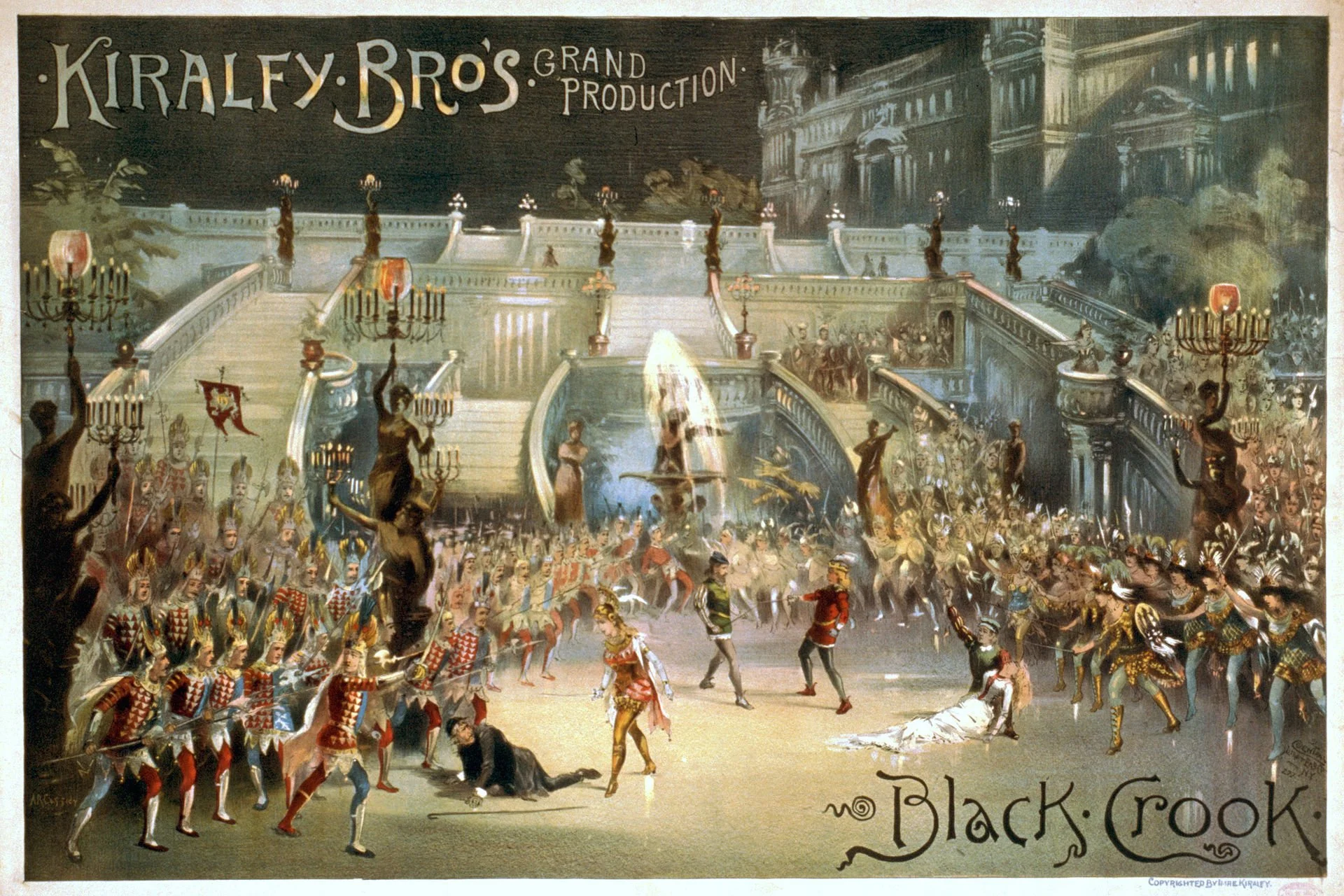
The Black Crook (1866) - popular for amazon characters in skimpy costumes defeating the devil
There are of course thousands of productions to consider, and this is a vast subject that will require careful cherry-picking, but a key work that gained various iterations from 1902 to the present is of course The Wizard of Oz, a 1902 musical extravaganza based on the 1900 novel The Wonderful Wizard of Oz by L. Frank Baum. We all know the later 1939 film with Judy Garland, but here's a snapshot of that groundbreaking production that led to so many other musicals. It premiered at the Chicago Grand Opera House on 16th June 1902, toured throughout the upper midwest before moving to the Majestic Theatre on Broadway on January 21, 1903, where it ran for 293 performances.

Fred Stone as the Scarecrow and David C. Montgomery as the Tin Woodman (1902)
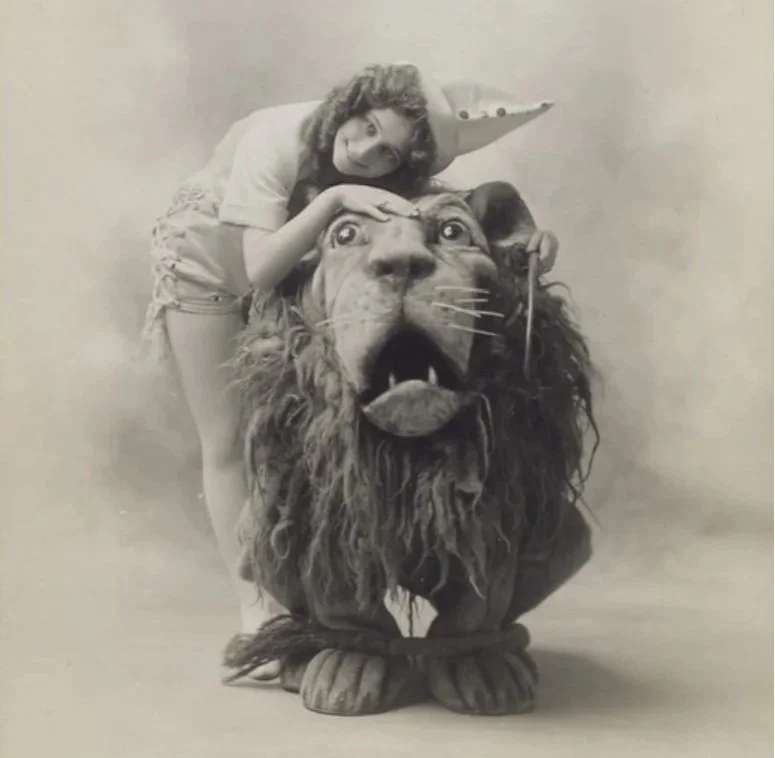
Arthur Hill as the Lion and Anna Laughlin as Dorothy (1902)
Black performers had to negotiate the thorny racist culture of minstrelsy throughout this period, but musicals also gave them opportunity to create, perform and earn a living.
A key show in that context was Shuffle Along, a huge hit entirely created and performed by Black artists. Composed by Eubie Blake, with lyrics by Noble Sissle and a book written by the comedy duo Flournoy Miller and Aubrey Lyles, it was a landmark in African-American musical theater, credited with inspiring the Harlem Renaissance of the 1920s and 30s. It premiered at the 63rd Street Music Hall in 1921, running for a record-breaking 504 performances, a remarkably successful span for that decade. It launched the careers of Josephine Baker, Adelaide Hall, Florence Mills, Fredi Washington and Paul Robeson, and was so popular it caused "curtain time traffic jams" on West 63rd Street, forcing a one-way system to be in place in which audiences literally had to shuffle along.
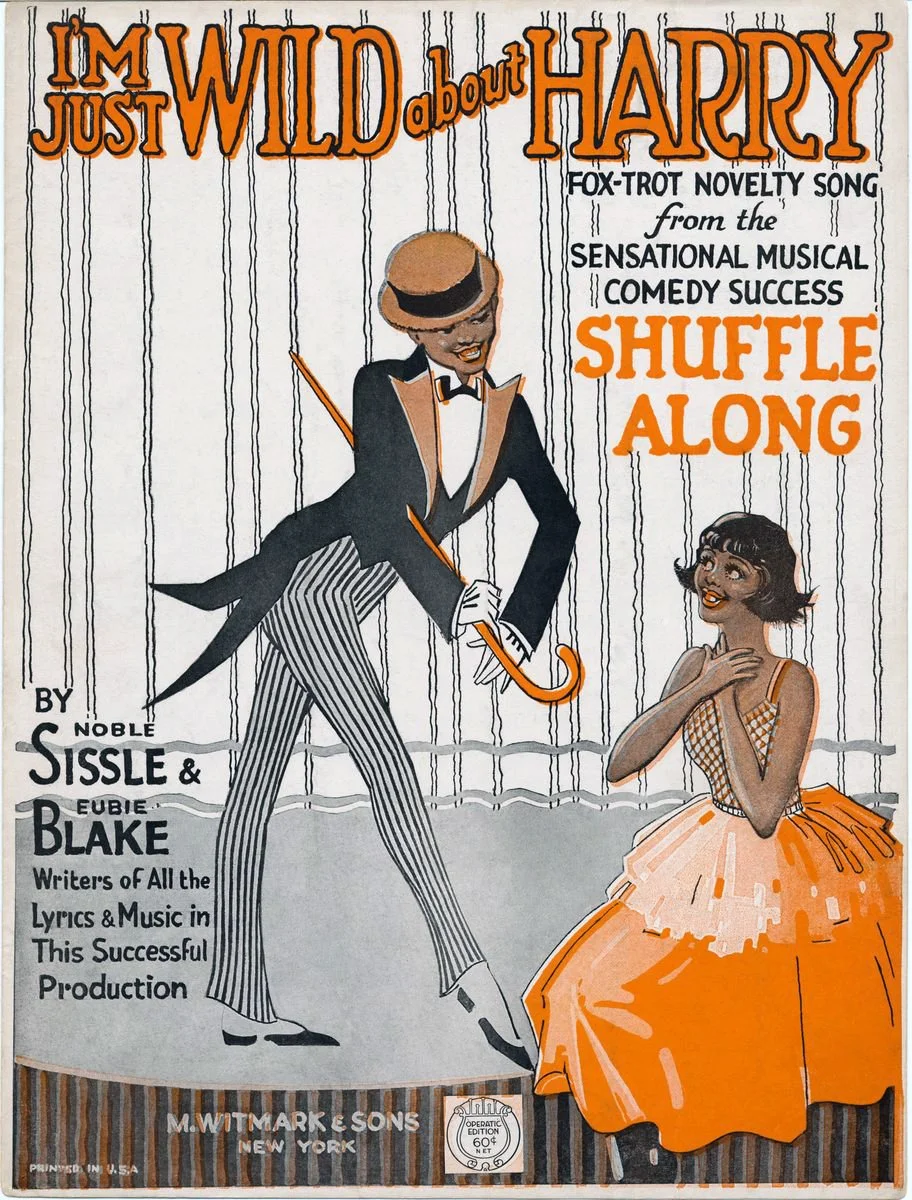
A song from the smash hit, all-Black Broadway musical of 1921 - Shufle Along
The rest, as they say is ... well, a long list of contenders, such Show Boat (1927), Of Thee I Sing (1931), Oklahoma! (1943), My Fair Lady (1956), West Side Story (1957), The Fantasticks (1960), The Sound of Music (1965), Hair (1967), Jesus Christ Superstar (1970), The Rocky Horror Picture Show (1973), A Chorus Line (1975), Les Misérables (1985), The Phantom of the Opera (1986), Wicked (2003) and Hamilton (2015). That's barely even beginning. But what songs stand up on their own outside of their shows in which they first found their voice?
There are also too many big movers to name, but of course as composers, Rodgers and Hammerstein, Kurt Weill, George Gershwin, Jerome Kern, Leonard Bernstein, Stephen Sondheim, Andrew Lloyd-Webber and Lin-Manuel Miranda will be among many in play.

Rodgers and Hammerstein and Irving Berlin (centre) at the St. James Theatre in 1948
And as for singers ... well who does it best? Paul Robeson? Julie Andrews?
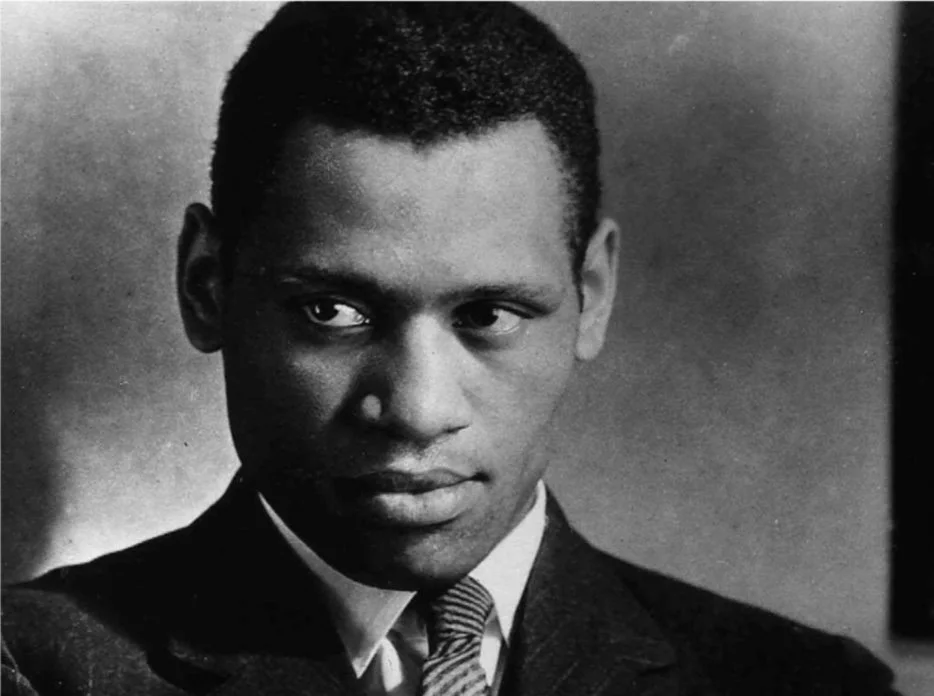
The transcendant Paul Robeson
Musicals can be centred around all walks of life – city or country, poverty or wealth. But what catches my eye are the ones given unusual settings or stories - sometimes originally conceived as a mischievous joke. Jerry Springer: The Opera - actuall the musical, written by the brilliant British standup Stewart Lee and Richard Thomas, was surely one idea borne of a keen sense of the absurd. I remember seeing a poster from a bus in 2003 and thinking this was just a piece of absurdist art. It was of course based on the US TV host's inflammatory show, contained a potent mix of extensively creative profanity, and surreal scenes, such as a troupe of tap-dancing Ku Klux Klan members and ran for over 600 of performances beginning in London from April 2003, before making a New York City debut in January 2008 at Carnegie Hall with Harvey Keitel starring as Jerry.
But it drew so many complaints and attracted so much controversy, especially from Christian groups and the far right, that Lee was left exhausted and deflated by his attempt to make such obvious and clever satire understood:
"It did make me feel there was not much point ever trying to reach a mass audience with anything interesting and provocative. You just run the risk of being misunderstood on a large scale."
And yet such a work is very important in a history of satirical musical, harking from Mel Brook's brilliant film The Producers (1967), filled with industry in-jokes as the character of Max Bialystock betting on a tasteless show to bomb, all for financial gain, with Nazi theme and central character, to the later smash hit of The Book or Mormon, or the South Park film of 1999 by Trey Parker.
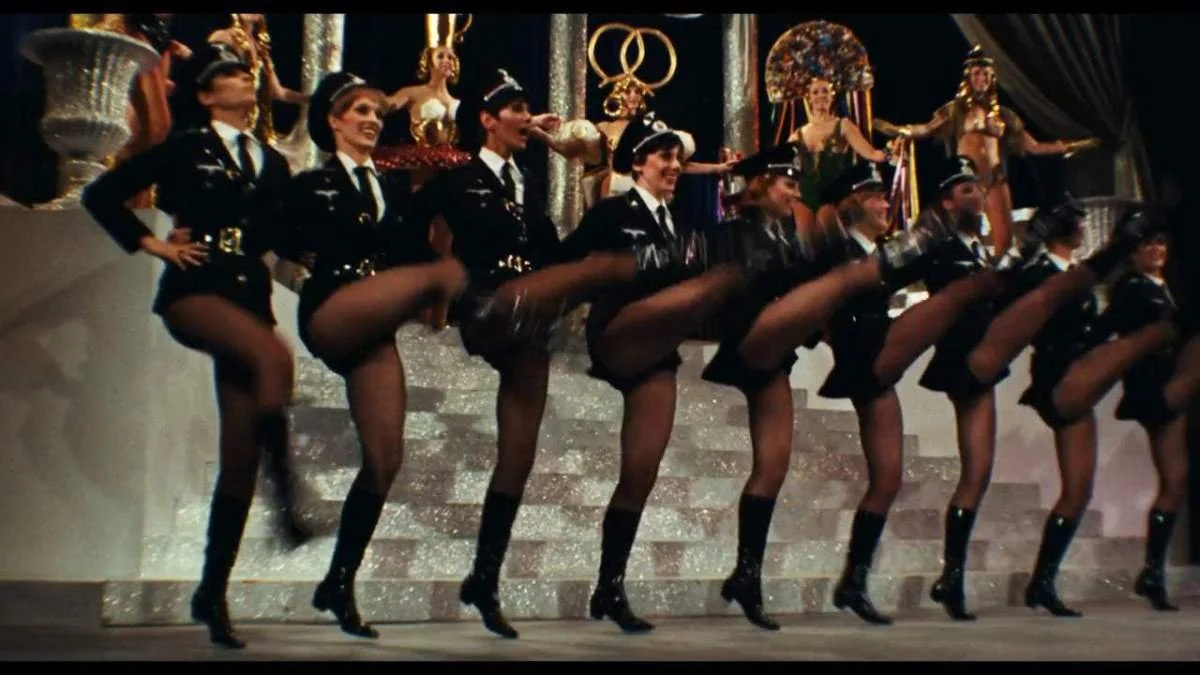
Nazi chorus line from The Producers (1967)
On a less successful note of the weird and wonderfully awful, Via Galactica (1972) was a space-themed musical trying to recreate a sense of weightlessness in the theatre. How? It featured a set made up of trampolines and a background of thousands of ping pong balls, but, naturally full of ups and downs (well, mostly downs …) it only ran for seven performances before falling back down to Earth and is one of the biggest flops in Broadway history. The storyline, in which non-conformists living on an asteroid, kidnap a garbageman to seduce him/introduce his genes into their gene pool. Naturally.
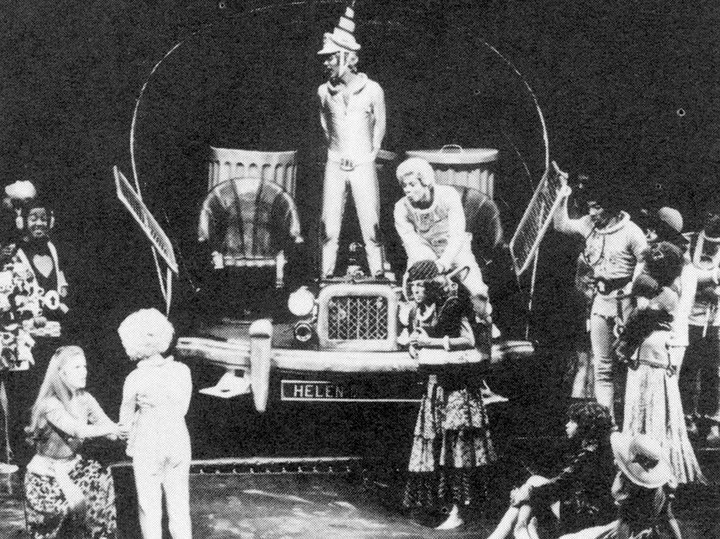
Via Galactica (1972)
But what's in the gene pool of your knowledge and appreciation of musicals? What songs can fly up and be enjoyed out on their own? Conducting the chorus and the orchestra on this week's topic is that master of song lists and keeping scores, Marco den Ouden aka Marconius! Place your suggestions in comments below for deadline at 11pm UK time on Monday, for playlists published next week. The show must go on ...
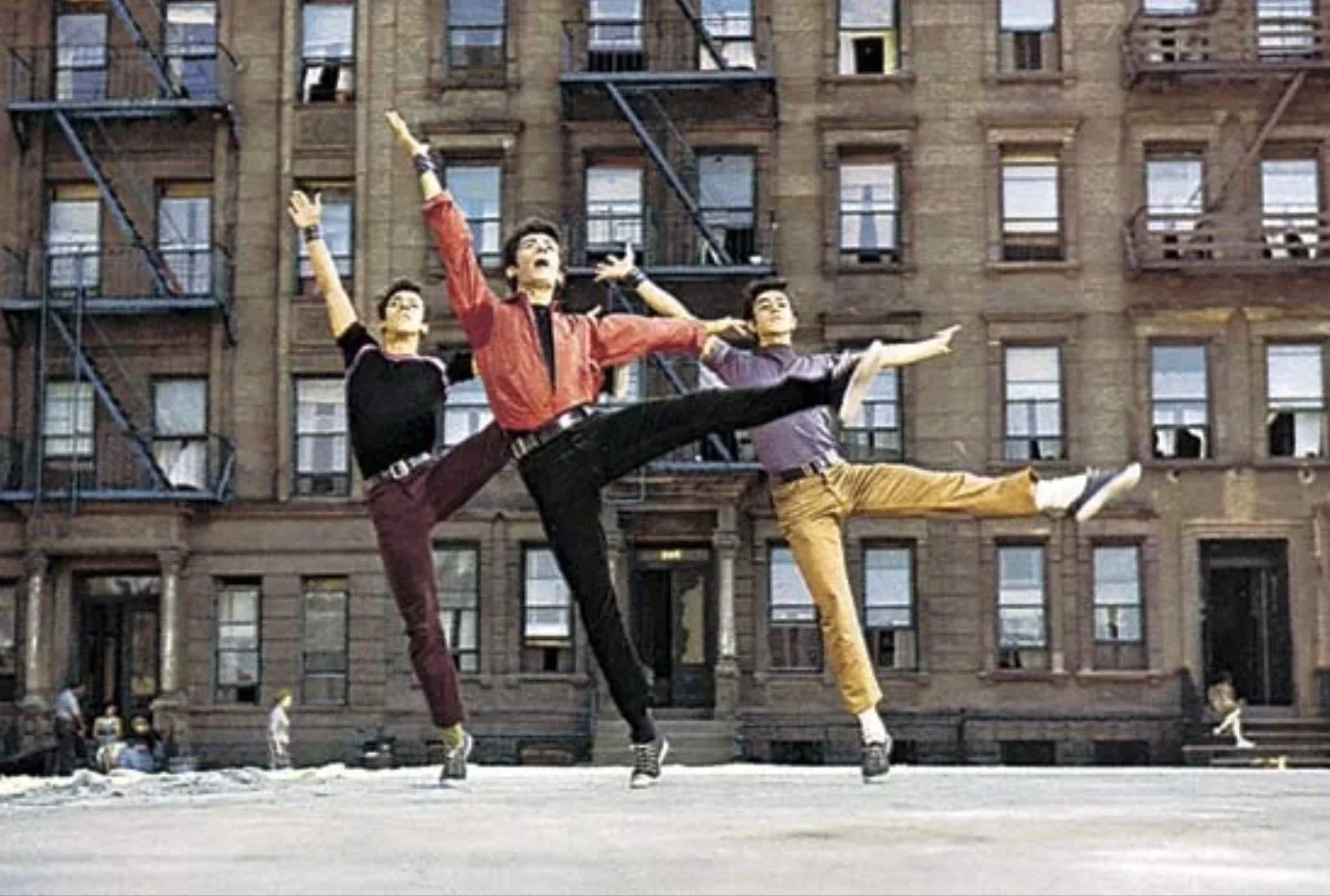
West Side Story …
New to comment? It is quick and easy. You just need to login to Disqus once. All is explained in About/FAQs ...
Fancy a turn behind the pumps at The Song Bar? Care to choose a playlist from songs nominated and write something about it? Then feel free to contact The Song Bar here, or try the usual email address. Also please follow us social media: Song Bar X, Song Bar Facebook. Song Bar YouTube, and Song Bar Instagram. Please subscribe, follow and share.
Song Bar is non-profit and is simply about sharing great music. We don’t do clickbait or advertisements. Please make any donation to help keep the Bar running.