
By The Landlord
“Men Wanted: For hazardous journey. Small wages, bitter cold, long months of complete darkness, constant danger, safe return doubtful. Honour and recognition in case of success.” ― Ernest Shackleton
“Huge blocks of ice, weighing many tons, were lifted into the air and tossed aside as other masses rose beneath them. We were helpless intruders in a strange world, our lives dependent upon the play of grim elementary forces that made a mock of our puny efforts.” – Ernest Shackleton
“Penguins are living lessons in caring for the earth and its creatures, in all their beauty and vulnerability.” – Charles Bergman
“Antarctica has this mythic weight. It resides in the collective unconscious of so many people, and it makes this huge impact, just like outer space. It's like going to the moon.” – Jon Krakauer
“First you fall in love with Antarctica, and then it breaks your heart.” – Kim Stanley
“I have done this to show what an Englishman can do." – Robert Falcon Scott, 1912
“I am just going outside, and may be some time.” – Lawrence Oates, 1912
“One of the things that was so remarkable about it was that the ice itself is a kind of pure geometry, so say, for example, if I was facing someone wearing a Joy Division t-shirt. Geography is crucial for my work. I went to Antarctica and took a studio to several of the main ice fields to make field recordings of ice to create a symphony - acoustic portraits of ice.” – DJ Spooky
“At a time when it's possible for thirty people to stand on the top of Everest in one day, Antarctica still remains a remote, lonely and desolate continent. A place where it's possible to see the splendours and immensities of the natural world at its most dramatic and, what's more, witness them almost exactly as they were, long, long before human beings ever arrived on the surface of this planet. Long may it remain so.” – David Attenborough
A little over a year ago, we went to explore the frozen north and formed a beautiful glacier of playlists. This time, it's time to turn that world upside down to an area of arguably even more unparalleled brutal beauty and remoteness, its icy vastness packed with extraordinary stories of exploration, endurance, bravery, tragedy, cruelty and irony, a cornerstone of scientific research, and of course of the hardiest survivors of the natural world – of penguins, seals, whales, birds, moss and plant life. To explore Antarctica, where most of us will never go, any more than going to the Moon or Mars, is as much a journey of the imagination, one that has inspired all sorts of music, lyrical and instrumental.
This week's topic mainly concentrates on the continent itself, a vast area that's 40% bigger than the whole of Europe, but also some of the surrounding islands beyond the circle at 66°34S, to north of the Weddell Sea to South Georgia, South Orkneys, South Shetlands, The Falklands (Malvinas) to the tip of South America (but not that continent unless it's in the context of Antarctica), and the same going beyond the Ross Sea but not including New Zealand and Australia itself, all of which would fit into another topic.
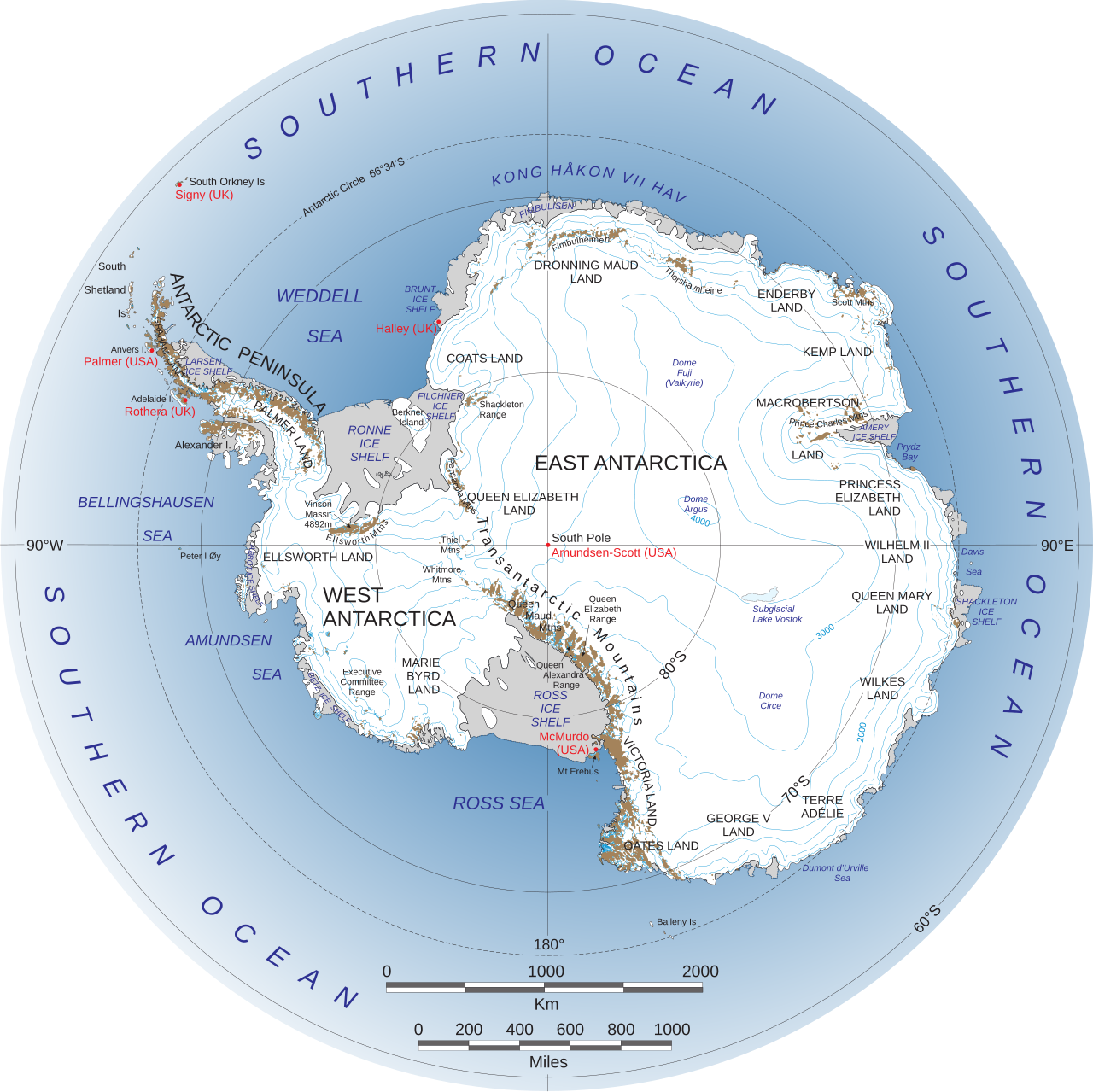
Antarctica region
Antarctica is a unique part of the world, the only continent without permanent or native human population, and is essentially a neutral territory, with various section claims by Argentina, Australia, Chile, France, New Zealand, Norway, and the United Kingdom, but since the 1959 Antarctic Treaty, is an internationally agree area of peaceful scientific study and conservation, in which many nations have set up bases, but are all legally allowed to mutually inspect, and often collaborate. It's a key area in the study and comparison of climate change, ozone depletion, larger geological history, ice flow, tectonic plates and plant paleontology.
It is also full of otherworldly natural oddities. The Ross Shelf is known for its "singing ice". Several hundred metres thick, it covers an area the size of France, and can sing an eerie melody when constant winds blow across its snow dunes, creating surface vibrations and almost non-stop seismic tones, changing in response to the environment. It's really more audible to scientific instruments than to our ears (which in any case would probably freeze off if we stopped to listen), but that strange music of land, water and air beyond our comprehension is profoundly poetic.
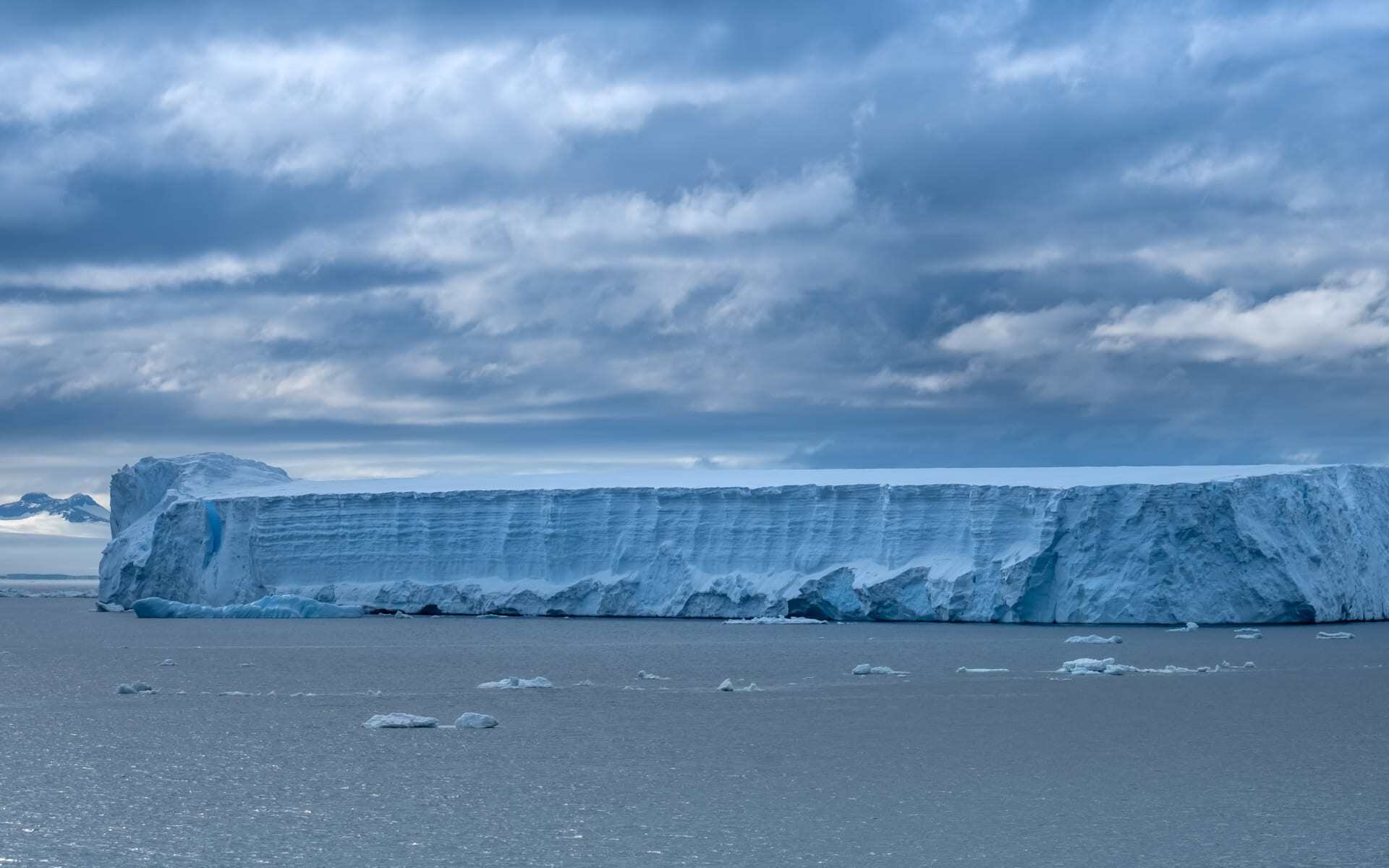
Ross Ice Shelf, Antarctica
There are also many underground lakes, perhaps as many as 400 sitting at under 3 kilometres of ice, and Lake Vostok, discovered in the 1990s by Russian scientists, is the third most voluminous in the world. Deep Lake, meanwhile is 55 metres below sea level, with water salinity increasing as it gets deeper. So while Antarctica's ice is up to 5 km thick, and any part of up to a million years, it gradually flows outwards from the centre and breaks off into icebergs.
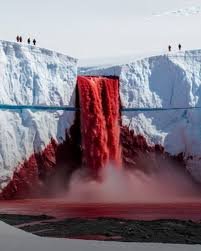
Blood Falls in the McMurdo Dry Valley
As the continent all white ice and snow and or just rock? No. Much of the ice is actually blue. Meanwhile Blood Falls in the McMurdo Dry Valley is a bright crimson, five-storey-high waterfall pouring out of Taylor Glacier into Lake Bonney. It looks like a gush of blood from a wound in the ice, but the colour comes from rich iron deposits devoid of oxygen and sunlight but, as it emerges through a fissure in the glacier and comes into contact with the air, the iron oxidises and rusts, staining the water a dark red colour. Bleedin' hell, indeed ...
Antarctica also been a fertile geographical and psychological area for often outlandish conspiracy theories, from mountain-sized lost pyramids, mythological species of giants, battles with alien spaceships, to Nazi hideouts and the occult, but let's not get lost in that, unless it's covered in song of course...
One of Earth's oldest continents, 3 billion years old, Antarctica has a surprising history. It was part of the larger Gondwana supercontinent, parts of which broke off to become those of South America, Africa and India. At some point in its long history it was all plant and tree forests, was home to dinosaurs and later mammals, and even included penguins six feet tall.
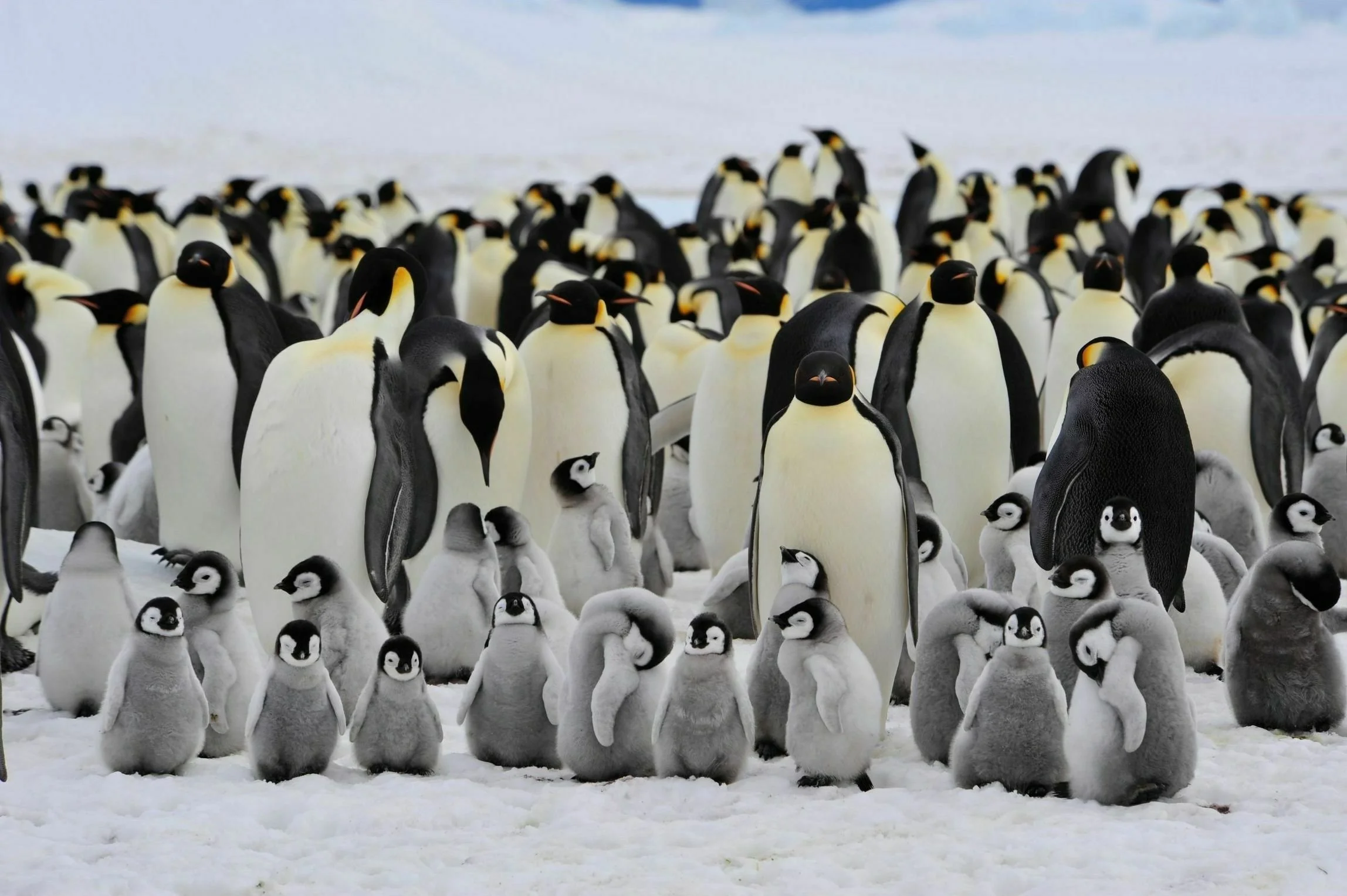
Penguins of course may gather en masse in your song suggestions. It's impossible not to love them, to feel emotional about their bravery, their monogamous loyalty, their endurance, especially the extreme lifestyle of the emperor penguin, the rearing of the young, through harsh winter, the shuffling in groups in -50C winds. It's a well-known life-cycle narrative covered in many documentaries and films, and if you have any kind of pulse, it is impossible not to be affected by. As Ernest Shackleton wrote his journal, South, of his 1914-17 expedition:
“A strange occurrence was the sudden appearance of eight emperor penguins from a crack 100 yds. away at the moment when the pressure upon the ship was at its climax. They walked a little way towards us, halted, and after a few ordinary calls proceeded to utter weird cries that sounded like a dirge for the ship. None of us had ever before heard the emperors utter any other than the most simple calls or cries, and the effect of this concerted effort was almost startling.”
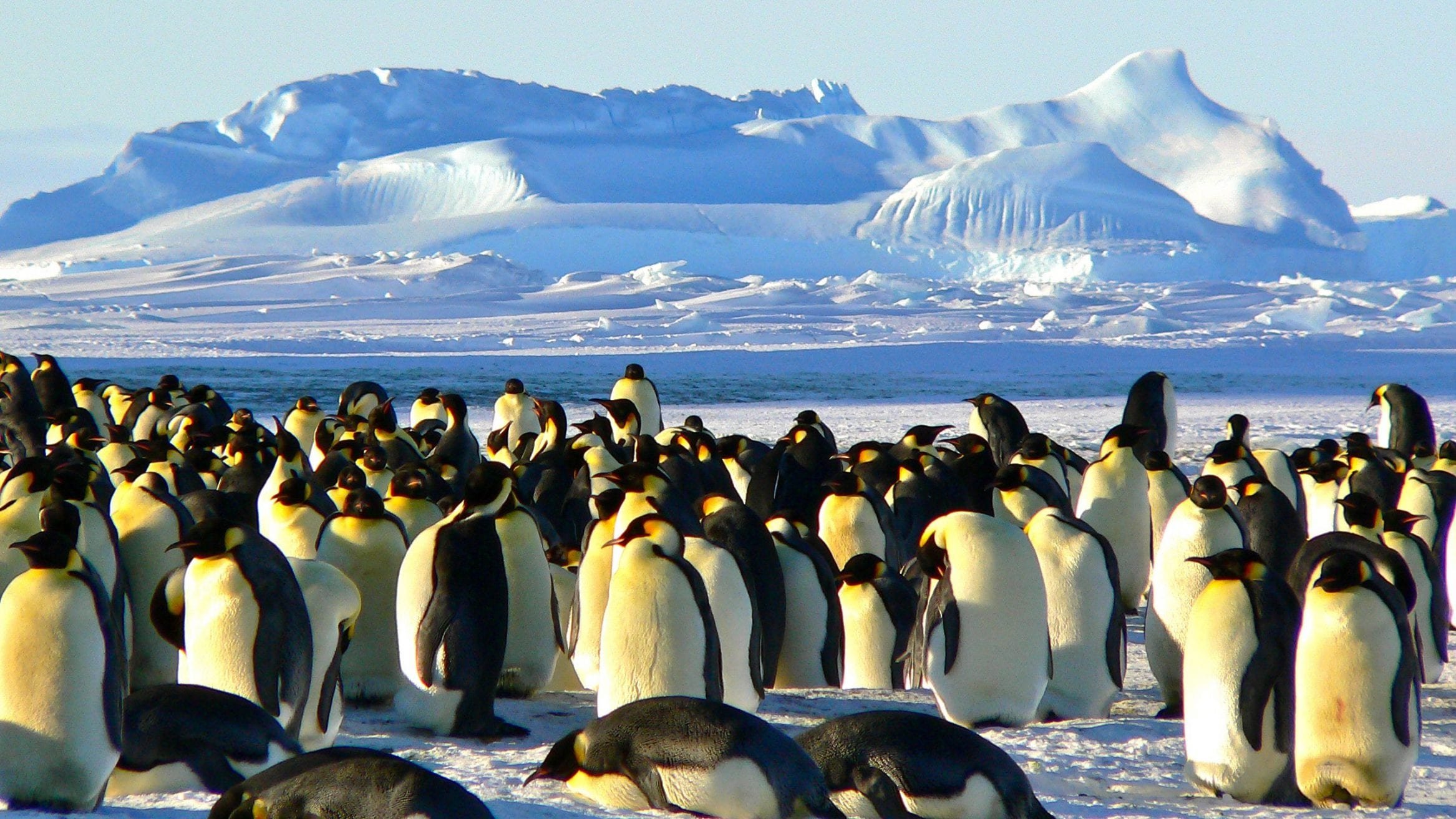
Emperor penguins - a sight and sound for Shackleton and many more
So what then of human stories and the region? The term Antarctic was first coined by the Ancient Greek geographer, cartographer and mathematician, Marinus of Tire in the 2nd century AD, as opposed to the Arctic region. But in terms of physical discovery, there's a blurry history. It's quite possible that the Polynesian explorers visited, as captured by oral tradition from Rarotonga, and by the navigator Ui-te-Rangiora or Hui Te Rangiora. Many Spanish and Portuguese explorers also travelled far south. A visit to South Georgia by the English merchant Anthony de la Roché in 1675 was the first ever discovery of land south of the Antarctic Convergence, after which cartographers began to depict ' Roché Island. James Cook surveyed and mapped the island in 1775, spurred on by The Royal Society and the hydrographer Alexander Dalrymple. Edmond Halley and Yves Joseph Kerguelen also made further explorations south, but for any sea voyage, the area is so dangerous and difficult, it is no wonder that it took so long to land on the main continent.
From the 1820s onwards, Antarctica became a bloody massacre area of seal and whale hunting, almost completely destroying these animal populations for fur and oil. Songs about this era with reference to any of the coastal or island areas will count, but the most resilient narratives will likely come later when Antarctica was seen as more of a target for exploration beyond the coast in what's known as the Heroic Era of Exploration.

“Three Polar Stars”: Amundsen, Shackleton and Peary
The Scottish National Antarctic Expedition led by William Speirs Bruce, leading to the establishment of Ormond House as a meteorological observatory on Laurie Island in the South Orkneys - the first permanent base in Antarctica. There are many other expeditions, from Australia, Belgium, Sweden, Germany and other countries.
From early attempts by Norwegian Carsten Borchgrevink to the ruthless focus of Norwegian Roald Amundsen finally reached the South Pole on 14th December 1911, beating Britain's Robert Scott by a month, Antarctica has become a focus point for extraordinary tales retold in many films and documentaries. Antarctica is most associated with Scott, who after reaching the pole on 17 January 1912, later died on the return journey from the Pole in his group of five men through a combination of starvation and cold, including that of Lawrence Oates, who famously sacrificed himself on his birthday by leaving the tent and not returning. One of the surprising facets of the region, unlike the north, is how quickly summer turns to winter, almost overnight.
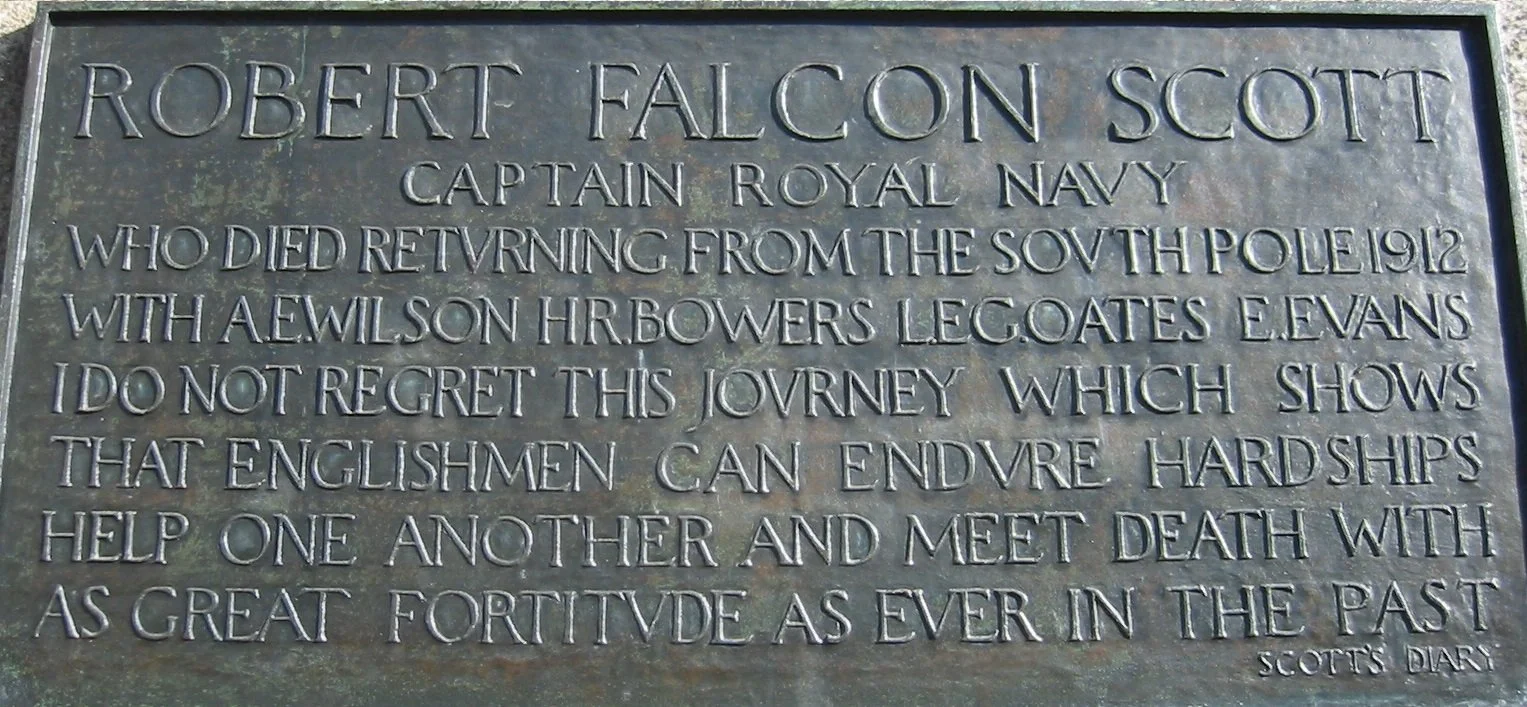
More words from Robert Scott’s diary at his statue in Christchurch
As Scott wrote in his found journal, these are his final words, dated 29th March 1912: “Had we lived, I should have had a tale to tell of the hardihood, endurance, and courage of my companions which would have stirred the heart of every Englishman. These rough notes and our dead bodies must tell the tale, but surely, surely, a great rich country like ours will see that those who are dependent on us are properly provided for."

Grotto in an Antarctic iceberg, 1911 by Henry Ponting
But despite that tragic failure, Scott was a successful pioneer, the first to really go inland, and his Discovery Expedition from 1901 to 1904 made the first ascent of the Western Mountains in Victoria Land, and discovered the polar plateau, setting a farthest south record at the time: 82°17'S.
Failure, tragedy and death is a great driver for stories. But song suggestions on the exploration side, might also include the bravery of Ernest Shackleton, originally part of Scott's expeditions, and part of the Nimrod Expedition of 1907–1909, otherwise known as the British Antarctic Expedition, was the first of three major ventures to the Antarctic led by Ernest Shackleton and his second time to the continent.
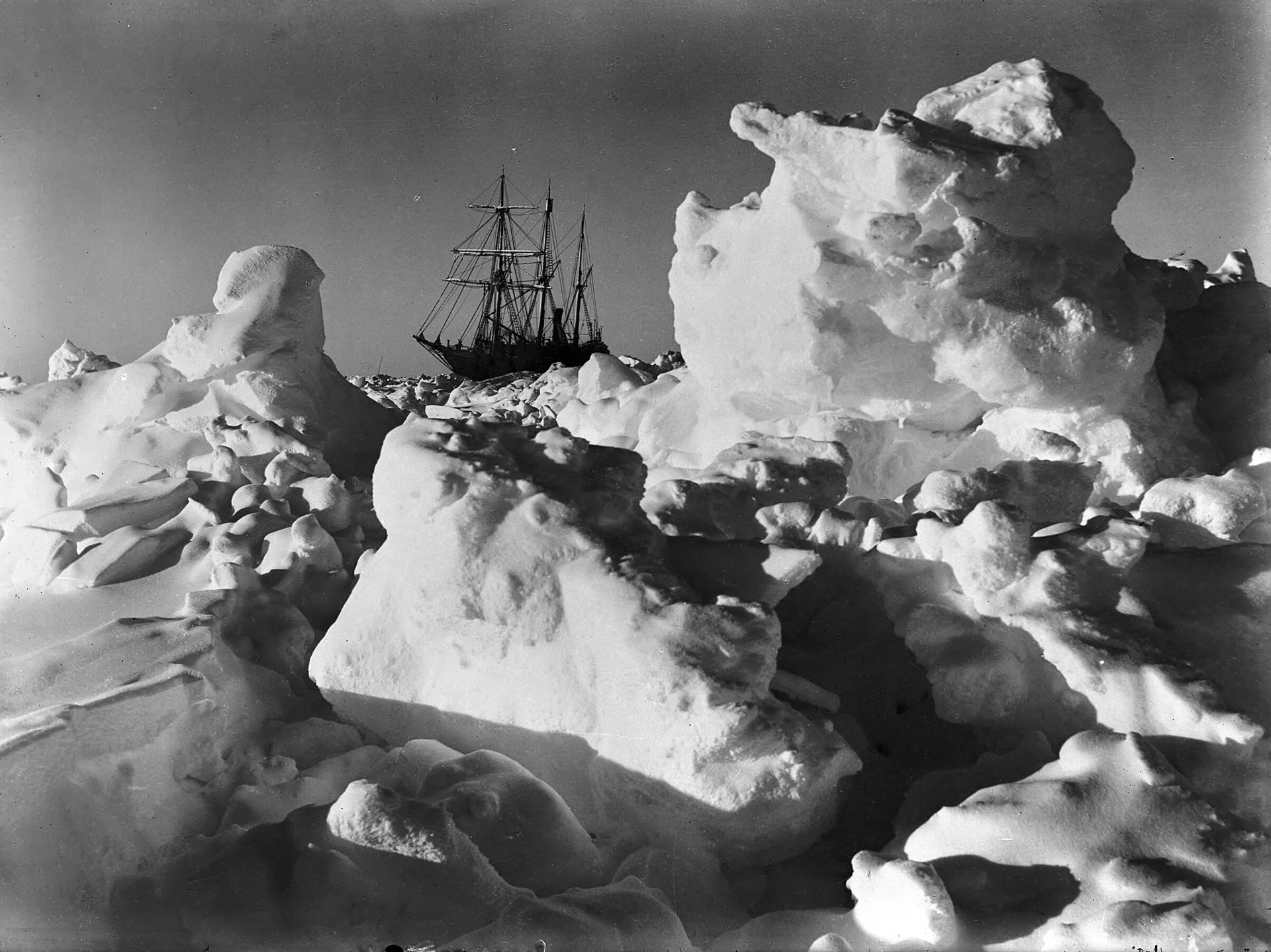
The Endurance is trapped by ice

Crew of the Endurance during the 1914-17 expedition
Most famous of all though is the tortuous voyage of the Endurance 1914–1917, during which he and crew got trapped in ice for over a year, then saw their ship crushed and sink, camping on ice, a a lifeboat journey to the remote Elephant Island, then an even small boat to South Georgia. Unimaginable hardships, but survival was somehow achieved as Shackleton eventually returned to rescue the remaining 22 men.
So then, where will your musical Antarctica exploration lead you? Captain of this week's voyage is the brave and bold Admiral Sir Shiv Sidecar! Whether it's about history, geography, wildlife, wars or science or more of the region, collect and place your discoveries in the comment boxes below for a deadline at 11pm on Monday UK time, when the ship bell will ring. Good luck and wrap up well. And here’s a lesser known starter suggestion to help break the ice …
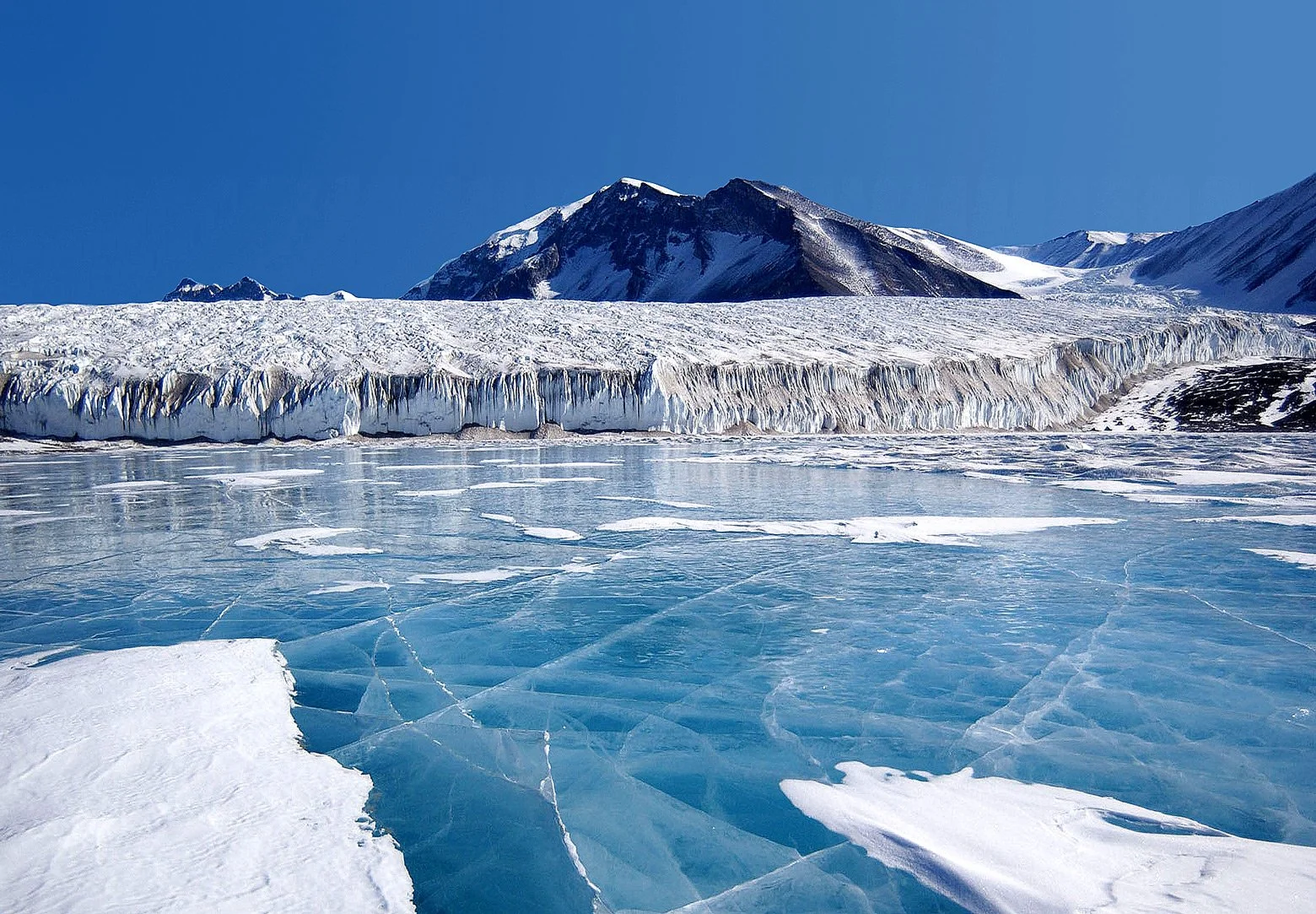
Blue ice at Lake Fryxell in the Transantarctic Mountains
New to comment? It is quick and easy. You just need to login to Disqus once. All is explained in About/FAQs ...
Fancy a turn behind the pumps at The Song Bar? Care to choose a playlist from songs nominated and write something about it? Then feel free to contact The Song Bar here, or try the usual email address. Also please follow us social media: Song Bar X, Song Bar Facebook. Song Bar YouTube, and Song Bar Instagram. Please subscribe, follow and share.
Song Bar is non-profit and is simply about sharing great music. We don’t do clickbait or advertisements. Please make any donation to help keep the Bar running.