
By The Landlord
“Popularity is teenage heroin.” – Shaun David Hutchinson, We Are the Ants
“You can make more friends in two months by becoming interested in other people than you can in two years by trying to get other people interested in you.” – Dale Carnegie, How to Win Friends & Influence People
"Men, it has been well said, think in herds; it will be seen that they go mad in herds, while they only recover their senses slowly, one by one.” – Charles Mackay, Extraordinary Popular Delusions and the Madness of Crowds
“To win the people, always cook them some savoury that pleases them.” – Aristophanes, The Knights
“Popularity should be no scale for the election of politicians. If it would depend on popularity, Donald Duck and The Muppets would take seats in the Senate.” – Orson Welles
“Avoid popularity if you would have peace.” – Abraham Lincoln
“Popular opinion is the greatest lie in the world.” – Thomas Carlyle
“Popularism is ultimately always sustained by the frustrated exasperation of ordinary people, by the cry of 'I don't know what's going on, but I've just had enough of it! It cannot go on! It must stop!'" – Slavoj Žižek
"Only on the Internet can a person be lonely and popular at the same time.” – Allison Burnett, Undiscovered Gyrl
"What is right is not always popular and what is popular is not always right.” – Albert Einstein
"Give the people what they want - and they'll get what they deserve.” – Ray Davies
“Personality is an unbroken series of successful gestures.” ― F. Scott Fitzgerald, The Great Gatsby
“Everybody loves you so much, girl, I just don't know how you stand the strain.” – Elvis Costello
"If Barbie is so popular, why do you have to buy her friends?” – Steven Wright
"Popularity is the one insult I have never suffered.” – Oscar Wilde
It might start off a goal, but end up being a gaol. Popularity, such as when we first go to school, college, or even appear at a new workplace, is perhaps something we long for, or at least think we do. To be admired, supported, universally respected, or talked about in positive terms by others outside your immediate friends or family, in other words by people who don’t really know you at all, seems seductive, and yet of course is utterly contradictory. It can also take many forms - to be popular doesn’t necessarily make you famous, as you might just be popular locally, or in your particular sphere or field, but wider fame does overlap with this subject.
It’s hard not to feel the seductive pull of popularity, no matter the cost or consequences, which can result in an arc of triumph and despair. The search for it, and consequences of it, all makes for tremendous stories and studies of human nature captured in books, film, art, and of course, in the more compact form of song. But how do you get and and where does it lead?
We’ve already heard some sharp insights on the subject from many figures above, and among those, Dale Carnegie, with his 20th century bestseller, a benign update of Italy’s far more manipulative 16th-century plotter Niccolò Machiavelli, adds a warning that: “When dealing with people, remember you are not dealing with creatures of logic, but with creatures bristling with prejudice and motivated by pride and vanity.”
The ever frank and wickedly funny film-maker and writer John Waters is also gracing our Bar, describing why he is somehow stupidly addicted to being liked: “A psychiatrist once told me early in treatment, ‘Stop trying to make me like you,’ and what a sobering and welcome smack in the face that statement was. Yet somehow, every day of my life is still a campaign for popularity, or better yet, a crowded funeral.”
The famously droll, brilliant, but also doleful British poet Philip Larkin is sipping tea in the corner, starting up an amusing conversation with John: “I think writing about unhappiness is probably the source of my popularity, if I have any-after all, most people are unhappy, don't you think?”
Enjoying the company, and the attention, Oscar Wilde is also back, adding, with a copy of The Picture of Dorian Gray in hand, declaring contrarily, "everything popular is wrong,” and "to be popular one must be a mediocrity.”
Joining this witty, downbeat and droll company, Harrison Ford is also around, adding: “The actor's popularity is evanescent; applauded today, forgotten tomorrow.”
Such are the contradictions of popularity. If you are creative, and do something to be read, seen or heard, part of that definition completely requires being appreciated by others. I’m no different in that respect as of course I aim for this Bar to be as popular as possible, but without it’s values or standards being compromised. Happily there is a statistically very large readership, and also a quietly appreciative one. Perhaps sometimes too quiet though …
The dilemma is summed up here by Cyril Connolly, writing in The New Statesman in 1933: "Better to write for yourself and have no public, than to write for the public and have no self.”
Ron and Russell Mael, aka the wonderful Sparks brothers, who in their long and influential career have much waxing and waining in sales and popularity in a fickle music business, but who are now riding high on a late wave, are straightforward about the needs of their genre. Here’s Russell: “We love popular music and there has to be a certain amount of popularity in what you do, or you're gone.”
Madonna is also in the House, a famous and variously popular figure arguably more of a marketing and image phenomenon, than a musical one (discuss …) but always bullish in her attitude: “I've been popular and unpopular, successful and unsuccessful, loved and loathed, and I know how meaningless it all is. Therefore I feel free to take whatever risks I want.”
Another guest in the Bar, who has gone full shameless “cheese” in his time as well as also gaining commercial respect in the industry, is Donny Osmond, who gives this warning: “You're an island no matter what you do. I think it's very dangerous to use popularity as your identity in life. So you have to really know who you are inside, the core person, and follow what is true rather than follow what is hype.”
Aesop Rock, who has been carving a successful, if niche under-the-radar career of brilliantly articulate, innovative, alternative hip-hop, prefers to stay out of the limelight: “Musicians are all about celebrity first and foremost, and I just can't do it. The second any sort of popularity contest comes into the picture, I have to walk in the other direction. These people are sociopaths.”
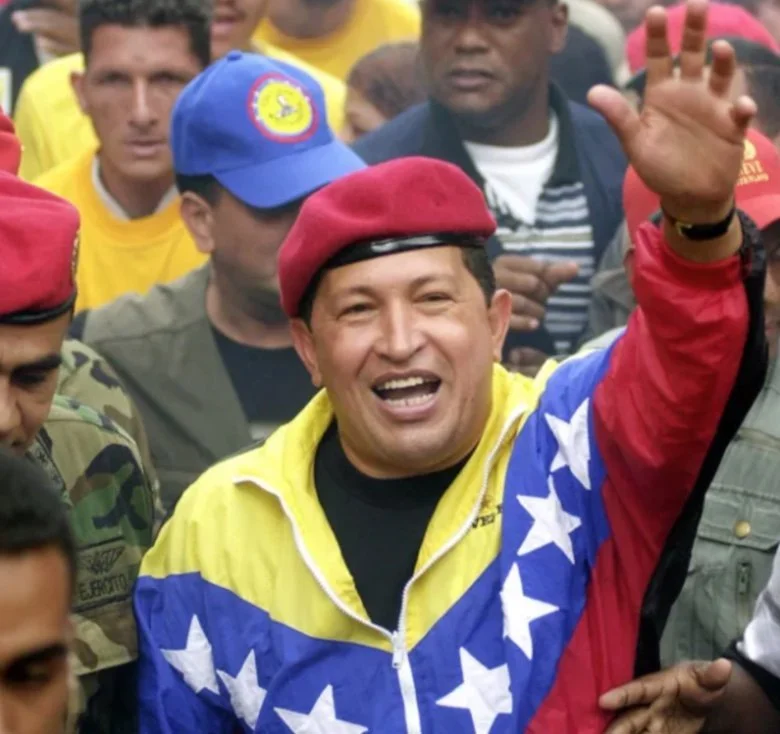
Talking of sociopaths, we can’t have a topic about popularity without mention of popularism, which is as much about the means of gaining popularity as the ends. The BBC South America correspondent Will Grant’s book, ¡Populista! (2021), is a fascinating study of six such leaders of different types in that region, filled with colourful stories of their rise and in some cases, fall, notably Cuba’s Fidel Castro, former Venezuelan president Hugo Chávez, Brazil’s Luiz Inácio “Lula” da Silva, Evo Morales in Bolivia, Rafael Correa in Ecuador and Nicaragua’s Daniel Ortega. While sharing some qualities, they are all different, some idealists with great intentions, others less so, but all gaining huge popularity by fair means of foul. With plenty of manipulation and interference by the CIA in the background, their stories make for a fascinatingly seedy against-all-odds epic drama, of almost Ancient Greek or Shakespearean proportions, a mass TV soap opera waving and drowning, of plots and subplots, coups and corruption, back-stabbings and death squads, political upheaval and sordid status quos, iron grips on power, desperate downfalls and triumphant, shock comebacks.
All very different, with the especially dominant figures of Castro and Chávez, but what they also share illuminates the the downsides of popularism, or as Grant puts it: “They were also object lessons in the dangers of a government, indeed an entire political movement, built on the shoulders of one man.”
Grant begins his book with a warning about what is happening now in the rest of the world:
“Popularism is the defining political issue of the 21st century. Electorates from London To Lahore, Moscow to Manila are struggling to distinguish between the half-truths and outright falsehoods being peddled by populist leaders of every political hue. In Europe, anti-democratic figures have risen to prominence in several countries, riding waves of xenophobic popular support not seen since the 1930s ... The United Kingdom is coping with a new and destabilising current of populist discourse while the United States is being led by the most polarising and capricious president it has ever known.”
It’s a dire and important warning, the situation growing each day, fuelled by social media and shadowy sponsors … but on a more musical context, let’s have a look at some political figures who have also sought popularity, not just through politics, but through musical performance.
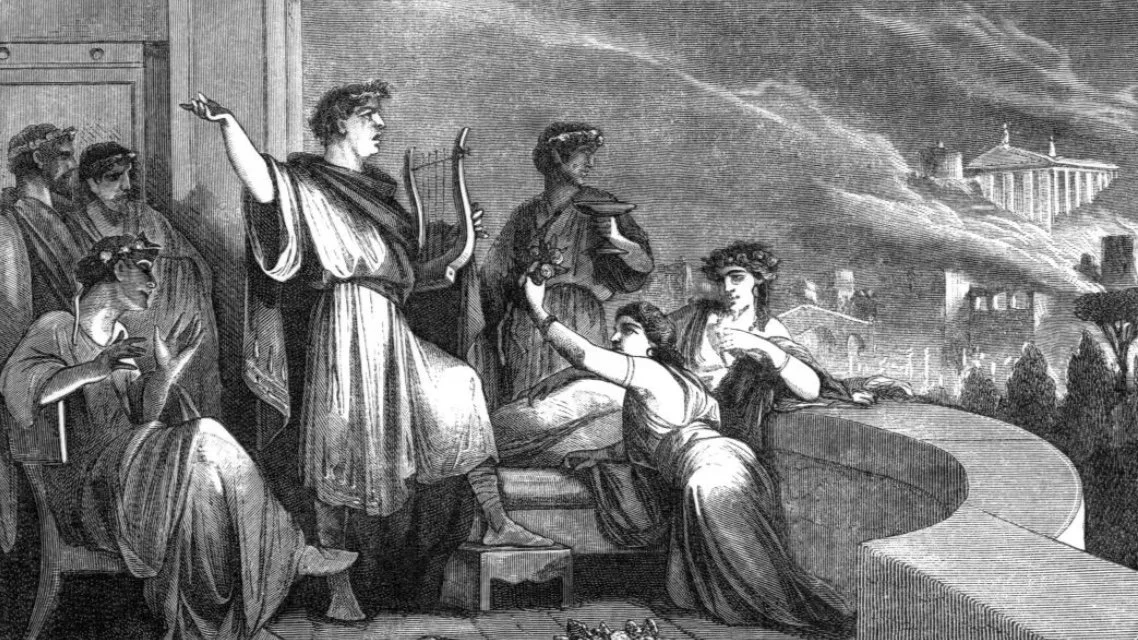
The Emperor Nero doesn’t so much fiddle, but play lyre while Rome burns …
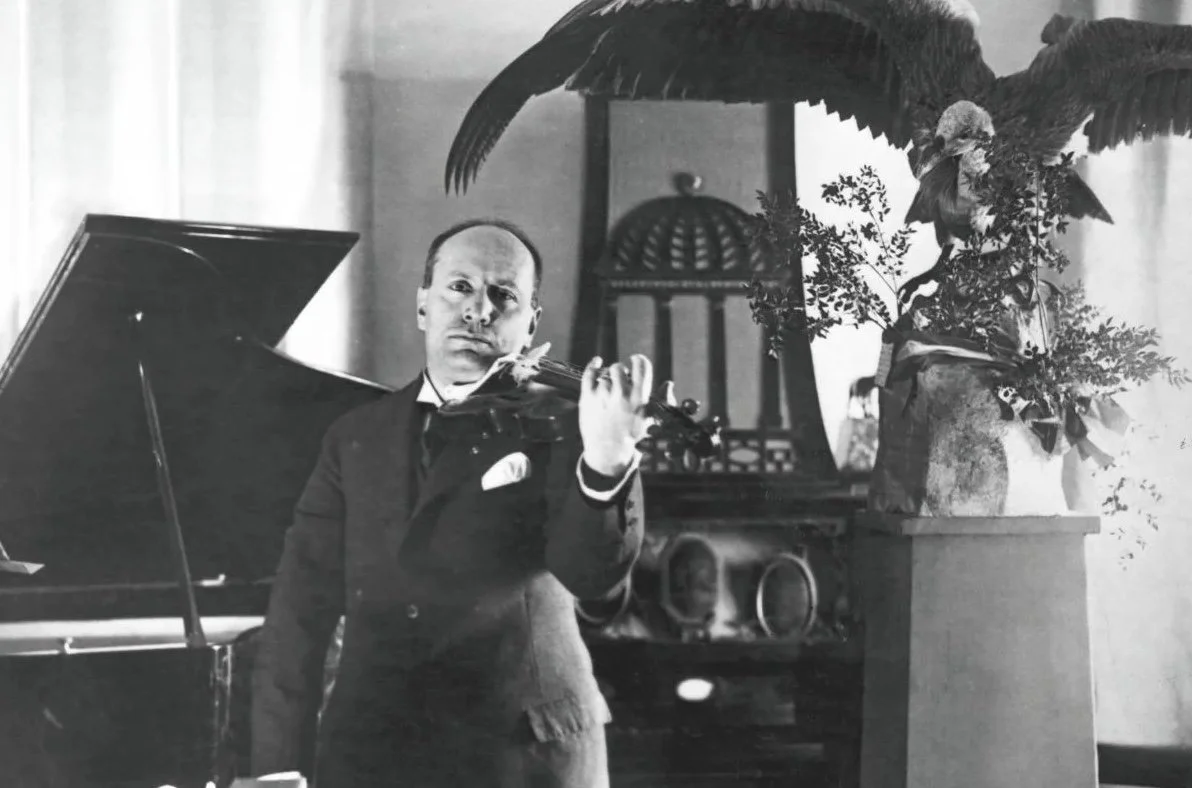
… but Benito Mussolini was frequently on the fiddle …
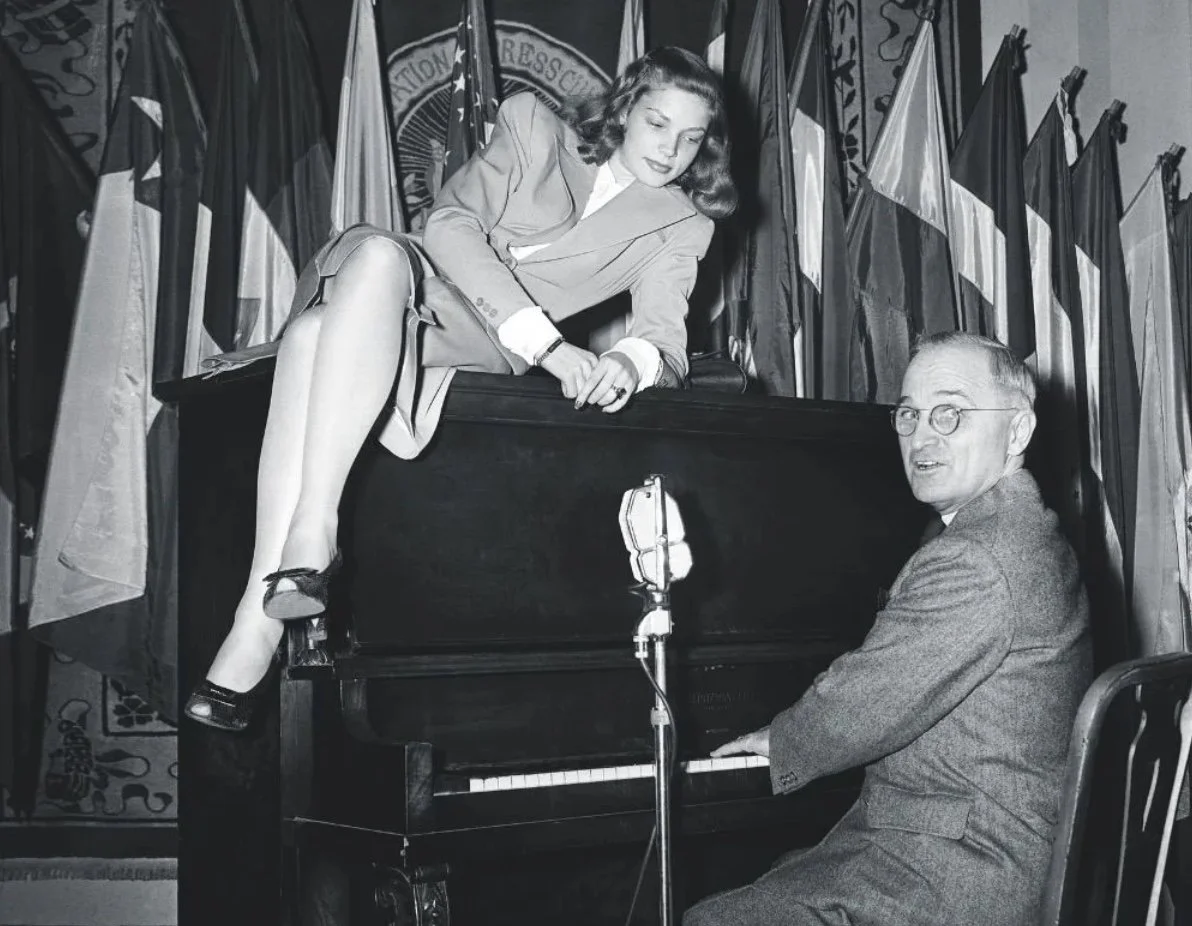
Harry S Truman liked to keep his fingers on the pulse of pianos and popularity, including this photo op with Lauren Bacall
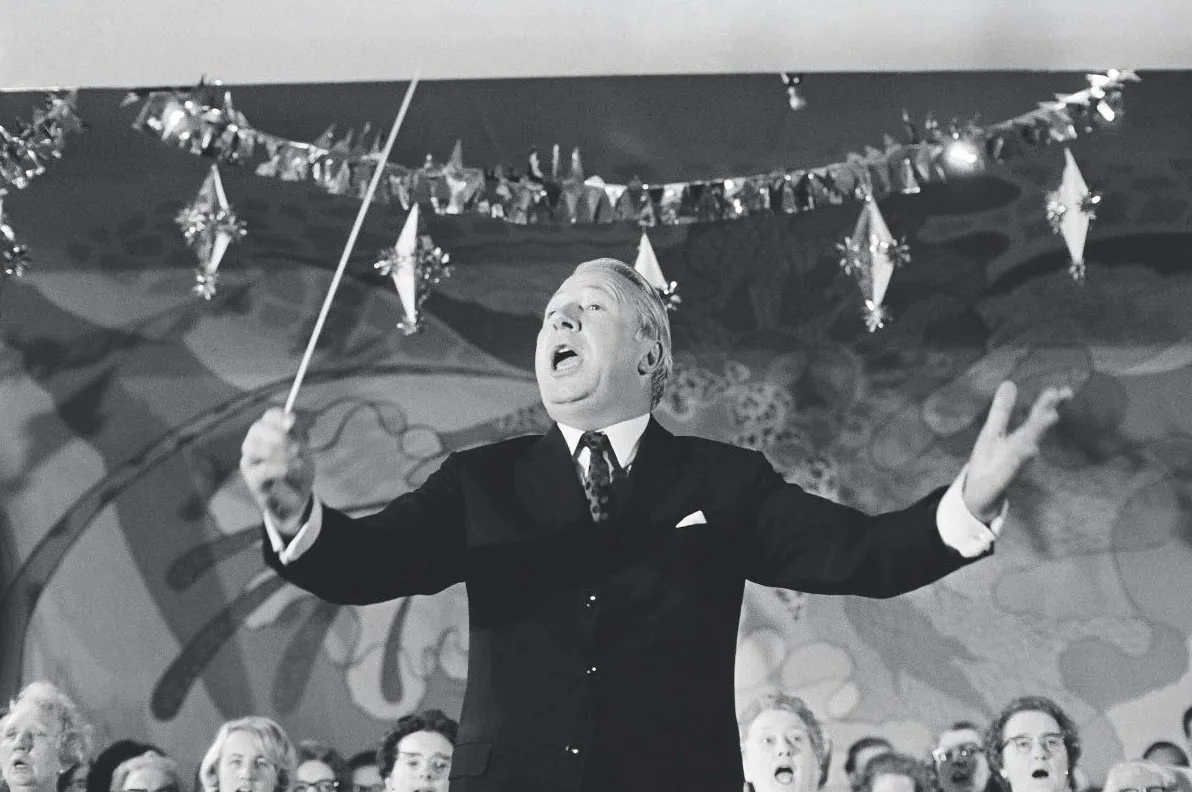
British PM Edward Heath had ideas on how to conduct himself, here in 1970
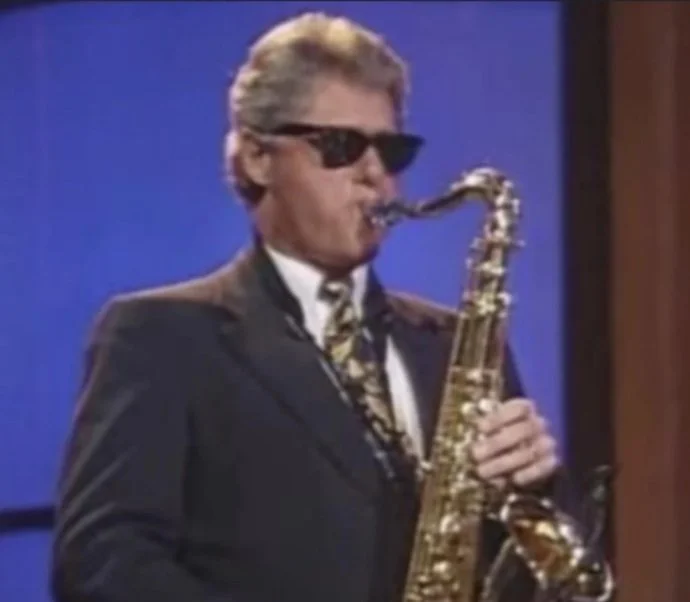
Bill Clinton always enjoyed a good blow …
Enough about those popularity seekers and those currently in power. Now back to school, just as we began. Here’s the British actress and standup Arabella Weir: “When popularity is your only goal, doing well in class is going to feature very low, if at all, on your priority list.”
But there’s also a contradiction there. With that in mind, let’s end on on a lighter, more entertaining note, returning to the school scenario, that time when we might first feel popularity’s pull and also bite. There are many excellent films and books about this, such as Heathers (1989), Booksmart (2019), or Napoleon Dynamite (2004), but, also briefly touched on in last months back to work and school topic, Election (1999), is a fantastically sharp and funny film about the growing feud between a righteous school teacher (Matthew Broderick) and a precocious student (Reese Witherspoon), neither of whom are popular and all, with the latter stopping at nothing to get elected as head of the student body.
So then, it’s time to propose, and elect songs about popularity in all of its forms, craziness, and contradictions, personal, political or otherwise. This week, as yet we have no returning officer, but as an experiment, as well as suggesting songs on this subject, please upvote any songs nominated that you like, not just those you nominate. Upvotes, seen next to comment boxes, can only happen once by each reader, at least on the same device. Why this method? It’s an experiment in popularity and democracy. The resulting playlists will be governed by their degree of popular upvotedness. Is it a flawed system? Will they be the best choices? Perhaps. Perhaps not. Let’s see. That’s the contradictory nature of popularity. Over to you, then, wise and learned readers and music lovers. Please vote for as many songs as you like, and even your own ideas - once. Every vote counts.
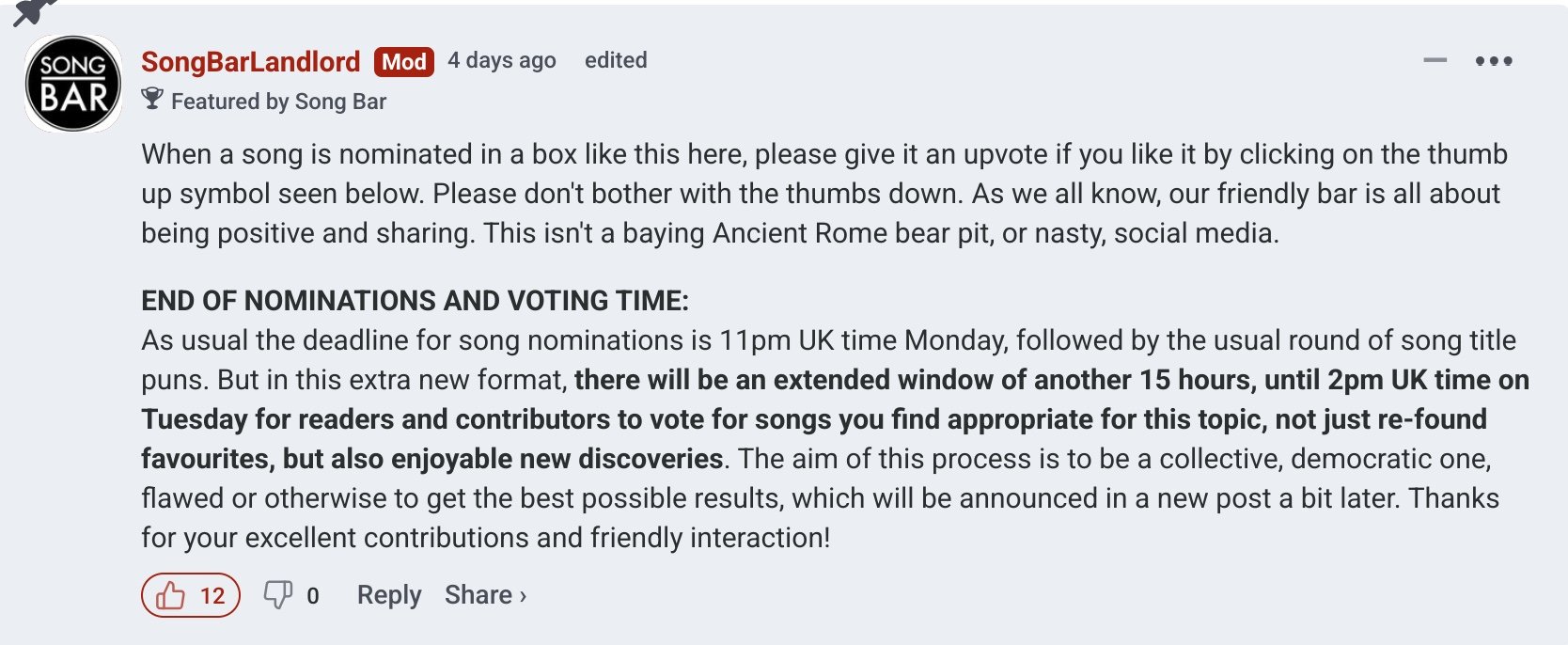
New to comment? It is quick and easy. You just need to login to Disqus once. All is explained in About/FAQs ...
Fancy a turn behind the pumps at The Song Bar? Care to choose a playlist from songs nominated and write something about it? Then feel free to contact The Song Bar here, or try the usual email address. Also please follow us social media: Song Bar X, Song Bar Facebook. Song Bar YouTube, and Song Bar Instagram. Please subscribe, follow and share.
Song Bar is non-profit and is simply about sharing great music. We don’t do clickbait or advertisements. Please make any donation to help keep the Bar running.