
By The Landlord
“The sitar is a world in itself, extensive, limitless, with towering peaks and deep valleys.” — Roop Verma
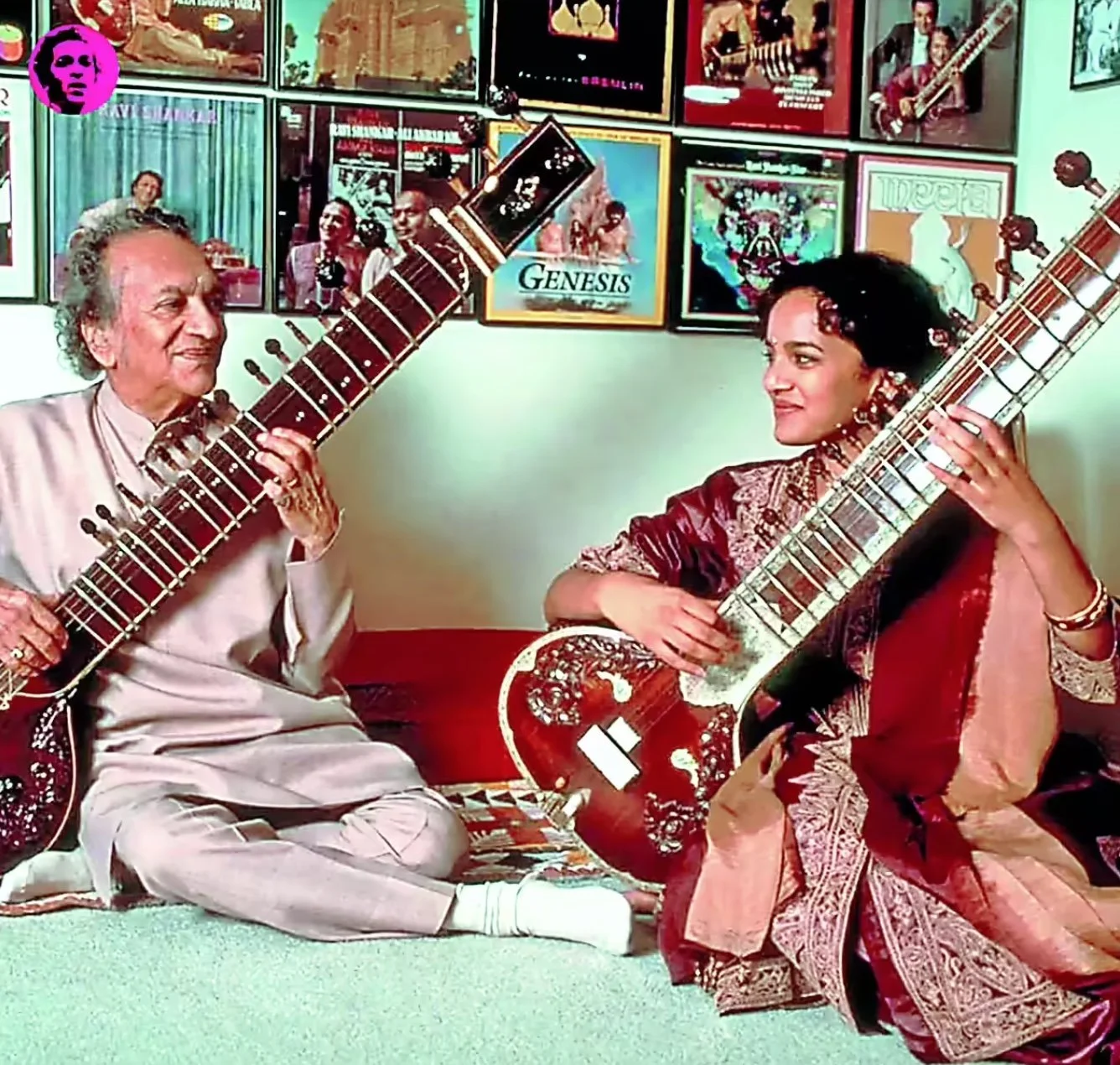
“The sitar is a really difficult instrument to play. Physically it's taxing... There's a lot of pain, especially at the start.” — Anoushka Shankar
“There are thousands of ragas, and they are all connected with different times of the day, like sunrise or night or sunset. It is all based on 72 of what we call 'mela' or scales. And we have principally nine moods, ranging from peacefulness to praying, or the feeling of emptiness you get by sitting by the ocean.” – Ravi Shankar
“In the west, classical music is composed by individuals and written down. Indian music is based on certain sequences called ragas. When I perform live, 95% of the music is improvised: it never sounds the same twice.” – Ravi Shankar
It produces a distinctively beautiful, flavoured, warm, twangy, exotic sound - filled with melodious bends and scales, and a crystalline, shimmering resonance emanating from a row of vibrating, sympathetic strings. Formally an Indian classical instrument, one that takes many years to master, to western ears it might summon up a series of cliched associations - temples, spices, rugs and magic carpets, incense, expansive Indian ragas, and then course The Beatles, George Harrison, and 60s psychedelia, but it has infused into waves of other music.
This week then, we explore the beautiful sound of the sitar, from its Indian core as well as other genres, not merely the instrument in its pure, beautifully crafted, long-necked multi-stringed form, and also the bass sitar or surbahar, but also the electric sitar with music using sitar sounds, recreated by pedals and midi effects, blending across cultures and continents.
While the sitar has origins in the Indian subcontinent, and is most commonly used in Hindustani classical music, it's not nearly as old as many would imagine. The instrument as we would recognise today it was invented in the 18th century, and arrived at its present form in 19th century India. Khusrau Khan, from the 18th-century Mughal Empire, is agreed by many scholars as its inventor, developing the sitar from the setar (or in Persian sehtar meaning three strings), an Iranian instrument of Abbasid or Safavid origin. The earliest known written mention of sitar is in 1739, in the The "Muraqqa-i-Dehli", penned by Dargah Quli Khan during the reign of Muhammad Shah Rangila.

Sarasvati, the Hindu goddess of music, art, and learning is often depicted playing the sitar by Raja Ravi Varma, 1896
Some earlier models fewer strings, but now most have 18, 19, 20, or 21 strings; six or seven of these run over curved, raised frets and are the played strings, but the remainder are sympathetic strings (tarb, also known as taarif or tarafdaar), running underneath the frets and resonating in sympathy with those plucked above them. Unlike on a guitar or lute, the frets, which are known as pardā or thaat, are movable, allowing fine tuning. The played strings run to tuning pegs on or near the head of the instrument, while the sympathetic strings, which have a variety of different lengths, pass through small holes in the fretboard to engage with the smaller tuning pegs that run down the instrument's neck.
What also makes the sitar different to many stringed instruments are two bridges: the larger (badaa goraa) for the playing and drone strings, and the small bridge (chota goraa) for the sympathetic strings. Its timbre results from the way the strings interact with the wide, rounded bridge. As a string vibrates, its length changes slightly as one edge moves along the rounded bridge, promoting the creation of overtones and giving the sound its distinctive tone. The maintenance of this specific tone is by the skilled maker’s shaping the bridge - called jawari.
Teak or tun wood, which is a variation of mahogany, make up the neck and faceplate (tabli), while calabash gourds comprise the resonating chambers. The instrument's bridges were originally of deer horn, ebony, or very occasionally from camel bone, but now more mostly synthetic material.
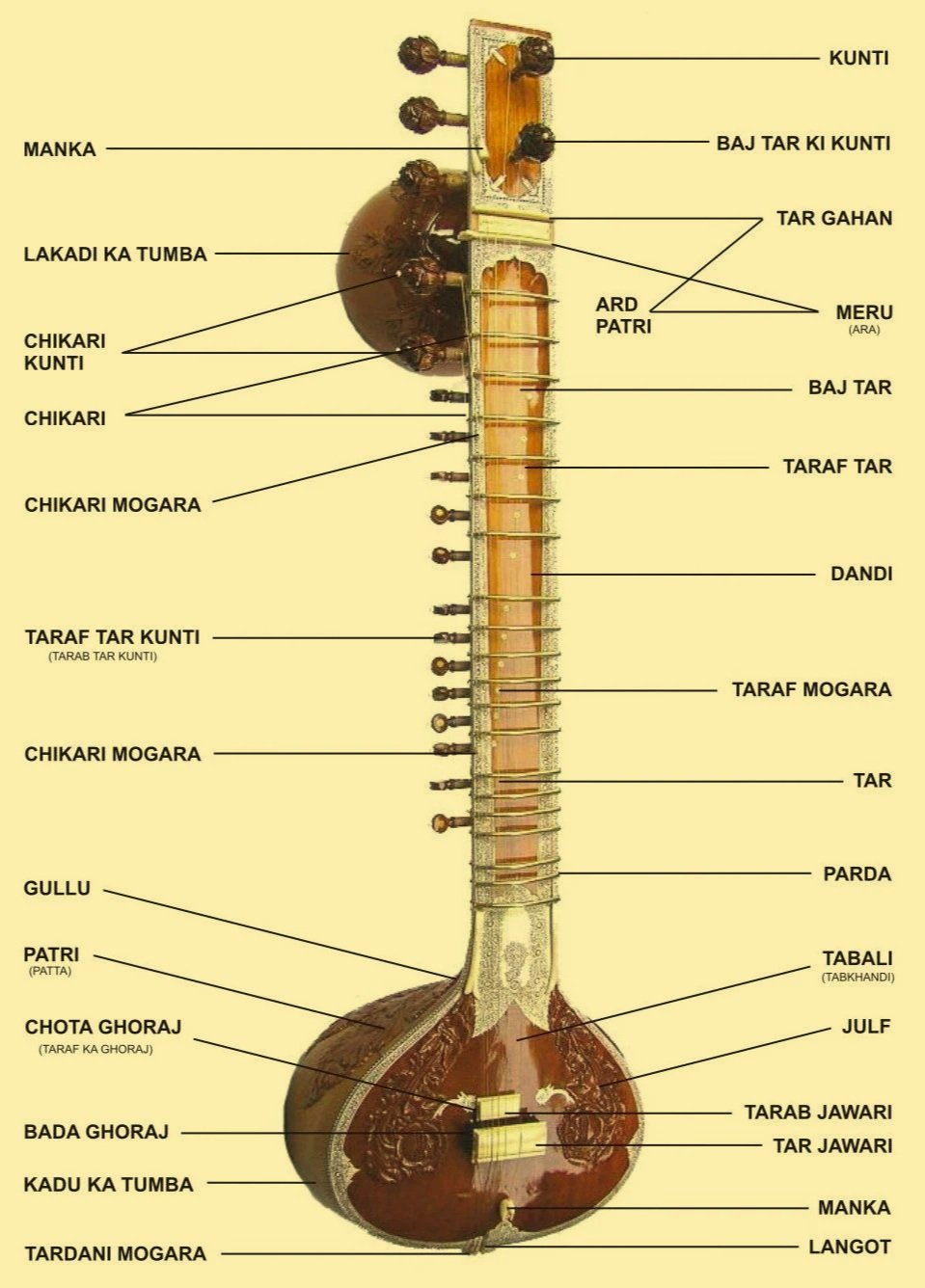
Sitar parts
Above is diagram, and below, a video in which Abhik Mukherjee explains to guitarist Rob Scallon how the instrument works, demonstrating the quite remarkable flexibility of the strings to bend several notes up or down.
While the southern India classic veena may strike up some similar cultural associations, (see the Word of the Week entry on this), it is an entirely separate, much older instrument. But this week we can include the bass sitar, or surbahar, with its rich and deeper tones. Here is another detailed diagram, some legendary older players, and a video by modern master Kushal Das, who can bend strings up to an octave at a time.
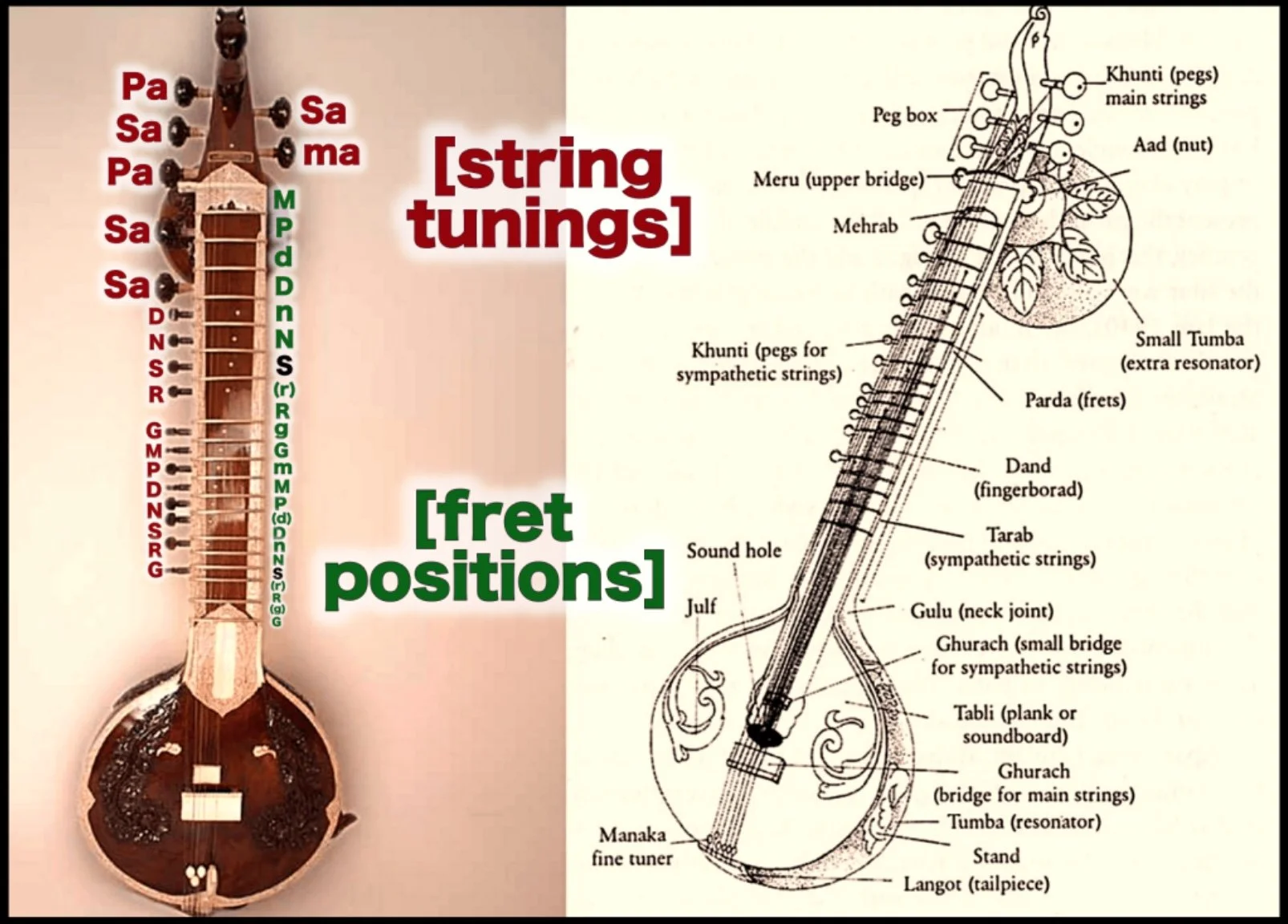
The surbahar or bass sitar
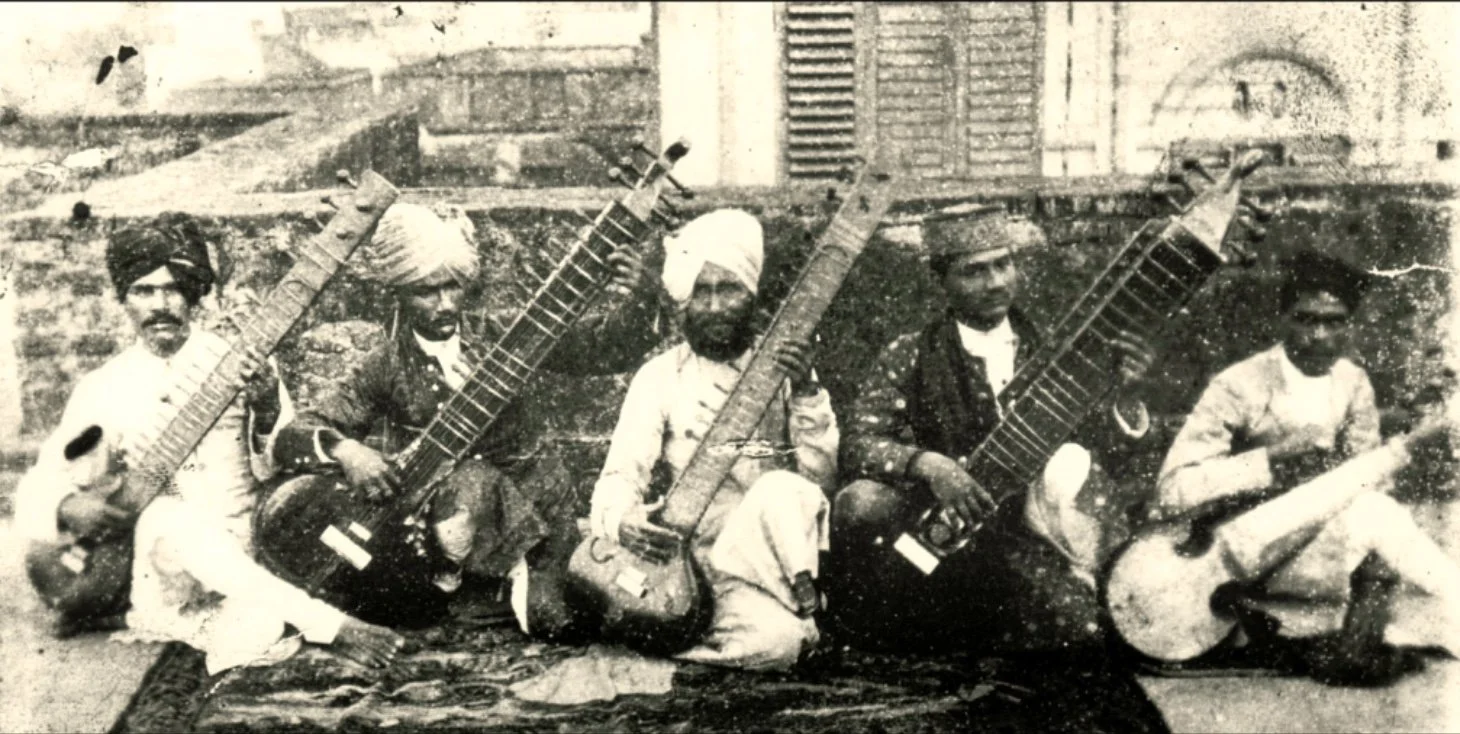
Early 20th century players Enayat, Imdad, and Wahid Khan with their surbahars. Some of their recordings were published on 78 vinyl
Back to the better known form of sitar, there are many tuning variants, in more modern times, particularly the 20th century onwards, there have been two popular modern styles: the fully decorated "instrumental style" (sometimes called the Ravi Shankar style) and the "gayaki" style, also Vilayat Khan style, named after another great master, considered by many considered by many to be the greatest. Along with Imdad Khan, Enayat Khan, and Imrat Khan, he is credited with the creation and development of gayaki ang (a technique that emulates the vocal melisma of Hindustani classical music) on the sitar.
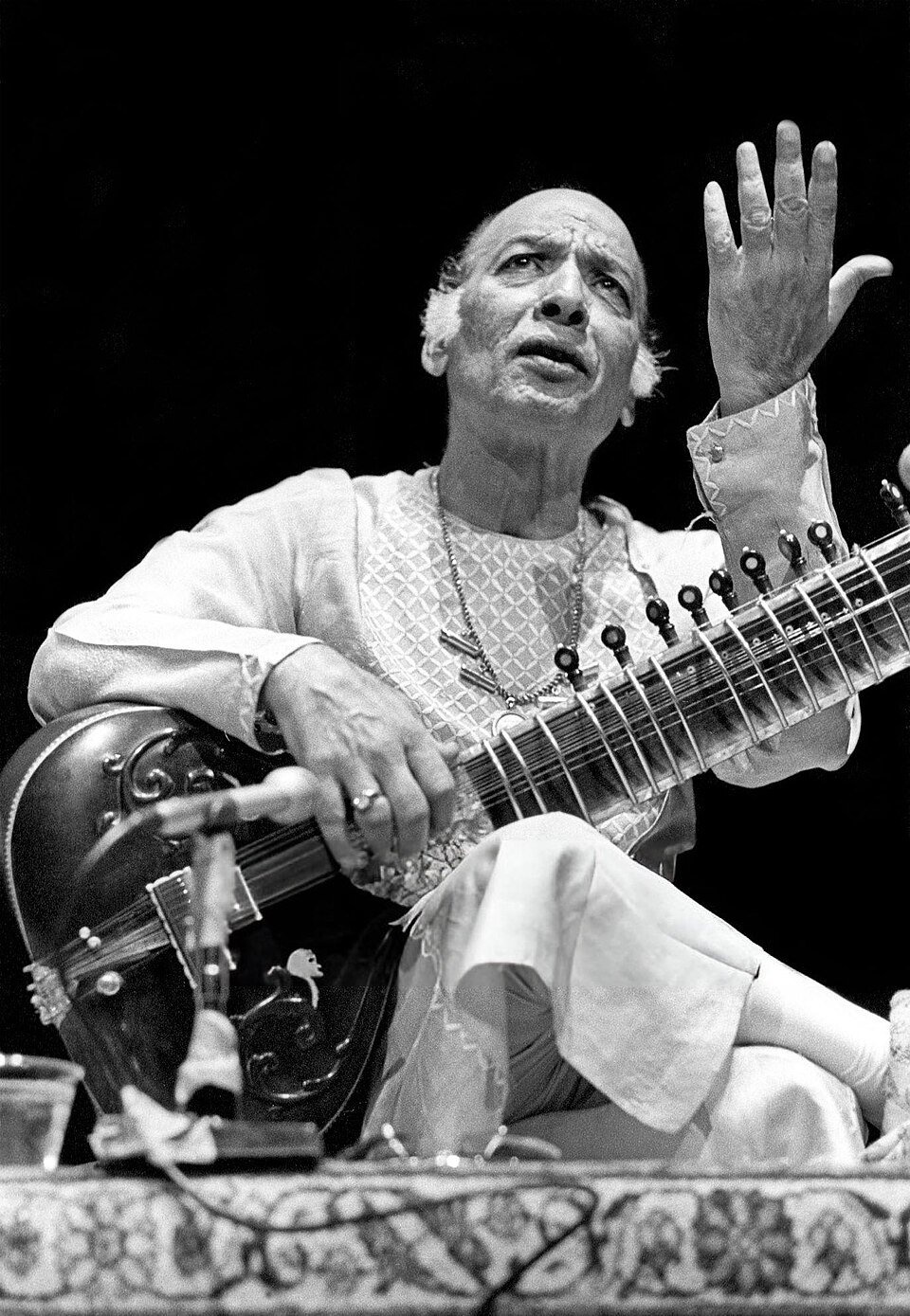
Vilayat Khan (1928 - 2004)
Ravi Shankar's ornate sitars, crafted in Kolkata by master instrument maker Nodu Mull have been described by his famous daughter Anoushka as the “Stradivarius of the sitar”.
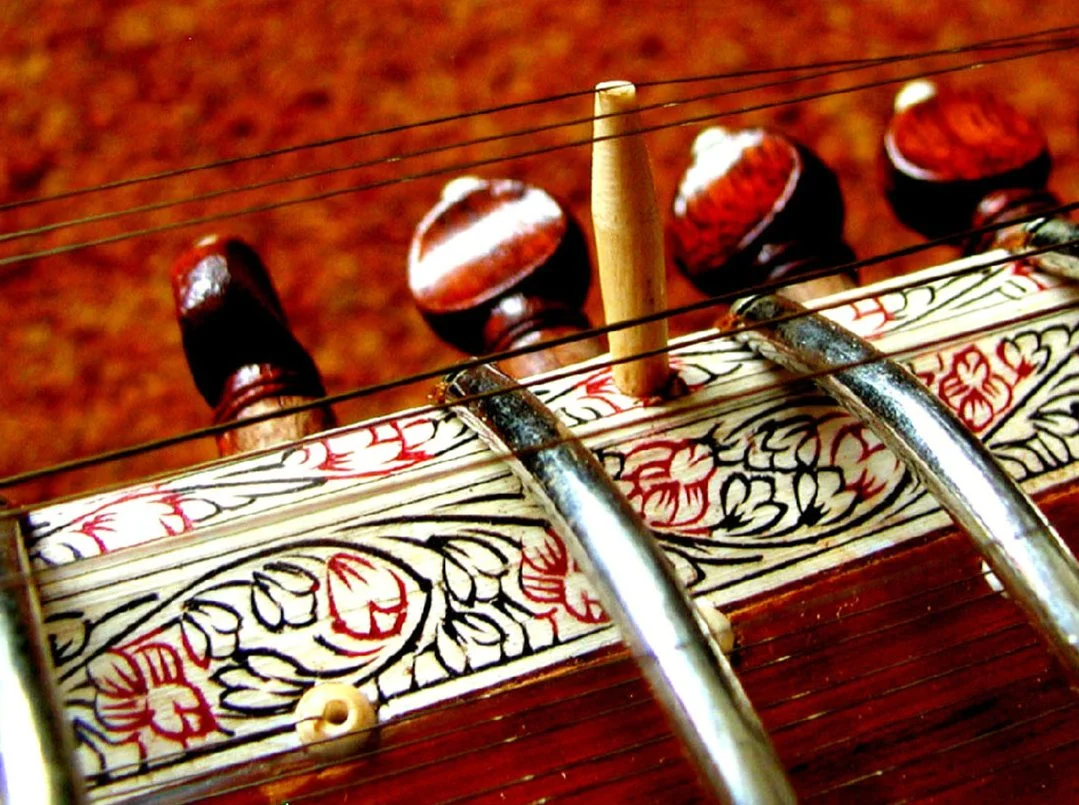
Ornate fret on a Ravi Shankar sitar
Ravi Shankar of course who will be best known to western ears, particularly because of his influence on George Harrison and the Beatles in the mid- and late 1960s and other contemporary rock musicians.
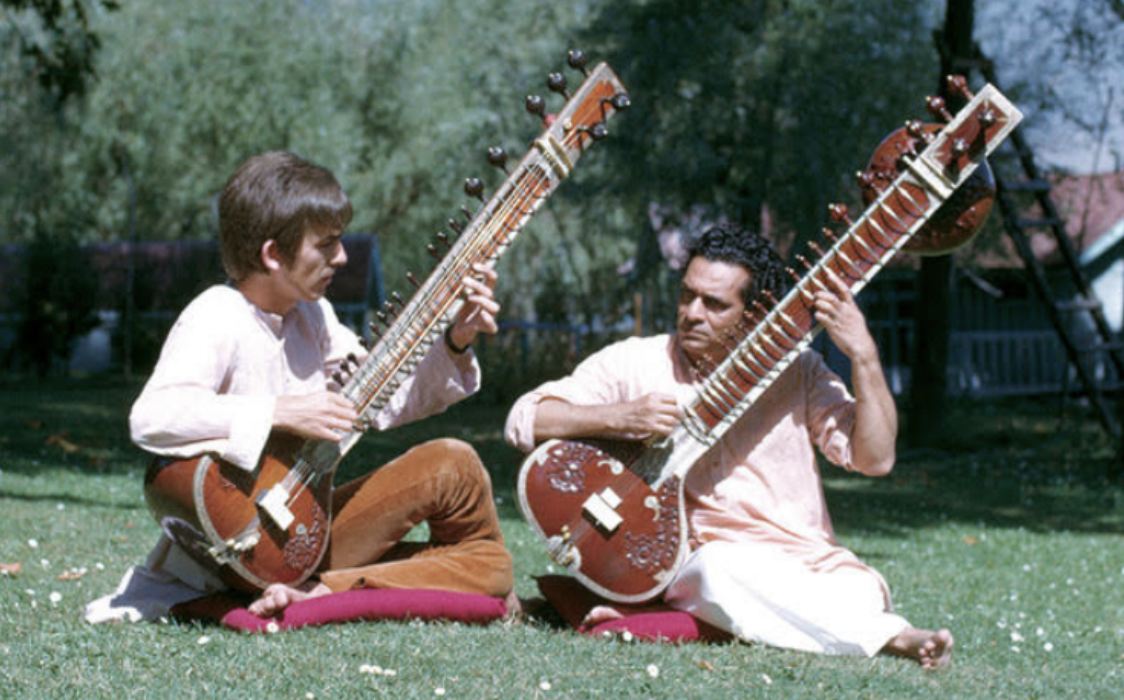
Pupil with master: George Harrison learns technique from Ravi Shankar
While Ravi is the giant of the instrument bridging between east and west, Anouska, while classically trained by her father, has also developed the sound of the instrument with further innovations, with loops and delay pedals to create layers of new sounds.
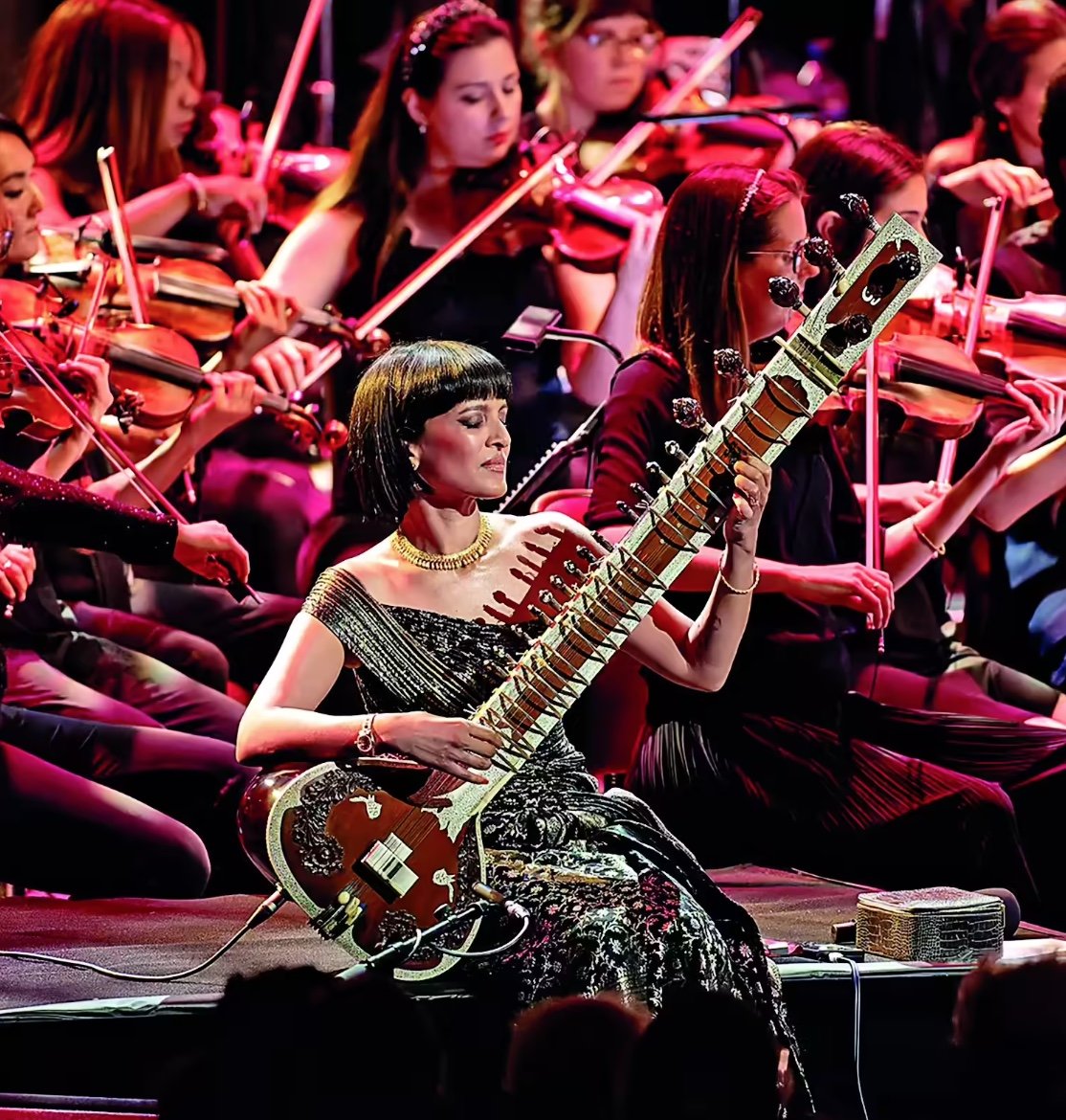
Anoushka Shankar performing at the BBC Proms in 2025
Both are likely to feature in song and composition nominations, so I'll let their music do the talking. And on that note, many songs from western artists more familiar will likely come up. How was that sitar sound created? Not necessarily on the type of sitar played by Indian classical musicians, but the electric version, a hybrid that looks more like the guitar. Developed in early 1960s by session guitarist Vinnie Bell in partnership with Danelectro and released under the brand name Coral in 1967.
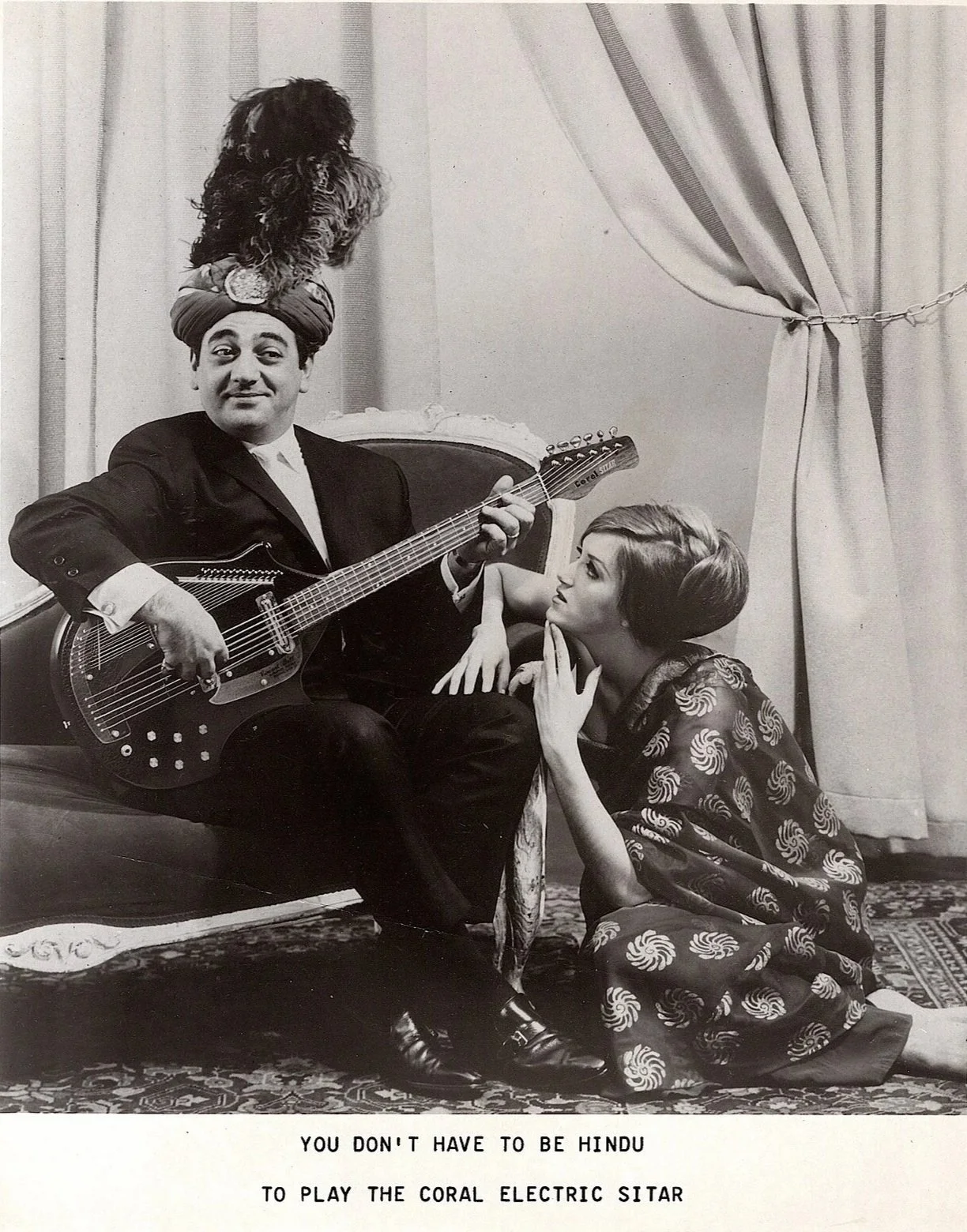
A 1960s promo image featuring co-creator Vinnie Bell and the DanElectro Coral Electric Sitar
While The Beatles' Norwegian Wood solo, played by George Harrison, occurred on a real sitar (reportedly a cheap model bought from the Indiacraft store on Oxford Street), and is thought to be the first time it appeared on western rock and pop, the electric sitar led to a huge wave of recordings in which the sitar sound could be recreated from the 1960s to the present day, across rock and pop, Motown and soul, reggae, jazz, synth-electro, dance music and more.
But your suggestions, especially those in the 21st century may also come from electronic sources from midi sounds via keyboards, or perhaps the fetching sitar pedal, allowing guitarists to transform their instrument into that golden, shimmering, bendy sound.
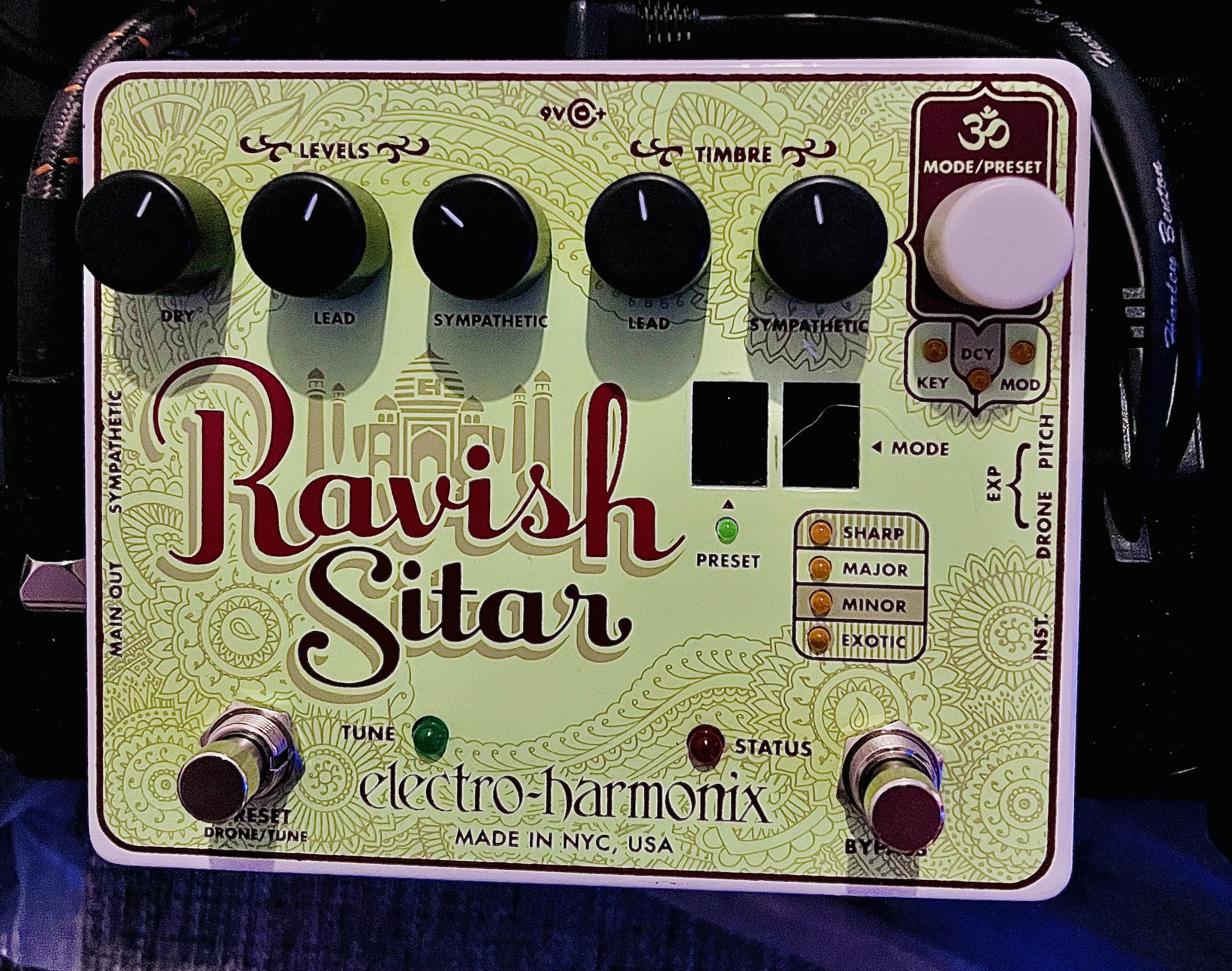
Electro-Harmonix’s Ravish Sitar pedal
So then, it's time to bend your ears and your strings to sitar selections. If suggesting a song which features a sitar part or outstanding solo, please indicate where in the song it is most prominent. But who will take up the guru playlist pleasure challenge? It’s the hugely knowledgeable Nicko! Deadline for nominations as usual is 11pm UK time on Monday, for playlists published next week.
New to comment? It is quick and easy. You just need to login to Disqus once. All is explained in About/FAQs ...
Fancy a turn behind the pumps at The Song Bar? Care to choose a playlist from songs nominated and write something about it? Then feel free to contact The Song Bar here, or try the usual email address. Also please follow us social media: Song Bar X, Song Bar Facebook. Song Bar YouTube, and Song Bar Instagram. Please subscribe, follow and share.
Song Bar is non-profit and is simply about sharing great music. We don’t do clickbait or advertisements. Please make any donation to help keep the Bar running.