
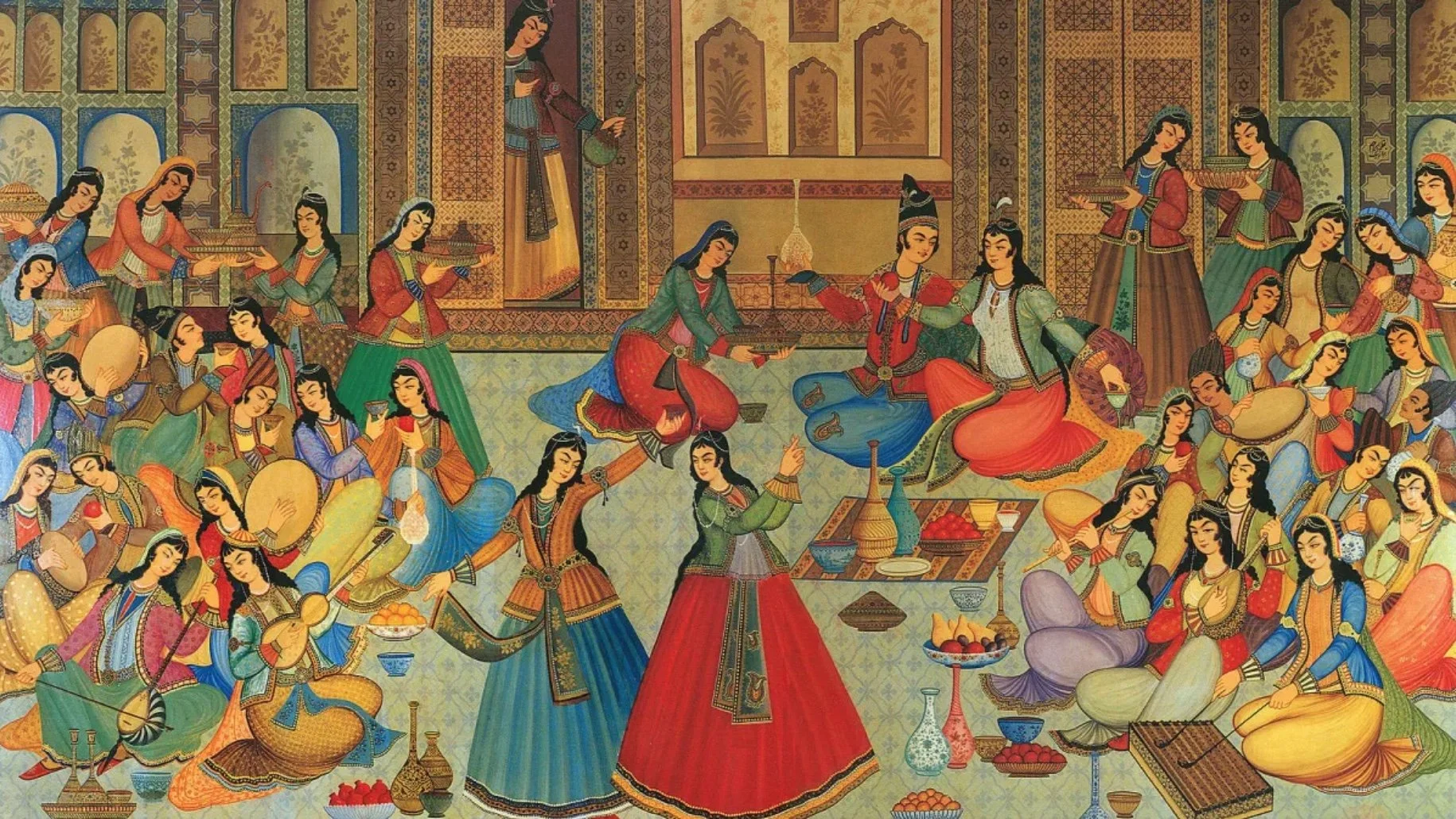
By The Landlord
“Iran is a country of poetry, where the verses of Hafez and Rumi echo through the centuries.” — Ferdowsi
“It's probably more frustrating to me as an Iranian living in America than it is when I'm over there. Inside Iran, people are actually quite well educated about America. There are things they don't understand, particularly in the government, but the people, by and large, know the American sensibility quite well, and the reverse is not true. There's a lack of knowledge about Iran and the Iranian people.” – Hooman Majd
"The wound is the place where the Light enters you." — Rumi
“Persian cuisine is, above all, about balance - of tastes and flavours, textures and temperatures. In every meal, even on every plate, you'll find both sweet and sour, soft and crunchy, cooked and raw, hot and cold.” – Samin Nosrat
“Persia is 7,000 years old and will fight to survive.” – Richard Engel, NBC News
"Bešno az ney čon hekāyat mikonad" (بشنو از نی چون حکایت میکند) “Listen to the reed flute as it tells its story" - from the opening of Rumi’s Masnavi
Constantly in the news for all the wrong reasons, and perhaps more misunderstood by the west than any other cultures, with so much stereotypical portrayal, this country is home to the world's oldest continuous major civilisation. Iran, or Persia as it has also been known in English, with a population of over 90 million, has a long history of tenacity and survival, of passion and religion and bloody wars and empire, but also great learning, creativity and invention, right across literature, philosophy, mathematics, medicine, astronomy, art, music and especially poetry, with key luminaries in that genre such as Ferdowski, Saadi, Hafez, Attar, Nizami, Rumi and Omar Khayyam, all of whom had a huge influence on western writers.
The great Ferdowsi (940-1020 CE), also known as Abu’l-Qāsem Ferdowsi Tūsī, wrote the Shahnameh ("Book of Kings"), which is one of the world's longest epic poems created by a single poet, and the greatest epic of Persian-speaking countries.
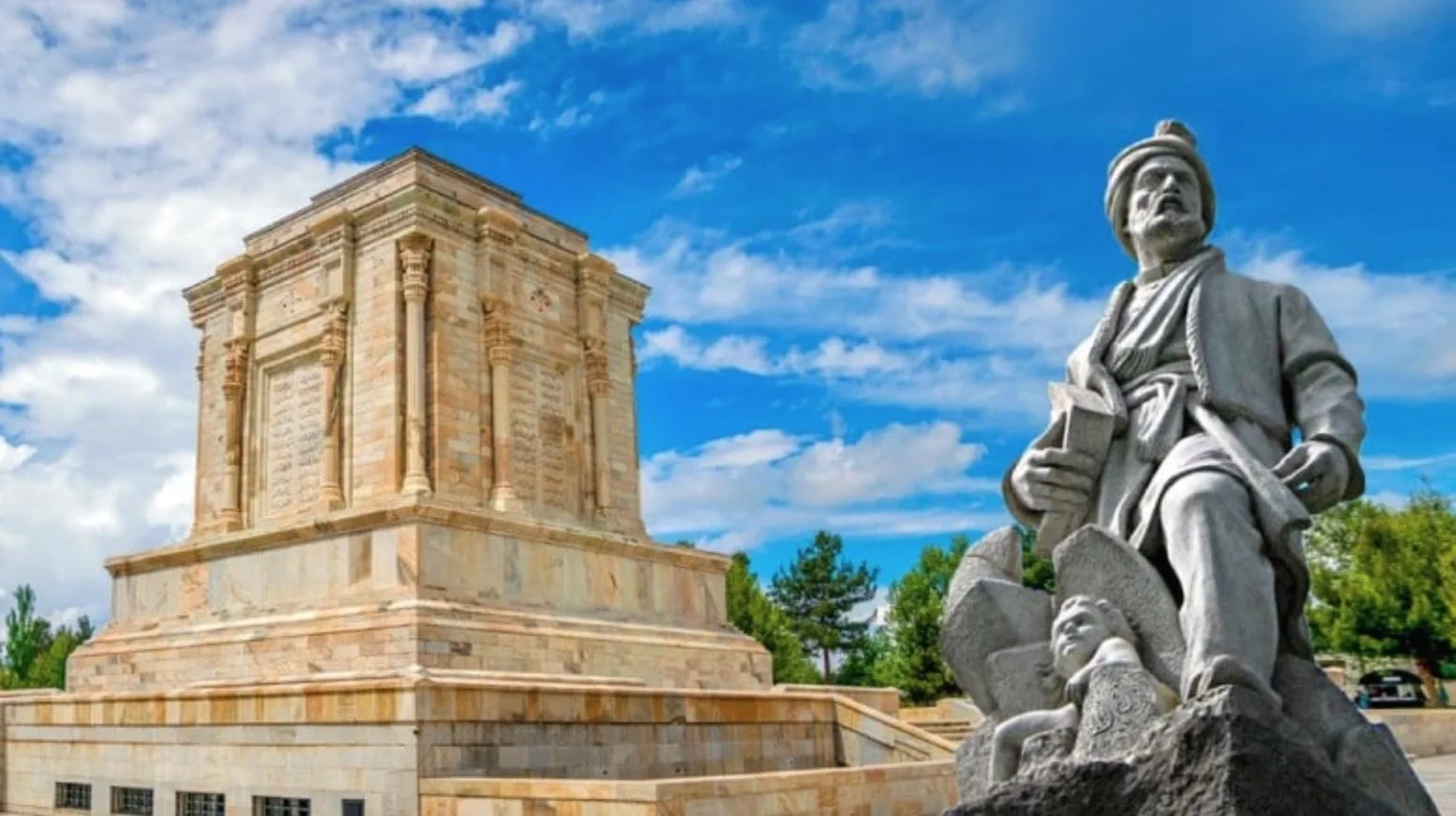
Ferdowsi, a monument to literary achievement
These figures may certainly colour, directly or obliquely, this week's topic, which can spring from music by, or about Iran or the Persian region and culture, and can feature Iranian musicians or instruments, or reference to the culture and its history in sounds or lyrics, others or in collaboration with artists from elsewhere. But first, some quick history and background ...
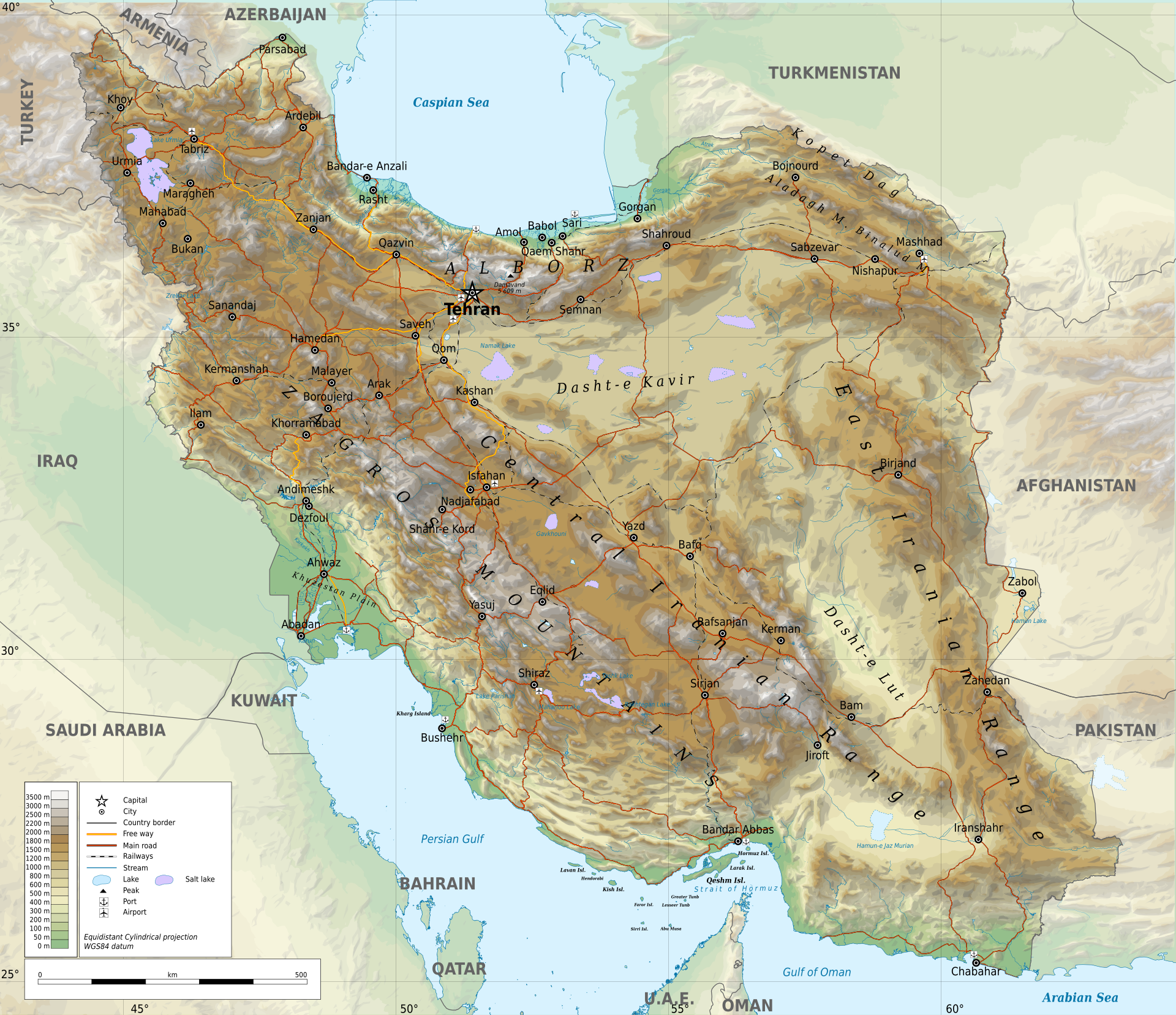
Iran topographical map
The Persian creation story is one of the richest and longest in the world, Rooted in Zoroastrianism, the religion the area long before Islam, describes a 9,000-year struggle between the wise creator Ahura Mazdā and the evil spirit Angra Mainyu. Ahura Mazdā, is the supreme god in that ancient Iranian religion, from the Iranian prophet Zarathustra (c. 6th century BCE; Greek name Zoroaster) and Ahura Mazdā was worshipped by the Persian king Darius I (522–486 BCE) who created one of biggest richest empires, regularly defeating the Greeks and later the Romans. The Persian empire was vast, stretching across Iraq to Africa and in elsewhere.
There's not time nor space here, to give a full history of this civilisation, but before Darius, the territory of present-day Iran was first unified under the Medes in the 7th century BC and reached its territorial height in the 6th century BC, when Cyrus the Great founded the Achaemenid Empire. It brought all sorts of innovations, including a postal service. At the heart of this was Persepolis, the ceremonial capital, which, for a period became the richest city in the world, still an impressive ruin to this day, an international site with a grand ‘gateway to the nations’. So important to Iranians is this historic site, that during the 1979 Revolution, locals stopped tanks from entering the area. More than 300,000 stone tablets of recorded information have been found here.
Other key moments include the successful invasion and conquering by the Macedonian Alexander The Great, who though, despite his attack on Persepolis, instead of stamping out Persian culture, then adopted much of it himself, including wearing Persian royal garments to appease his new subjects, though he had his limits - the long-sleeved tunic and another Persian invention - trousers (anaxyrides) were not his style.
An Iranian rebellion in the 3rd century BC established the Parthian Empire, which later liberated the country. including a crushing Roman defeat of the Romans at the Battle of Carrhae. Conflict with the Roman Empire lasted around 600 years. The Parthians were succeeded by the Sasanian Empire, which oversaw a new golden age in Iranian civilisation.
Islam came to the region in the 7th century AD following a civil war and during the reign of the Sasanian king Yazdegerd III, the Muslims under Umar invaded Iran. Yet the effect was far from immediate and differing from other Muslim countries, the original identity of Zoroastrianism still has its mark. After the fall of the Sasanian Empire in 651, the Arabs of the Umayyad Caliphate adopted many Persian customs, charmed by this culture just as Alexander The Great centuries earlier.
Eventually, as Islam took hold, more into the 11th or 12th centuries, the blossoming of Persian literature, philosophy, medicine and art became major elements of the newly forming Muslim civilization that created its own identity rather than an Arab one. Inheriting a heritage of thousands of years of civilization, and being at the "crossroads of the major cultural highways" contributed to Persia emerging as what culminated into the next Islamic Golden Age. During this period, hundreds of scholars and scientists vastly contributed to technology, science and medicine, later influencing the rise of European science during the Renaissance.
Among these was Persian astronomer Qotbeddin Shirazi (1236–1311), here depicted with an epicyclic planetary model.

Persian astronomer Qotbeddin Shirazi (1236–1311)
Iran went through many dynasties and civil wars, Shias, taking over from Sunnis, invasion by the brutal Timur, a Turco-Mongol, then the Safavid dynasty, with ruthless figures such as Shah Abbas I the Great (1587–1629) or the in the 16th century the Turkic Afshar warlord from Khorasan, Nader Shah, a brilliant and brutal military commander:

Portrait of Nader Shah, 1740
The Qajar dynasty (1796–1925) saw many international wars and this is a period when the British empire and Russia saw Iran as a buffer zone to stop each others' territory spreading.
Lord Curzon. the Viceroy of India, 1899–1905. is best known for the controversial Partition of Bengal in 1905, and one of the history's biggest bastards and foreign interest manipulators, viewed Persia as a critical, fragile buffer state essential for protecting British India, describing it as a "piece on a chessboard upon which is being played out a game for the dominion of the world". That is a view that still persists in foreign policy today, and explains much about what is going on right now.
Curzon’s perspective is full of contradictions. He supported an independent Iran to prevent Russian expansion, famously lamenting that the country was "one of the few surviving Mahomedan countries which still retain an independent and autonomous existence." In his Persia and the Persian Question (1892), Curzon’s description of Iran was full of prejudiced values, but also but very revealing:
“The Persian character presents many complex features, elsewhere rarely united in the same individual. They are an amiable and a polished race, and have the manners of gentlemen. They are vivacious in temperament, intelligent in conversation, and acute in conduct. If their hearts are soft, which is, I believe, undeniable, there is no corresponding weakness of the head. On the other hand, they are consummate hypocrites, very corrupt, and lamentably deficient in stability or courage... Whilst, as individuals, they present many attractive features, as a community they are wholly wanting in elements of real nobility or grandeur. With one gift only can they be credited on a truly heroic scale; and this, though it may endear them to the student of human nature as a fine art, will excite the stern repugnance of the moralist. I allude to their faculty for what a Puritan might call mendacious, but what I prefer to style imaginative, utterance. This is inconceivable and enormous.”
He also adds with a mixture of racism and admiration these contradictions:
"I am convinced that a true son of Iran would sooner lie than tell the truth; and that he feels twinges of desperate remorse when, upon occasions, he has thoughtlessly strayed into veracity. Yet they are an agreeable people—agreeable to encounter, agreeable to associate with; perhaps not least agreeable to leave behind. ... These are their irrepressible vitality; an imitativeness long notorious in the East, and capable of honourable utilisation; and, in spite of occasional testimony to the contrary, a healthy freedom from deep-seated prejudice or bigotry. History suggests that the Persians will insist upon surviving themselves; present indications that they will gradually absorb the accomplishments of others."
Iran’s geography, much of it mountain and desert, but also enjoying oil and a very strategic position, has made it a target for many manipulative powers. Flickers of contrived or otherwise democracy came and went, but as the 20th century progressed through two world wars, Iran was under continuous interference, by the UK and others, and then more and more by the US and Israel over dominance in the region and oil interests. After WW2, the US controlled the establishment of the Shah, who then was overthrown by the clever strategy and military theocracy of Ayatollah Khomeini in 1979 with the balance of power changing again, leading to the tensions which continue ...
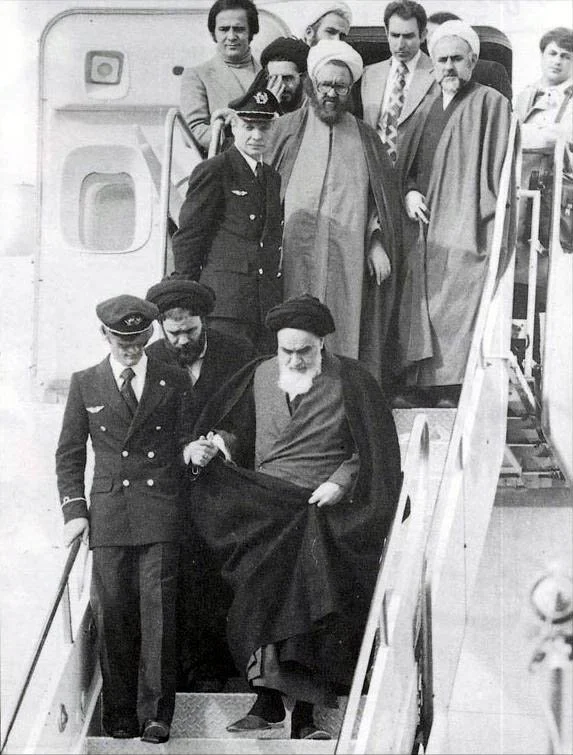
Ayatollah Khomeini returns to Iran after exile in 1979 to take power
From manipulation to relgion and repression, can read much more about this elsewhere. But harking back to the ancient Persepolis, in a new context, one of the more revealing histories of late-20th century Iranian history comes from a surprise source, a graphic novel turned full-length animation from the book by Marjane Satrapl. It shows a child going through regime change and discovering other cultures, including music. Here’s the English dubbed version in a trailer. Droll, funny, insightful, moving, and seen very much from an Iranian point of view, it’s a great piece of work:
Chiefly, though, we're here for the music, whether it is traditional or cross-pollinated with other genres. Could your suggestions include traditional instruments, such as the Tar, the Kamancheh, Barbat or Ghaychak lutes, the Chang harp, the hammered dulcimer Santoor, the Qānūn, or sitar-like Shurangiz? A few of these, and more, are shown here:
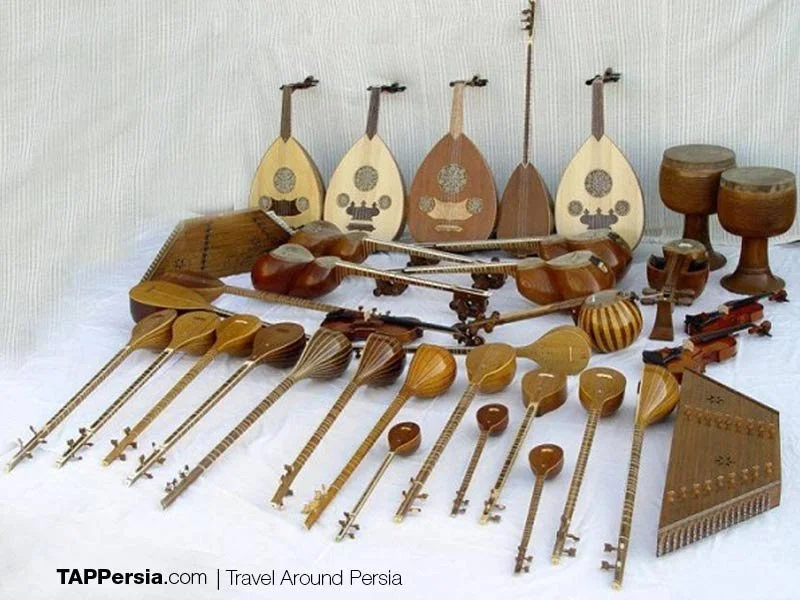
Persian instruments
Perhaps also, you might consider Iranian classical, jazz, blues, rock, pop or even hip-hop, perhaps including Iranian-American Viguen Derderian, who was known as Iran's "Sultan of Jazz" and from the so-called golden age of Persian pop in the early 1970s, to more recent rappers Hichkas or Yas. It's a whole new world to share and discover…
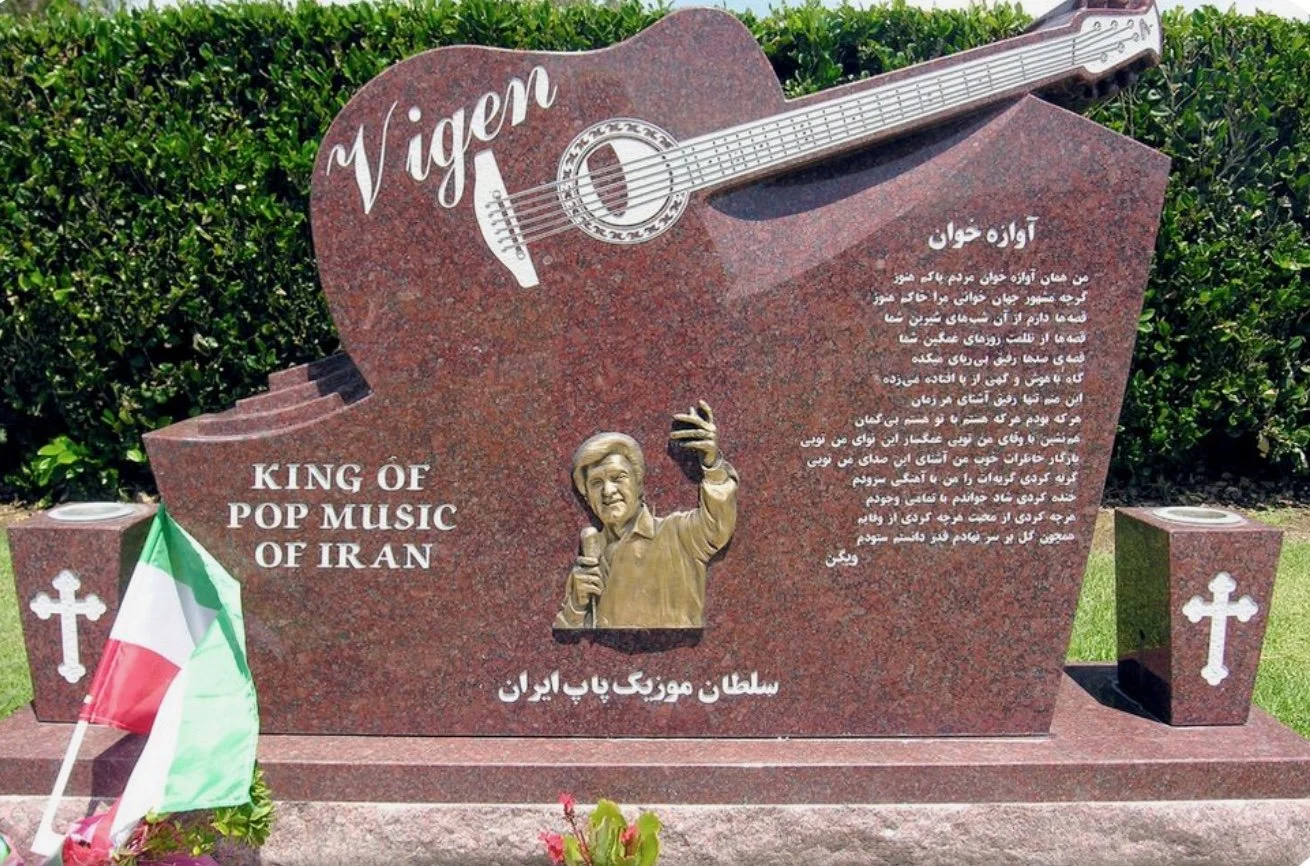
The grave of Vigen Derderian in California
Or perhaps any other reference to Iran's culture, geography, cuisine, style, literature, design will come to mind ...
This week's professor of Persia professor and fan of Iran comes in the form of the sharp ears of Severin! Place your suggestions in comments below for a deadline that, unlike some, will definitely be kept - 11pm UK time on Monday, for playlists published next week. May it, as the Persian language describes be "Gushnavâz" (گوشنواز) (ear-caressing/melodious).
New to comment? It is quick and easy. You just need to login to Disqus once. All is explained in About/FAQs ...
Fancy a turn behind the pumps at The Song Bar? Care to choose a playlist from songs nominated and write something about it? Then feel free to contact The Song Bar here, or try the usual email address. Also please follow us social media: Song Bar X, Song Bar Facebook. Song Bar YouTube, and Song Bar Instagram. Please subscribe, follow and share.
Song Bar is non-profit and is simply about sharing great music. We don’t do clickbait or advertisements. Please make any donation to help keep the Bar running.