

By the Landlord
“There is a pleasure in the pathless woods,
There is a rapture on the lonely shore,
There is society, where none intrudes,
By the deep sea, and music in its roar:
I love not man the less, but Nature more.” ― Lord Byron
“Who hears music, feels his solitude
Peopled at once.” ― Robert Browning
“I'll read my books and I'll drink coffee and I'll listen to music and I'll bolt the door.” ― J.D. Salinger
“Reading is that fruitful miracle of a communication in the midst of solitude.” ― Marcel Proust
“I would rather sit on a pumpkin, and have it all to myself, than be crowded on a velvet cushion.” ― Henry David Thoreau
“Solitude gives birth to the original in us, to beauty unfamiliar and perilous - to poetry. But also, it gives birth to the opposite: to the perverse, the illicit, the absurd.” ― Thomas Mann
“The more powerful and original a mind, the more it will incline towards the religion of solitude.” ― Aldous Huxley
“A man can be himself only so long as he is alone; and if he does not love solitude, he will not love freedom; for it is only when he is alone that he is really free.” ― Arthur Schopenhauer
“In order to understand the world, one has to turn away from it on occasion."― Albert Camus
“The greatest thing in the world is to know how to belong to oneself.” ― Michel de Montaigne
“Solitude sometimes is best society.” ― John Milton, Paradise Lost
“The soul that sees beauty may sometimes walk alone.” ― Johann Wolfgang von Goethe
“The secret of a good old age is simply an honourable pact with solitude.” ― Gabriel García Márquez, One Hundred Years of Solitude
Alone, yes, but not lonely. This week, before any even thinks of a certain Elvis Presley hit, there’s absolutely no room for loneliness, songs about feeling lonely, or longing for the company of others. It’s the very opposite. This theme is all about willingly hoping for, seeking out or finding a state of solitude, an often happy, or at least calm, soothing place that may be meditative, creative, restorative, or practical, blissful or useful, from walks in the woods or being immersed in words and books, painting, music, or whatever quality time with the self, whether it’s the songwriter, a narrator or that of a portrayed character. Solitude is the goal.
We come into this world alone, and die alone, said Orson Welles, Hunter S. Thompson and many others before and since, but in between, through various life stages our relationship with being solitude, or at least alone, changes throughout life. As a young child, with much older siblings and cousins doing other things, I was very happy spending lots of time by myself, lost in in a world of toys and bricks, Lego or Meccano, or whatever other hand-me-down, second-hand items were around. I was in solitude, but as a young kid, never felt alone, as my mind was filled with stories and characters and imaginary animal friends, pens and paper and books, and was in practice still in company, having conversations with my own imagination. That’s one of the keys to good solitude - you enjoy your own company.
Then of course, as junior school, then secondary school, teenage and then young adulthood unfold, peer pressure begins to build, we seek out and embrace friends and cool things and flings, sex and adventure, and wherever the party is at for some time is the most important thing on the radar. I didn’t have social media to mess with my head when I was a teen, so am grateful to have grown up before it. Social interaction is of course important as long as it’s positive and comes in the right amount. Unfortunately it’s not always easy to find the right dose.
Then later, as work and other responsibilities taken over, suddenly you find yourself with not a minute to yourself, other than when fitfully asleep. You begin to long for solitude, and eventually when it occasionally happens, it’s a precious experience and when immersed in something creative, that state of childhood play can finally return.
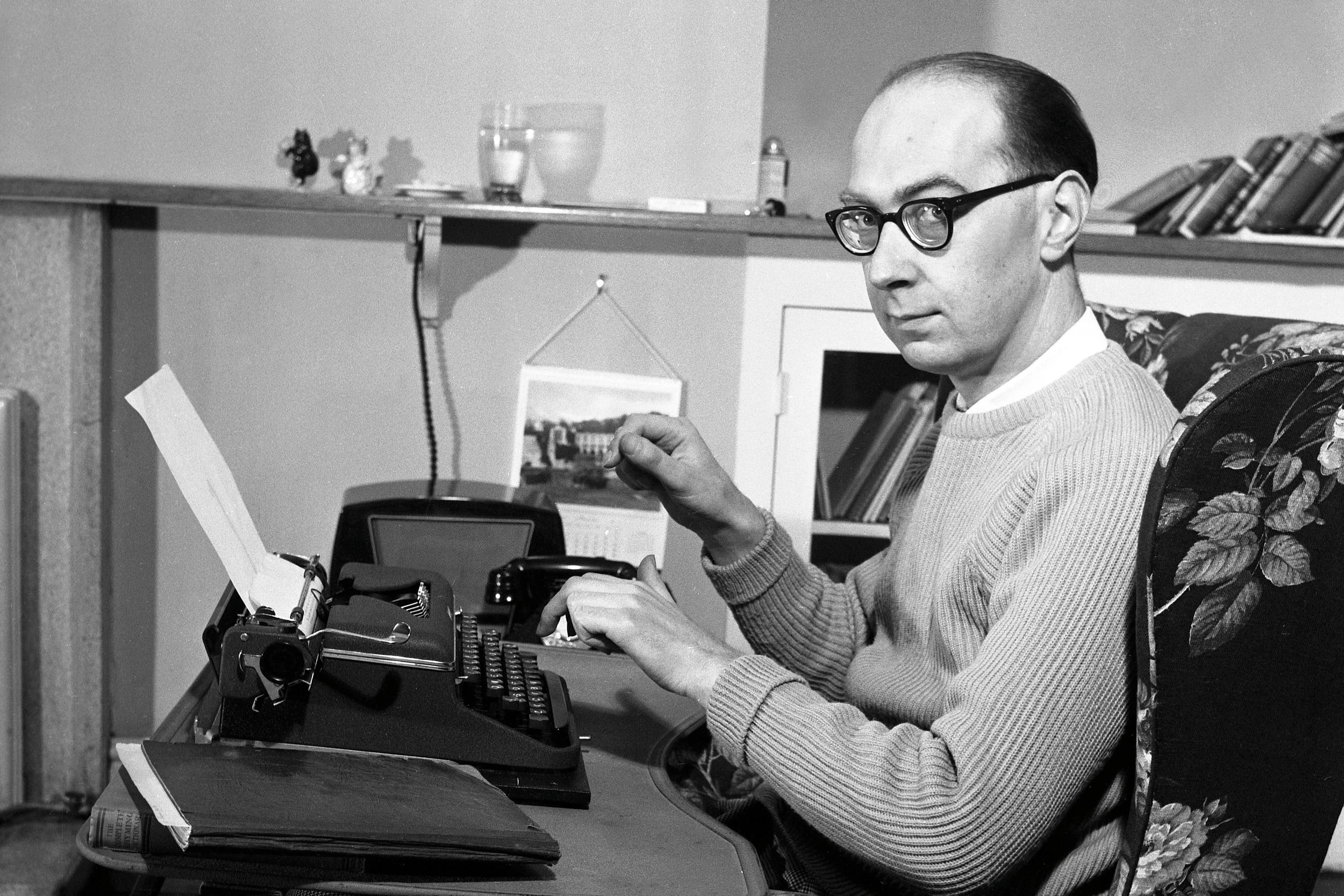
Philip Larkin
Those social stages are most poignantly and precisely characterised by the cheerfully miserable pen of poet and Hull librarian Philip Larkin, who likely echoed that John Milton phrase from Paradise Lost to coin the title of his poem Best Society, written in 1951, but not published until the 1988 Collected Poems three years after his death. Here it is in full, capturing much of life’s arc, albeit with his classic downbeat, unromantic, yet fabulously vivid and brutally honest style:
When I was a child, I thought,
Casually, that solitude
Never needed to be sought.
Something everybody had,
Like nakedness, it lay at hand,
Not specially right or specially wrong,
A plentiful and obvious thing
Not at all hard to understand.
Then, after twenty, it became
At once more difficult to get
And more desired - though all the same
More undesirable; for what
You are alone has, to achieve
The rank of fact, to be expressed
In terms of others, or it's just
A compensating make-believe.
Much better stay in company!
To love you must have someone else,
Giving requires a legatee,
Good neighbours need whole parishfuls
Of folk to do it on - in short,
Our virtues are all social; if,
Deprived of solitude, you chafe,
It's clear you're not the virtuous sort.
Viciously, then, I lock my door.
The gas-fire breathes. The wind outside
Ushers in evening rain. Once more
Uncontradicting solitude
Supports me on its giant palm;
And like a sea-anemone
Or simple snail, there cautiously
Unfolds, emerges, what I am.
Yet of course the person most famously associated with seeking solitude is Swedish actress and unwilling Hollywood star Greta Garbo, taken from that scene in the 1932 film Grand Hotel: “I want to be alone”:
It’s a fraught phrase, because it implies the difficulty of achieving it as her character in the film. Her real life she continued to be paradoxical, first in Hollywood then later in New York. In between some outstanding success and performances, it consisted of taking on many unwanted roles, of being very much in the public eye and yet trying to avoid it. In her autobiography, this is captured by her not altogether clear clarification that: “I never said, 'I want to be alone.' I only said 'I want to be let alone!' There is all the difference.”
Much of her private correspondence revealed such difficulties about her apparently blessed-but-cursed circumstances. She found the sunshine of California repressive and was homesick for the less clement weather of Sweden: “I have been thinking a lot about Tistad. About summers there when it rains and that marvellous melancholy enfolds us.”
Solitude was only an occasional escape for someone who frequently felt lonely in a crowd. “I am almost always alone and talk to myself. I drive to the beach and take walks and that’s always marvellous. But that’s it.”
Solitude can be portrayed more positively through the prism of film. In Wim Wenders' 2023 Perfect Days, Kōji Yakusho plays Hirayama, a Tokyo toilet cleaner, who spends many of his hours in contemplative state in work or leisure; cleaning of course, as well as watering plants, listening to music and reading. He is not entirely alone in the film, and occasionally interacts with others including his niece, but has a constant, positive presence gained from his many hours of humble, but positive solitude:
This week the Bar is full again, but in respect to the topic, I’ve temporary divided it into lots of small single-seat and table snugs and booths, so customers can enjoy some quality me-time. It is like the scene in Heinrich Böll’s Irisches Tagebuch (Irish Journal), his 1957 travelogue about Dublin and rural Ireland which he captures the culture of the country and in particular via traditional pubs in which punters can disappear into small drinking booths to drown their sorrows.
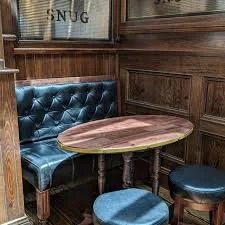
This week the bar has lots of snugs - for individual me-time enjoyment
Let us then discreeting float then over our snugs and read the thoughts of more visitors contemplating life in a state of supping solitude:
“Whosoever is delighted in solitude, is either a wild beast or a god,” declares Aristotle over a flagon of wine with a more extreme view of that state.
“I need to be alone. I need to ponder my shame and my despair in seclusion; I need the sunshine and the paving stones of the streets without companions, without conversation, face to face with myself, with only the music of my heart for company,” scribbles Henry Miller, enjoying a whisky.
“I have to be alone very often. I'd be quite happy if I spent from Saturday night until Monday morning alone in my apartment. That's how I refuel,” thinks a happy Audrey Hepburn to herself, escaping the crowd and enjoying the comfortable, discreet surroundings with a cocktail and cigarette.
“For now she need not think of anybody. She could be herself, by herself. And that was what now she often felt the need of - to think; well not even to think. To be silent; to be alone. All the being and the doing, expansive, glittering, vocal, evaporated; and one shrunk, with a sense of solemnity, to being oneself, a wedge-shaped core of darkness, something invisible to others... and this self having shed its attachments was free for the strangest adventures,” writes Virginia Woolf, penning a decent draft of To the Lighthouse in her Song Bar booth with a hot toddy and her typewriter.
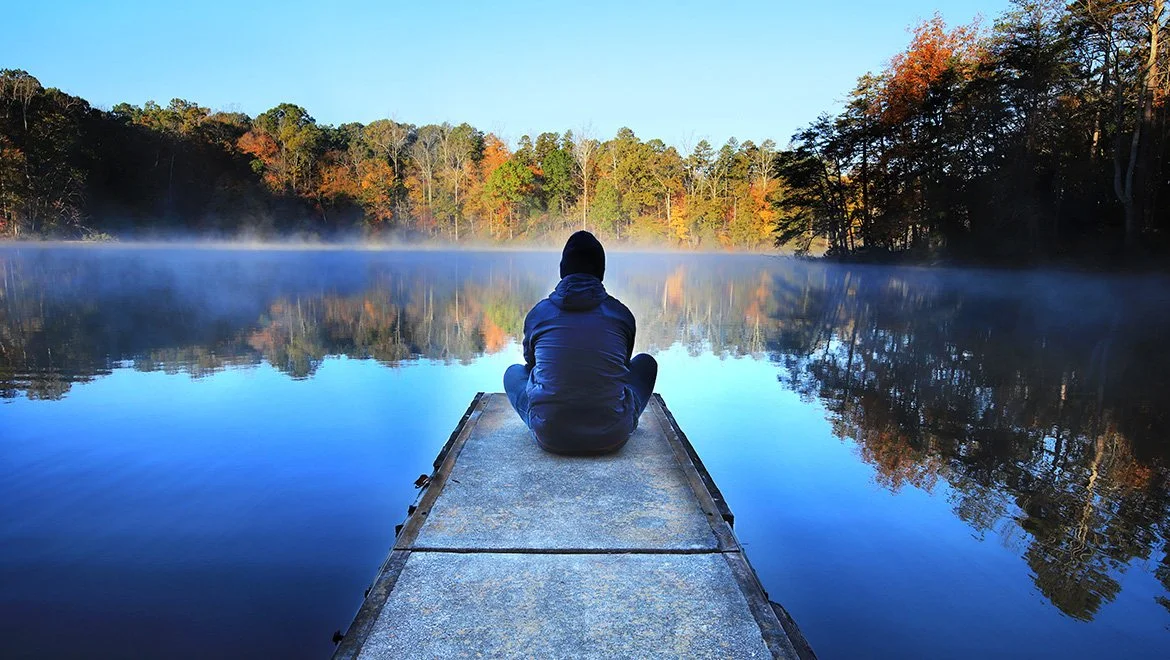
Rapture on the lonely shore
And finally here’s Albert Camus once more, enjoying his own existential bottle of fine wine in a separate snug, and adding to his notebooks, nicely summing up what solitude can bring:
“Find meaning. Distinguish melancholy from sadness. Go out for a walk. It doesn’t have to be a romantic walk in the park, spring at its most spectacular moment, flowers and smells and outstanding poetical imagery smoothly transferring you into another world. It doesn’t have to be a walk during which you’ll have multiple life epiphanies and discover meanings no other brain ever managed to encounter. Do not be afraid of spending quality time by yourself. Find meaning or don’t find meaning but 'steal' some time and give it freely and exclusively to your own self. Opt for privacy and solitude. That doesn’t make you antisocial or cause you to reject the rest of the world. But you need to breathe. And you need to be.”
That seems like a strong way to finish and also start, so now it’s time to “breathe and be” with your nominations about what solitude can bring on comments below. This week’s bringer of splendid isolation is the wise wanderer of the woods, DiscoMonster! Deadline for songs is 11pm UK time on Monday, for playlists published next week. Blissful.
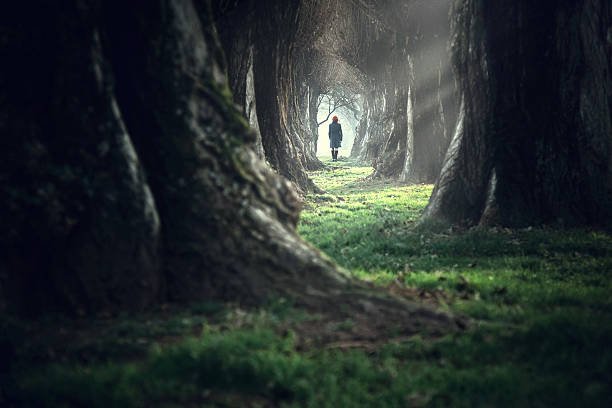
Pleasure in the pathless woods
New to comment? It is quick and easy. You just need to login to Disqus once. All is explained in About/FAQs ...
Fancy a turn behind the pumps at The Song Bar? Care to choose a playlist from songs nominated and write something about it? Then feel free to contact The Song Bar here, or try the usual email address. Also please follow us social media: Song Bar X, Song Bar Facebook. Song Bar YouTube, and Song Bar Instagram. Please subscribe, follow and share.
Song Bar is non-profit and is simply about sharing great music. We don’t do clickbait or advertisements. Please make any donation to help keep the Bar running.