
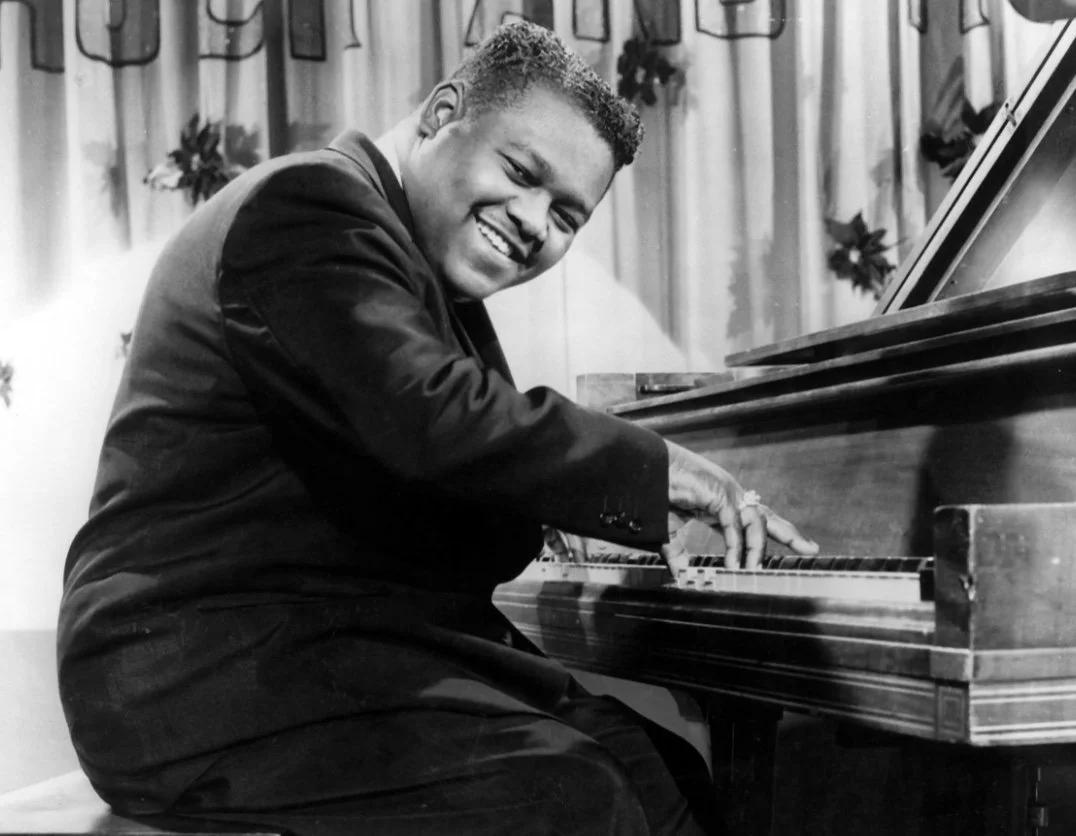
By The Landlord
“Fats Domino was a huge influence on me when I started out... he's the real king of rock 'n' roll.” – Elvis Presley
“There wouldn't have been a Beatles without Fats Domino.” – John Lennon
“I sing like I talk - soft, with all the words clear.” – Fats Domino
“My music is a very simple type, and that's why the kids have no trouble understanding it. They don't want to figure out what a musician does; they want to feel it.” – Fats Domino
“I play the same for 60 people as I do for 6,000. I used to play in front of 60,000 people. No difference. Just play and sing.” – Fats Domino
Today, 26th February, would have been his 98th birthday. Antoine Caliste Domino Jr. (February 26, 1928 – October 24, 2017), known to all as Fats Domino, was a gentle giant, a hugely influential hit-making pioneer, a brilliantly innovative piano player formulating a smooth, rolling blend of New Orleans rhythm and bluesy, innovative triplet-style boogie woogie, a singer with an engaging, warm delivery, and arguably an absolutely vital influence in the evolution of rock’n’roll. Lauded by all, later given medals by presidents, to this day he is also still thought of as one of the nicest people in music history.
He grew up in poverty in New Orleans from of French Creole heritage, and Louisiana Creole was his first language. Married young with children, in his early days as a performer, his whole family lived in a room in his in-laws’ house, he worked a day job at a mattress factory, and on the side for extra cash, he sold crushed ice with syrup to children. But while, particularly at the peak of his career in the 1950s, and amassing more than 65 million record sales, he continued to live (albeit in a bigger house) in the city’s Lower Ninth Ward all the way up to Hurricane Katrina in 2005.
Humble, quietly spoken, and extremely affable, Fats was arguably the very first rock’n’roll star, but was very un-rock’n’roll, unlike many of those who rose to stardom in his wake - outrageous figures such Little Richard and Jerry Lee Lewis and Screamin’ Jay Hawkins. While many of his bandmates also became heroin addicts, Fats just enjoyed his food and a drink or two, phoned his wife Rosemary every night while on tour (they were married for 61 years from 1947 until her death in 2008) and had eight children. Perhaps he was particularly fond of the key of A as all of his kids’ names began with that letter - Antoine III, Anatole, Andre, Antonio, Antoinette, Andrea, Anola, and Adonica.
So then, this week we’re all about Fats Domino. Let’s celebrate the birthday of that affable singer and piano playing genius who Elvis said was the real king of rock’n’roll - from key covers of his songs, his rhythm, style and delivery on others’ songs as well as lyrical references to him and his work.
Growing up in New Orleans, his father also playing violin, Fats had rich influences of his own, from the early jazz of Jelly Roll Morton, Cuban and Spanish rhythms, and as well as piano pieces such as Danza by the earlier New Orleans composer and piano player, Louis Moreau Gottschalk, and contemporary keyboard maestros of that region, including Professor Longhair, James Booker, Allen Toussaint, Huey “Piano” Smith.
Another influence constantly in the musical ether was that popular number, Junker’s Blues, as recorded by Champion Jack Dupree (1941), a quintessential New Orleans sound, and about being a drug addict (“Some people call me a junker 'Cause I'm loaded all the time / I just feel happy/ And I feel good all the time”).
But in 1949 a newly penned and recorded song, with an echo of that track, became the focus of some special talents. Fats Domino’s voice and piano playing, arrangements and co-writing by Dave Bartholomew, the brilliant drumming of a young Earl Palmer, with the sharp ears of engineer and studio owner and Italian immigrant Cosimo Matassa who was born in New Orleans in 1926 and opened his tiny J&M Recording Studio at the back of his family's shop on Rampart Street where all the magic happened. The Fat Man was born:
"They call, they call me the fat man / 'Cause I weigh two hundred pounds / All the girls they love me / 'Cause I know my way around”. It became a huge hit and is arguably the first rock’n’roll release, - mixing polyrhythms of Delta blues melody and boogie-woogie piano, a subtle sexual boasting energy and free-floating jazz with a steady snare-backbeat, bringing overweight lover’s first 10-inch breakthrough single.
Dave Bartholomew became an important figure in Fats Domino’s career, and his label Imperial Records enjoyed great success, but another was Art Rupe from Speciality Records, a figure who bridged black musicians to a wider white audience. Domino and Bartholomew for a while had a difficult relationship, both feeling that they contributed more to each record than the other, but they were, like many partnerships, greater than the sum of their parts. Bartholomew was an innovative arranger, producer, and songwriter of narrative arcs and lyrics. But Domino had the playing style and voice, a natural feel, relatable ideas, melodies and hooks. Together they created magic.
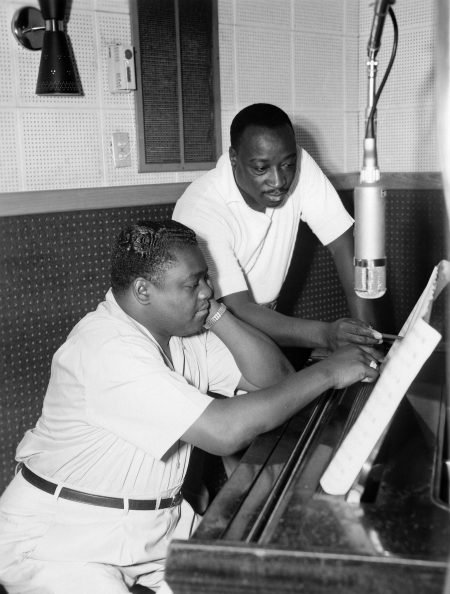
Fats Domino and Dave Bartholomew in 1957
They fell out for a while in the early 1950s, Fats feeling that Dave was getting too much songwriting credit, Dave feeling Fats was upstaging him and getting all the adoration, but they came together again by chance by working at the Rampart Street studio alongside Art Rupe on Lloyd Price’s song Lawdy Miss Clawdy, recorded in 1952, simply because Fats happened to be passing when a piano player was needed to fill in.
From rolling, free-flowing sexy piano riffing and slipped in extra notes, innovative syncopations, swamp pop with double-time piano with heavy, doleful saxophones and emotive, declaratory lyrics all about love, the magic formula blossomed with a string of hits which made listeners both dance as well as bringing them them joy, lust and yearning.
Here are few examples: Goin' Home (1952 - Fats’ first R&B number one, a farewell to a troublesome lover co-written with Alvin E. Young with a hard-swinging half-time blues groove) the Ain’t That A Shame (1955). which really launched Fats into the pop realm and a wider audience.
On that score, of course there are been many great artists who have benefited from his legacy, and building on it, brought their own originality, from rock to pop and certainly with these layers of rhythms - reggae. Hopefully many of these will come up in nominations. But not all artists were of such artistic merit. In the 1950s the industry was still very driven on racial bias and music history is of course full of white exploitation of black musicians. Only a month after Ain’t That A Shame came out, Pat Boone released his own version (and nearly released it earlier) selling even more records to a largely white audience, much the the chagrin of Domino and Bartholonew. Boone, who committed crimes against music with many other cover versions, even wanted to change to title to the ungainly Isn’t That A Shame, until producers advised him otherwise. Awkward.
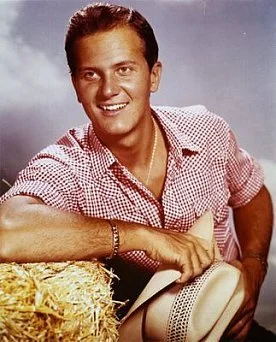
The shame of it: Cashing in on the bandwagon, Pat Boone released an awful cover of one of Fats’ great numbers barely a month after him, and tried to rename it Isn’t It A Shame
Fats gained huge success with 40 top-10 hits in the R&B charts and 25 in the the US pop charts and many more bubbling under. Here are a few more highlights: I'm In Love Again (1956 - a two-minute declaration of love set to a springy saxophone line his bluesy piano playing); Blue Monday (1956 - thought to be Fats’ favourite – a bluesy classic, relaxed, and swinging R&B rhythm with a heavy, steady, second-line feel); Blueberry Hill (previously recorded in the 1940s by Sammy Kaye and Glenn Miller, but arguably Fats brought the definitive version); I’m Walkin’ (1957 - with that bouncy, playful, and infectious rhythm); Whole Lotta Loving (1958) a joyous number which might conceivably have floated an idea into he heads of a certain British rock giants, to I Want To Walk You Home (1959) a devoted lover’s a piano stroll which might possibly have put an idea into the hands of a pair of rather important Liverpool pop songwriters …
Here’s a fetching video also reviewing his life and images …
All of these numbers and others have been extensively covered by others and influenced numerous artists. So then, whether covertly or overtly, where has Fats’ influence found itself specifically in songs. Meanwhile, here are some more photos with Fats and some of his many admirers and collaborators:
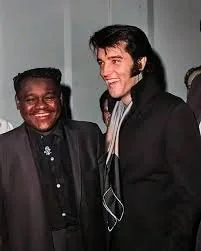
With Elvis
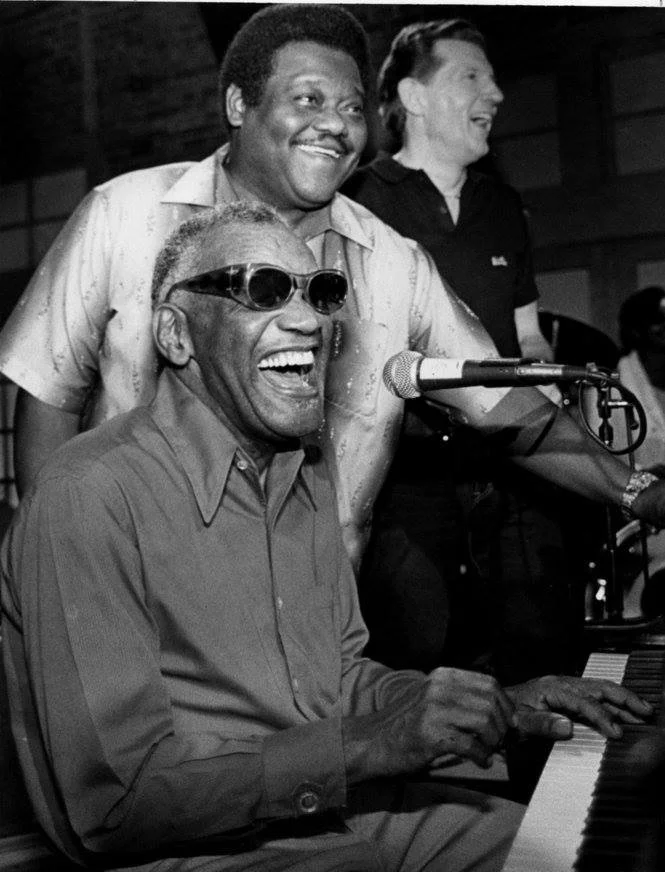
With Ray Charles and Jerry Lee Lewis
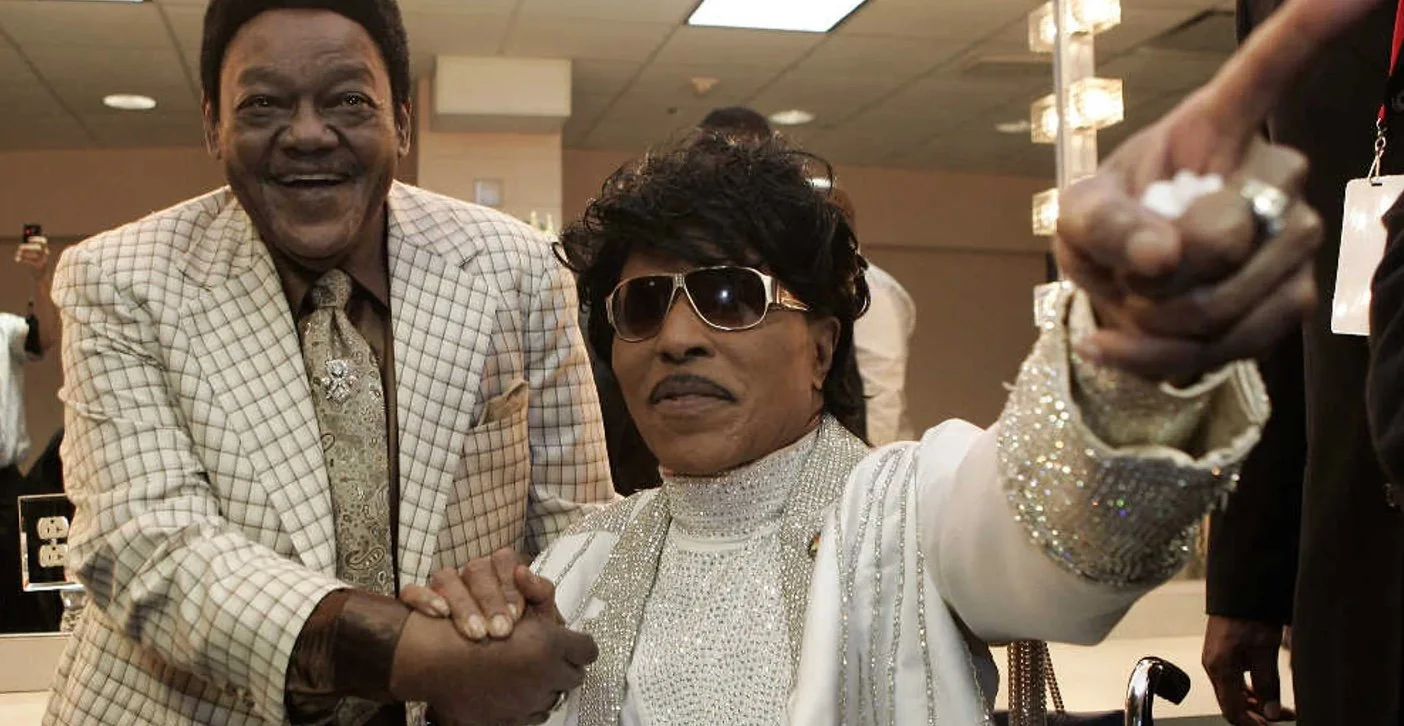
With Little Richard when Fats was 81
Where does he get referenced, musically or lyrically, in your collections? It’s now time to roll the credits for this player, as well your fingers across your own keyboards, and suggest songs below. Enjoying the full fat of this week’s selections is guest of the week and back from a bit of a break – Loud Atlas! Deadline as usual is 11pm UK time on Monday for playlists published next week. It’s time to see where the Dominos fall …
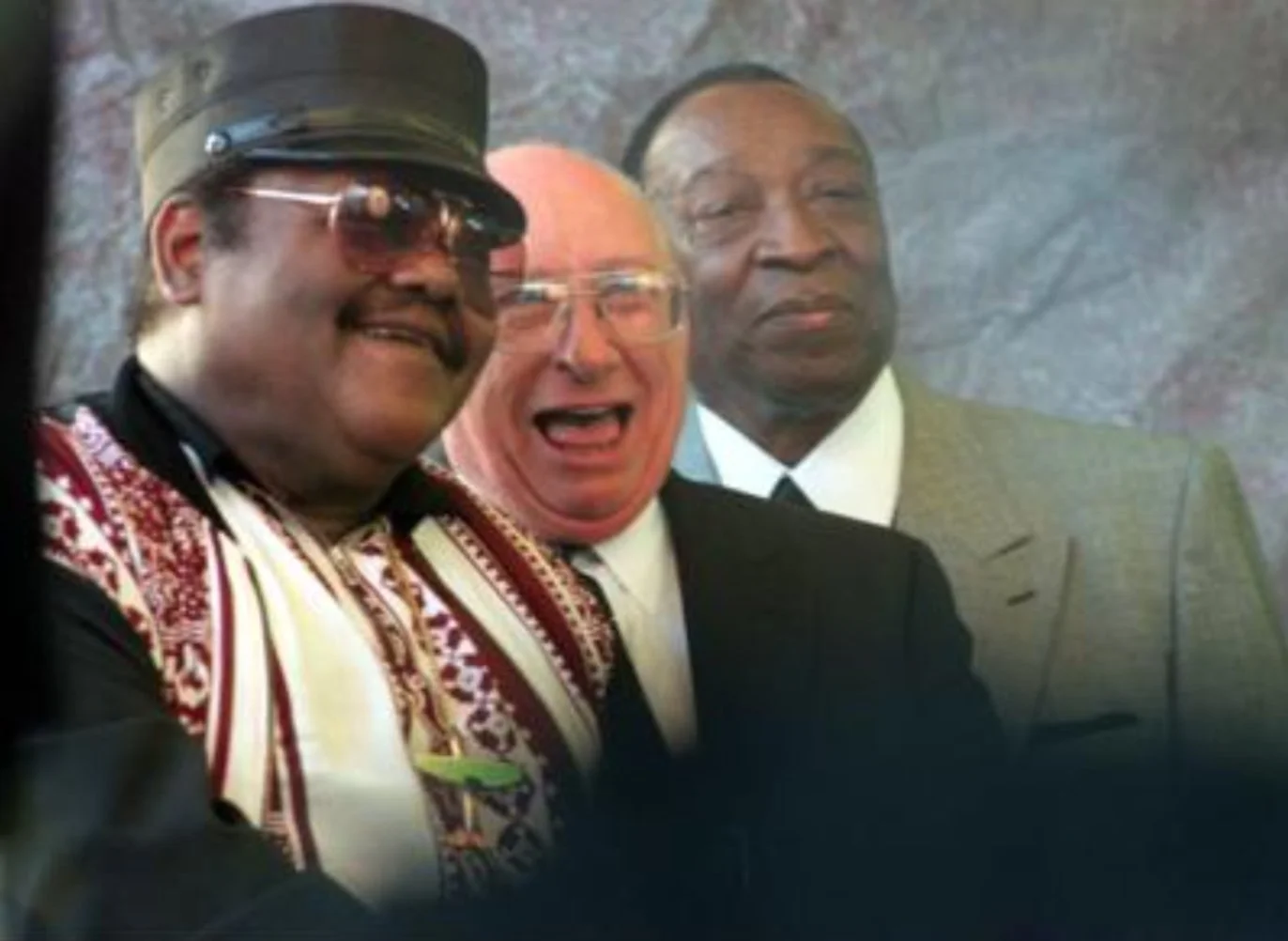
Old friends reunited: Fats Domino, Cosimo Matassa and Dave Bartholomew, marking the 70th anniversary of the recording of The Fat Man
New to comment? It is quick and easy. You just need to login to Disqus once. All is explained in About/FAQs ...
Fancy a turn behind the pumps at The Song Bar? Care to choose a playlist from songs nominated and write something about it? Then feel free to contact The Song Bar here, or try the usual email address. Also please follow us social media: Song Bar X, Song Bar Facebook. Song Bar YouTube, and Song Bar Instagram. Please subscribe, follow and share.
Song Bar is non-profit and is simply about sharing great music. We don’t do clickbait or advertisements. Please make any donation to help keep the Bar running.