
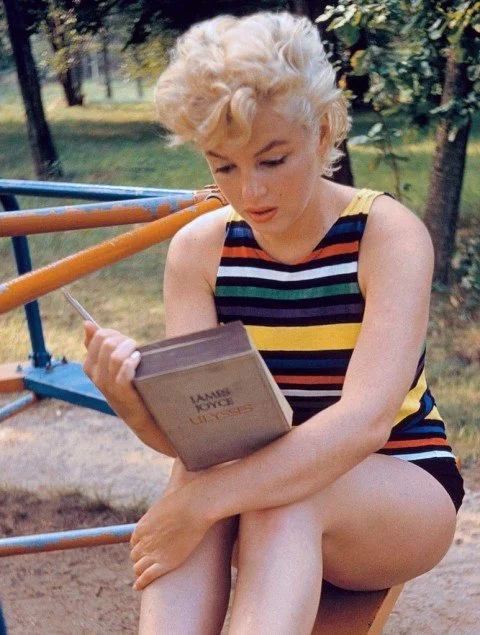
By The Landlord
“Once upon a time and a very good time it was there was a moocow coming down along the road and this moocow that was coming down along the road met a nicens little boy named baby tuckoo.” ― James Joyce, A Portrait of the Artist as a Young Man
“Welcome, O life! I go to encounter for the millionth time the reality of experience and to forge in the smithy of my soul the uncreated conscience of my race.” ― James Joyce, A Portrait of the Artist as a Young Man
“What shall I do? What shall I do? now low, a murmur, now precise as the headwaiter’s And to follow? and often rising to a scream. And in the end, or almost, to be abroad alone, by unknown ways, in the gathering night, with a stick.” – Samuel Beckett, Molloy
“Such fools we are, she thought, crossing Victoria Street. For Heaven only knows why one lives it so, how one sees it so, making it up, building it round one, tumbling it, creating it every moment afresh; but the veriest frumps, the most dejected of miseries sitting on doorsteps (drink their downfall) do the same; can’t be dealt with, she felt positive, by Acts of Parliament for that very reason: they love life. In people’s eyes, in the swing, tramp, and trudge; in the bellow and the uproar; the carriages, motor cars, omnibuses, vans, sandwich men shuffling and swinging; brass bands; barrel organs; in the triumph and the jingle and the strange high singing of some aeroplane overhead was what she loved; life; London; this moment of June.” – Virginia Woolf, Mrs Dalloway
Let us go then, you and I,
When the evening is spread out against the sky
Like a patient etherized upon a table;
Let us go, through certain half-deserted streets,
The muttering retreats
Of restless nights in one-night cheap hotels
And sawdust restaurants with oyster-shells:
Streets that follow like a tedious argument
Of insidious intent
To lead you to an overwhelming question ...
Oh, do not ask, "What is it?"
Let us go and make our visit.
In the room, the women come and go
Talking of Michelangelo. – T. S. Eliot, The Love Song of J. Alfred Prufrock
“Every life is in many days, day after day. We walk through ourselves, meeting robbers, ghosts, giants, old men, young men, wives, widows, brothers-in-love, but always meeting ourselves.” ― James Joyce, Ulysses
“Let us record the atoms as they fall upon the mind in the order in which they fall, let us trace the pattern, however disconnected and incoherent in appearance, which each sight or incident scores upon the consciousness.” – Virginia Woolf, The Common Reader
"a quarter after what an unearthly hour I suppose they're just getting up in China now combing out their pigtails for the day well soon have the nuns ringing the angelus they've nobody coming in to spoil their sleep except an odd priest or two for his night office the alarmclock next door at cockshout clattering the brains out of itself let me see if I can doze off 1 2 3 4 5 what kind of flowers are those they invented like the stars the wallpaper in Lombard street was much nicer the apron he gave me was like that something only I only wore it twice better lower this lamp and try again so that I can get up early" – James Joyce, Ulysses
Ooh, hello again cat, alright then, just a few more biscuits, just this once, again, and ouch, yes I need to stretch too, bit of backache this morning but now coat's on, and out of the house. Walk and get some coffee that’s a plan. Park cafe. Can that bring an idea? Left hamstring a bit stuff from that run yesterday. Got so much to do. Emails, emails, emails. Ping! Oh no, boring, I can't reply to that right now, no time …
On my way, down the street, into the park, sunshine yes, and, ah, morning here comes Andy the ranger, and already he's on it again about finding that rare 7-inch by The Jam, and then suddenly off into politics, just can't help it, yeah, it’s well dodgy that latest parliamentary civil servant sacking scandal and questions – like scene from Yes Minister, all naughty nuance, cleverly ambiguous, playing mischievously with the devil-in-detail actualité, yeah who knows, nobody knows, everybody knows, it's all bullshit, what a corrupt cockup, but then really, priority right now is …
... the cost of living, fuel and energy prices, we're stuffed because of that stupid orange prick ... yeah what with the Strait, sacking all he generals who warned against it, but meanwhile upcoming local elections in May, who will you vote for Labour or Green, this time, why do some people not ever turn up, not give a flying fuck, but then, with a quick left-right-left mental duck, now Andy’s onto the boxing, his favourite subject, wasn't that a joke, that last Fury fight, he's so past it that fat bastard, ridiculous wobbly love handles, it's all greed showbiz cash bollocks, and suddenly he says do I think Spurs will get relegated (honestly Andy I don't care) but football tickets is all out of control exploiting loyalty now anyway, isn't it maybe time for someone to have a big fall …
… wait, he stops himself, - what's the time, I must be going he says, but oh yes, hang on, I really like your watch, where's that from, looks expensive (no Andy it's cheap) and yeah, everybody's ADHD these days, but have you seen that new series on Netflix, brilliant isn't it, and then, no time, must go, off like a rocket, lovely day, gotta empty those bins mate, catch up later, gotta do mowing pruning, non-sequiturs in mind, secateurs in pocket.
So then, phew I got there, and welcome, it's a stylistic theme time at the Bar this week, with a modernist twist, not merely in song lyrics but potentially also noodly musical moods. Stream of consciousness is a literary narrative technique, revolutionised in early 20th century novels to capture our chaotic minds and flooding random flow of our actual thought processes, often with non-linear sense of time, filled with free association, saturated with sensory experiences, seemingly unfiltered, often with unusual punctuations and therefore rhythms. Is it pure, instinctive inspiration, straight out the right hemisphere of the brain? It could be, but for all of that could all be cleverly crafted to appear so. The result is what matters. It’s all about style as much as content.
In short, it's a topic that requires your ears as well as your eyes, but if it feels like a stream of consciousness, lyrically or musically, just give it a go, let it in, and let flow, right into the comments section below.
Many songs are filled with literary inspiration, particularly that of James Joyce, and his masterpiece published in 1922, Ulysses. Following the events of one single day in Dublin, the 16th of June 1904, it is really more like 18 novels in one, so vast in vision and affirmation of the human spirit, capturing the characters, sights, and sounds of the city at the time, but centred on three main characters, the melancholy, intellectual young man Stephen Dedalus, the curious, libidinous, knicker fantasist Leopold Bloom, and his adventurous, garrulous wife Molly. Funny, filthy, infinitely inventive, colourful and lyrical, it attracted controversy and survived censorship, but is regarded as perhaps the greatest novel of the 20th century.
Where do even start with a book like this? Edna O'Brien for example, suggest Episode 11, titled Sirens, one, appropriately for our Bar, dominated by motifs of music (Joyce himself had a great tenor voice), and in which Bloom has dinner with Stephen's uncle at the Ormond hotel, while Molly's lover, Blazes Boylan, proceeds to his rendezvous with her. While dining, Bloom listens to the singing of Stephen's father and others, watches the seductive barmaids, and composes a reply to Martha Clifford's letter.
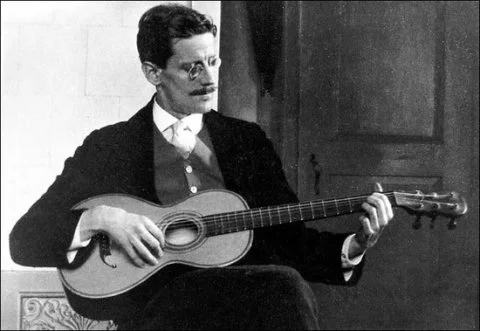
James Joyce finds some distraction. He possessed a beautiful tenor voice ….
Joyce had already experimented with the form in his previous book Portrait of the Artist As A Young Man (1916) in which the protagonist, young Stephen Dedalus, Joyce's later fictional alter ego in Ulysses, gradually grows up, the language, although as a third-person narrative, changing from baby-ish feelings at the beginning to a gradually more educated one as his life progresses.
And his most difficult and final novel, Finnegans Wake, Joyce coined the term Chaosmos, one that describes a universe that is simultaneously chaotic and ordered, a blend of chaos and cosmos. It represents a "cyclic dance of creation" where disorder and order, liberty and rules, coexist in a continuous process. Joyce obsessively pored over every word of his works, and that is perhaps where craft and creativity that capture the human mind come into play.
But of course Joyce, hugely well read, was influenced by others before him, from Homer of course, and Hamlet's soliloquies, to the scatalogical, comedic, divergent trains of thought in Laurence Sterne's brilliant psychological novel Tristram Shandy (1757), regularly mentioned here the Bar, to other late-19th-century literary experiments, such as the first-person narrative of Edgar Allan Poe's short story The Tell-Tale Heart (1843), and the free association style of Édouard Dujardin's Les Lauriers sont coupés (1887).
Stream of consciousness, like any idea and of course water, has a source, and as a term, it was first coined by Alexander Bain in 1855 in the first edition of The Senses and the Intellect, when he wrote: "The concurrence of Sensations in one common stream of consciousness–on the same cerebral highway–enables those of different senses to be associated as readily as the sensations of the same sense".
The phrase itself is enshrined by William James who used it in 1890 inThe Principles of Psychology: "Consciousness, then, does not appear to itself as chopped up in bits ... it is nothing joined; it flows. A 'river' or a 'stream' are the metaphors by which it is most naturally described. In talking of it hereafter, let's call it the stream of thought, consciousness, or subjective life".
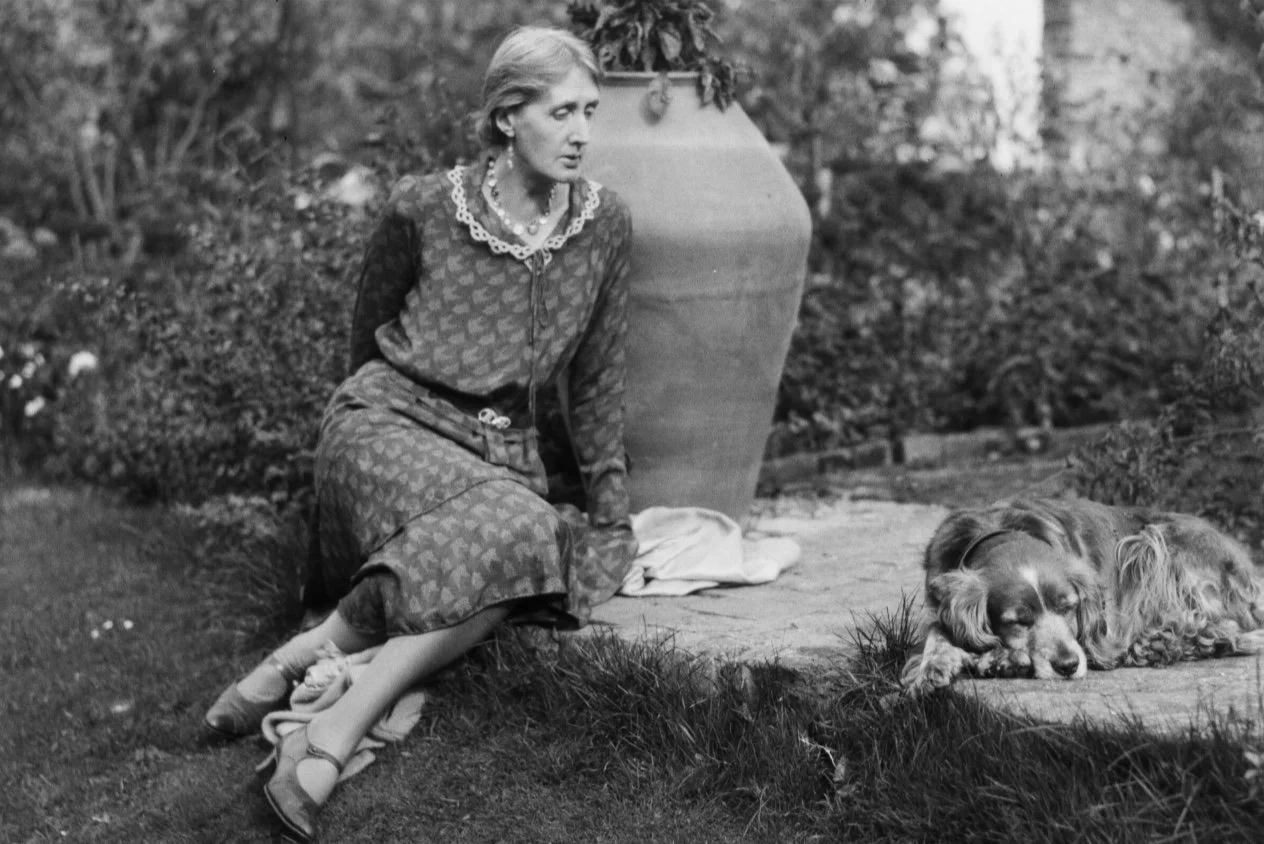
Pet Woolf: Virginia at home in the garden with friend
Joyce, TS Eliot, Marcel Proust, Virginia Woolf, William Faulkner, Samuel Beckett and others long since, in all sorts of writing, comedic to song lyric, have found stream of consciousness as an appropriate form to express the stimulating sensory experience of a rapidly changing world, but also as a way to capture the confusing machinations of their emotional turmoil into a form of hopefully entertaining wit and wisdom. Which lyricists come to mind? Answers in comments below…
This is perhaps largely a lyrical topic what about musically? Could leaps of the brain and fingers count, such as that of Coltrane's Giant Steps, filled with striking, mind-boggling, alternating modulations of major third and minor sixth intervals, it's more something that feels both highly crafted, but also like the brain leaping into a stream of the imagination.
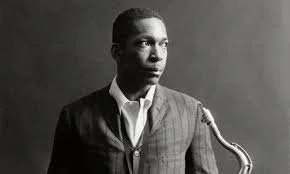
John Coltrane: combining craft and stream of musical consciousness
Wither then your stream of consciousness on this subject? What songs seem to spring into directions instinctively? Helping direct the flow is this week's guest - the excellent ajostu! Place your suggestions in comments below, for the deadline on Monday 11pm UK time (though let us imagine a Joyce Dublin bar ringing its bell for last orders), in time for playlists presented next week. Time to turn on those taps …
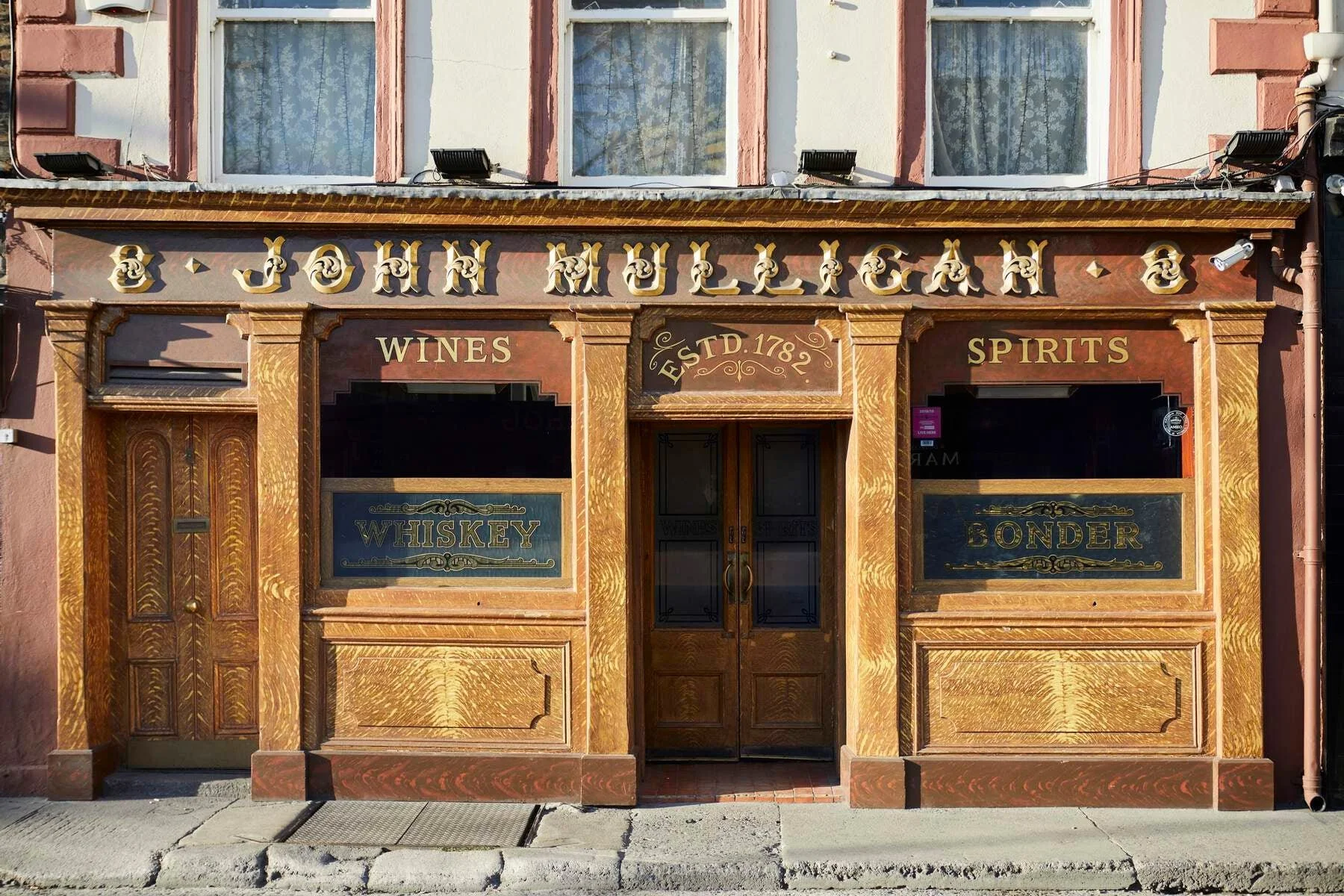
Mulligans in Dublin
New to comment? It is quick and easy. You just need to login to Disqus once. All is explained in About/FAQs ...
Fancy a turn behind the pumps at The Song Bar? Care to choose a playlist from songs nominated and write something about it? Then feel free to contact The Song Bar here, or try the usual email address. Also please follow us social media: Song Bar X, Song Bar Facebook. Song Bar YouTube, and Song Bar Instagram. Please subscribe, follow and share.
Song Bar is non-profit and is simply about sharing great music. We don’t do clickbait or advertisements. Please make any donation to help keep the Bar running.