
By The Landlord
“In the beginning the Universe was created. This has made a lot of people very angry and been widely regarded as a bad move … Space is big. You just won't believe how vastly, hugely, mind-bogglingly big it is. I mean, you may think it's a long way down the road to the chemist's, but that's just peanuts to space.” – Douglas Adams The Hitchiker’s Guide To the Galaxy
“The universe is a pretty big place. If it's just us, seems like an awful waste of space.” ― Carl Sagan, Contact
“There are more things in heaven and earth, Horatio, / Than are dreamt of in your philosophy.” – Shakespeare, Hamlet
“The imagination of nature is far, far greater than the imagination of man.” – Richard Feynman
“Two possibilities exist: either we are alone in the Universe or we are not. Both are equally terrifying.” ― Arthur C. Clarke
“I'm sure the universe is full of intelligent life. It's just been too intelligent to come here.” ― Arthur C. Clarke
“Earth is a small town with many neighbourhoods in a very big universe.” ― Ron Garan
“I feel life is so small unless it has windows into other worlds.” – Bertrand Russell
“I know other worlds exist. I can see them in my peripheral vision.” – Joseph Gordon-Levitt
“If you think this Universe is bad, you should see some of the others.” ― Philip K. Dick
“Two things are infinite: the universe and human stupidity; and I'm not sure about the universe.” ― Albert Einstein
“There’s as many atoms in a single molecule of your DNA as there are stars in the typical galaxy. We are, each of us, a little universe.” ― Neil deGrasse Tyson
“Limitless undying love which shines around me like a million suns it calls me on and on across the universe.” ― John Lennon
A man said to the universe:
“Sir, I exist!”
“However,” replied the universe,
“The fact has not created in me
A sense of obligation.” ― Stephen Crane, War Is Kind and Other Poems
The universe is currently observable to 93 billion light years in diameter, containing 2 trillion galaxies, and 10 to the power of 24 (or a septillion) planets, but beyond that, it’s estimated to be at least 23 trillion light years wide, and constantly expanding, with our galaxy alone containing up to 400 billion stars and potentially 200 billion planets, and beyond it, more planets out there than there are grains sand on Earth.
In other words, it's a very big indeed, so huge and full of other worlds, that it melts our brain. No wonder that all sense of time itself and any sense of warps in vastness of space. And then of course there’s endless idea of the multiverse - alternative, infinite versions of all of us parallel worlds acoss time and space. Perhaps then, to counteract this sense of cognitive vertigo, it explains why the only way to cope with this is to glimpse and capture the feeling of it in the most human form we know - through stories and images and words and sounds, via the forms of art, books, poems, film, and of course - song.
So then, this week we’re taking a voyage to other worlds - by which we mean anywhere that’s not Planet Earth. When we talk about being in another world, often it might refer to an idiot you might encounter down the pub, or the political views of someone on TV, or even what’s going on in the soil or under a rock at the bottom of your garden, or what’s thrown up the contents of your algorithm as opposed to someone else’s, but we’re going far beyond that – literally to other worlds, real or imagined, to the Mars or Venus, to the intriguing moons of Jupiter, to outside our solar system to the Milky Way and beyond, seen through telescope of astronomy or the fanciful creative macroscopes of science fiction.
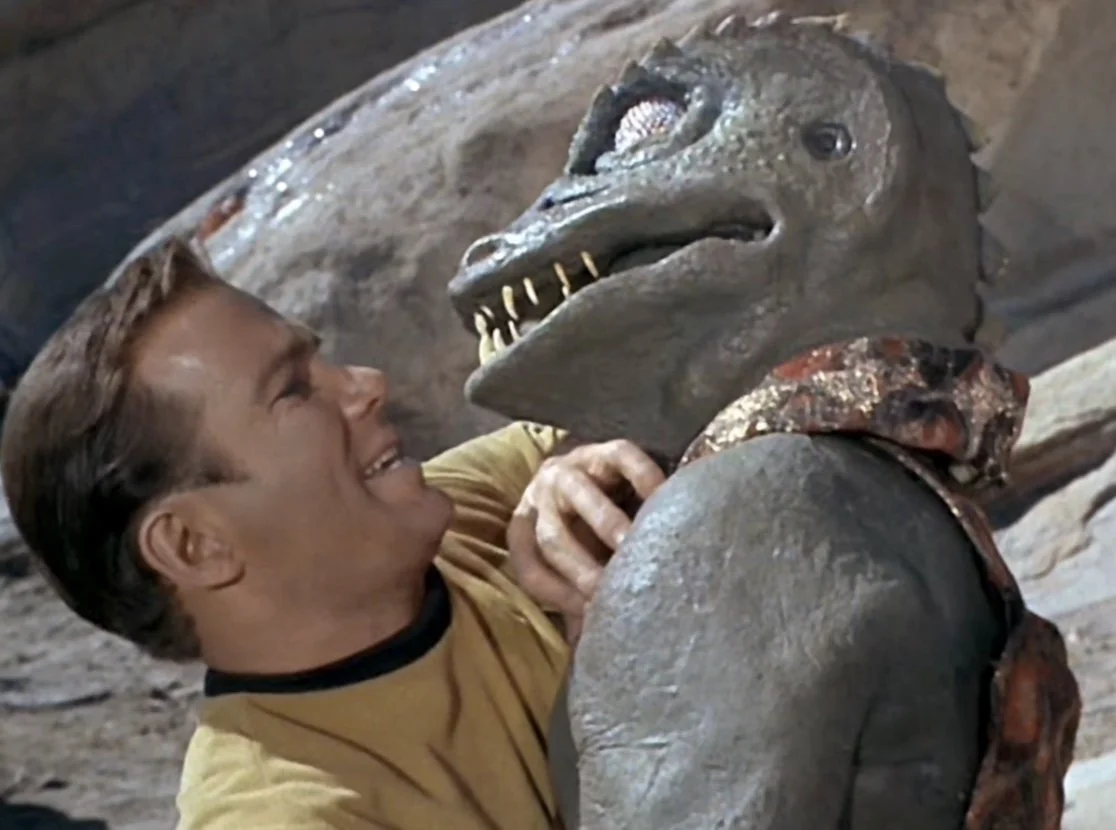
Space in more general terms and science fiction (including alternative Earths) have come up before), but this time we boldly go beyond … and ideally with some emphasis on other worlds that are imagined to be, or were once inhabited.
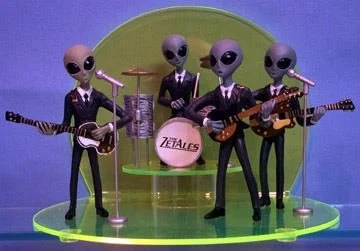
The idea of other life forms and worlds, has fuelled our art and imagination as long as we have existed, from cave-dwelling sun worshipers and beyond. Humans have been mapping the stars since Ancient Mesopotamia several millennia ago. And later when Nicolaus Copernicus (1473–1543) the visionary Renaissance polymath made the giant leap of heliocentric model, placing the Sun, rather than Earth a the centre of the known universe, upsetting many at the time, the concept of other worlds grew considerably. And then when when Frederick William Herschel (1738-1822) discovered Uranus and began counting stars well beyond, the conceived and perceived universe expanded again.
But what was out there? What does it take to create life, and how can we hope that it is out there?
Life forms, at least in the realms of our perception, are largely made of carbon, nitrogen and oxygen. Our origins, long before plants and fish evolved, may have even been formed by floating complex atoms and animo acids that broke off in the creative chaos in the formation of our solar system, possibly on Earth, but perhaps even at a time when Mars was inhabited by some forms of bacterial life, proven to even shown by the fact that it once contained or still contains traces of water. So are we, in sense, made of stars, and/or from Mars?
Oxygen and water are conventional signs of life, but even on our planet it has been found that life can exist in more extreme conditions of extreme pressures and heat of inside volcanic vents (evidence by white crabs and bacteria). So some life can exist via other elements such as sulphur and iron, why not via other elements? Could xenobiological forms exist form other forms of DNA?
While Rare Earth theory suggests that or planet could be a unique combination of lucky coincidences - just the right amount of certain chemicals, a stable sun, and being sheltered from comets by the huge pull of another planet – Jupiter. And that if the metaphorical volume, reverb and controls had been tweaked in just a tiny way, there would be no life at all. But then again, this supposes that only certain conditions can support life. It’s possible that other worlds also have the right combinations, but not necessarily for the same forms.
But assuming that water is one of life’s requirements, incidentally Jupiter’s moon Europa, and Titan, Saturn's largest moon, contain plenty of it.
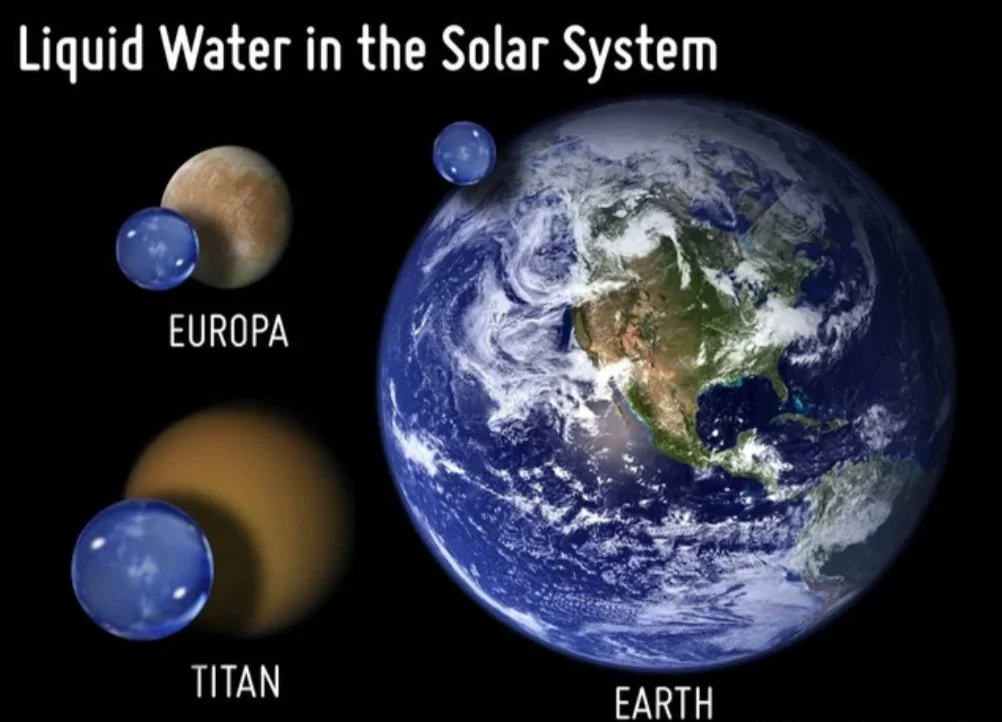
Titan contains more water than either Earth or Europa
It’s a fascinating concept for stargazers, and also under the discipline of spectroscopy, detecting and analysing light emitted, reflected, or absorbed by a planet to identify unique "fingerprints" of chemical elements, allowing astronomers to determine the composition of far-away worlds without visiting them.
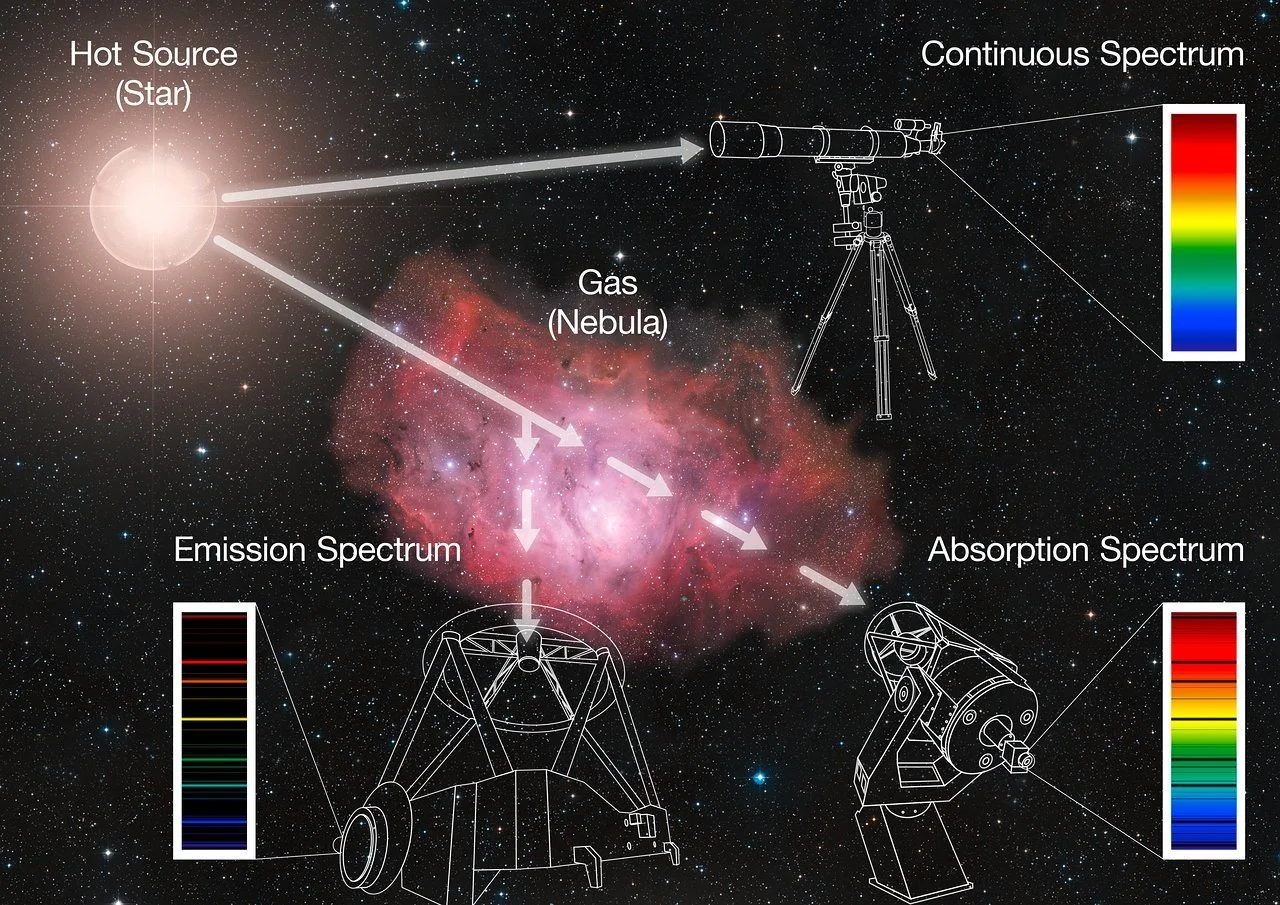
Spectroscopy analysis of far-away worlds
So does a planet randomly become formed to sustain life, or does life adapt to the planet it is from? Probably both. It’s a big question….
And what might other worlds be like? There’s a huge spectrum of literature that has touched on this, from Earth to imagined islands, hells and heavens, Dante to Shakespeare to Jonathan Swift’s Gulliver’s Travels, in which the seafaring Lemuel Gulliver variously finds himself in worlds of tiny people, giants, floating worlds of scientists and a race of superior horses.
But in perceiving stars in the night sky, Thomas Hardy’s unusual novel, Two on a Tower, depicts an astronomer, Swithin St Cleeve, given a tower to do his work by a lady aristocrat, Lady Viviette Constantine. In describing to her the immensity of the Milky Way, he says: “There's a size at which grandeur begins there's a size at which immensity begins - there's a size at which terror begins and that approximates the known size of the universe.”
An in more mischievous fantasy mode, in Terry Pratchett’s novel about the character of Death and his helper, Mort, he portrays the Discworld which is flat and rides on the back of four giant elephants who stand on the shell of the enormous star turtle Great A'Tuin, and which is bounded by a waterfall that cascades endlessly into space. As he puts it: “Scientists have calculated that the chance of anything so patently absurd actually existing are millions to one. But magicians have calculated that million-to-one chances crop up nine times out of ten.”
In another, The Color of Magic, he amusingly theorises about beginning of this universe:
“An alternative, favoured by those of a religious persuasion, was that A'Tuin was crawling from the Birthplace to the Time of Mating, as were all the stars in the sky which were, obviously, also carried by giant turtles. When they arrived they would briefly and passionately mate, for the first and only time, and from that fiery union new turtles would be born to carry a new pattern of worlds. This was known as the Big Bang hypothesis.”
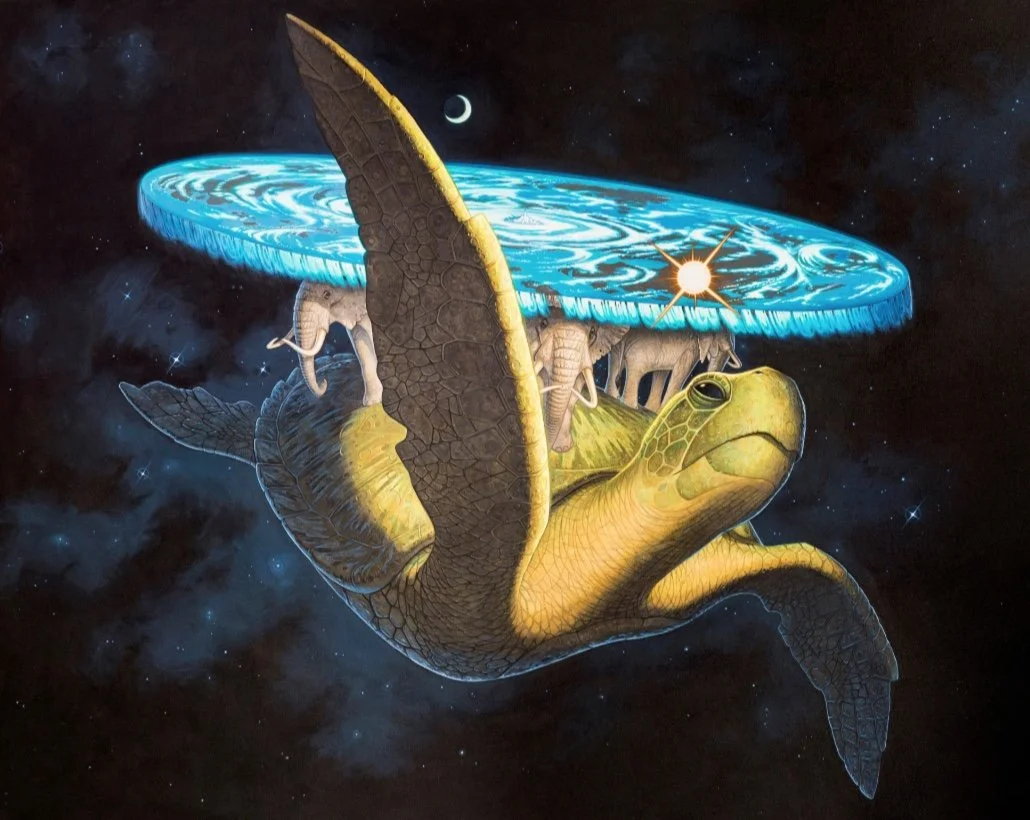
The Great A'Tuin of Discworld
But to what worlds will this week’s songs take us? To those of Star Trek? Or Isaac Asimov? Or Frank Herbert’s Dune? The Dispossessed by Ursula K. Le Guin? Or Consider Phlebas, or Surface Detail by Iain M. Banks, part of the Culture series? It’s all another world.
Over to you then, musical explorers, to boldly go find new worlds. This week’s brave space captain is the ever knowledgeable Nilpferd! Place your songs in comments below for deadline at 11pm UK Earth time on Monday, for playlists published next week. Now for a different bandwidth …
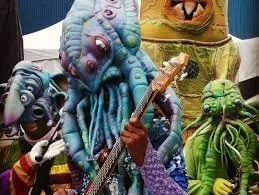
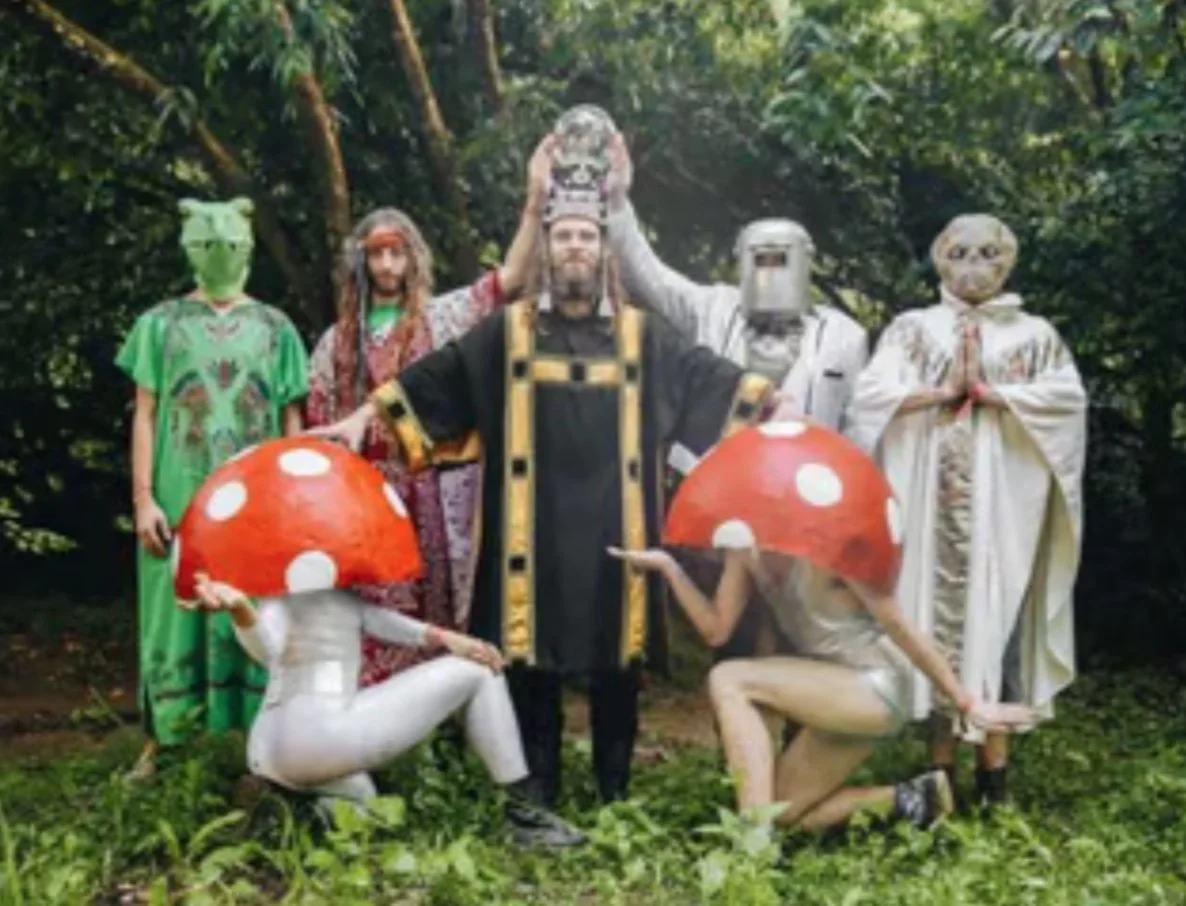
What on Earth? Alien bands Big Nazo and Henge
New to comment? It is quick and easy. You just need to login to Disqus once. All is explained in About/FAQs ...
Fancy a turn behind the pumps at The Song Bar? Care to choose a playlist from songs nominated and write something about it? Then feel free to contact The Song Bar here, or try the usual email address. Also please follow us social media: Song Bar X, Song Bar Facebook. Song Bar YouTube, and Song Bar Instagram. Please subscribe, follow and share.
Song Bar is non-profit and is simply about sharing great music. We don’t do clickbait or advertisements. Please make any donation to help keep the Bar running.